

The scene is easy to picture: a kettle rattling on the stove, sunlight catching a silver glint, and four vinyl chairs squeaking softly as kids pull them close. In the center of the room sits a tidy table with a glossy top—just the right size for bowls of cereal, an arts and crafts project, or kitchen table spelling bees. For so many American families in the 1940s and ’50s, a compact chrome dinette wasn’t just furniture. It was the heart of the kitchen, where everyday life unfolded between toast and the evening news.
Why Small Tables Loomed Large
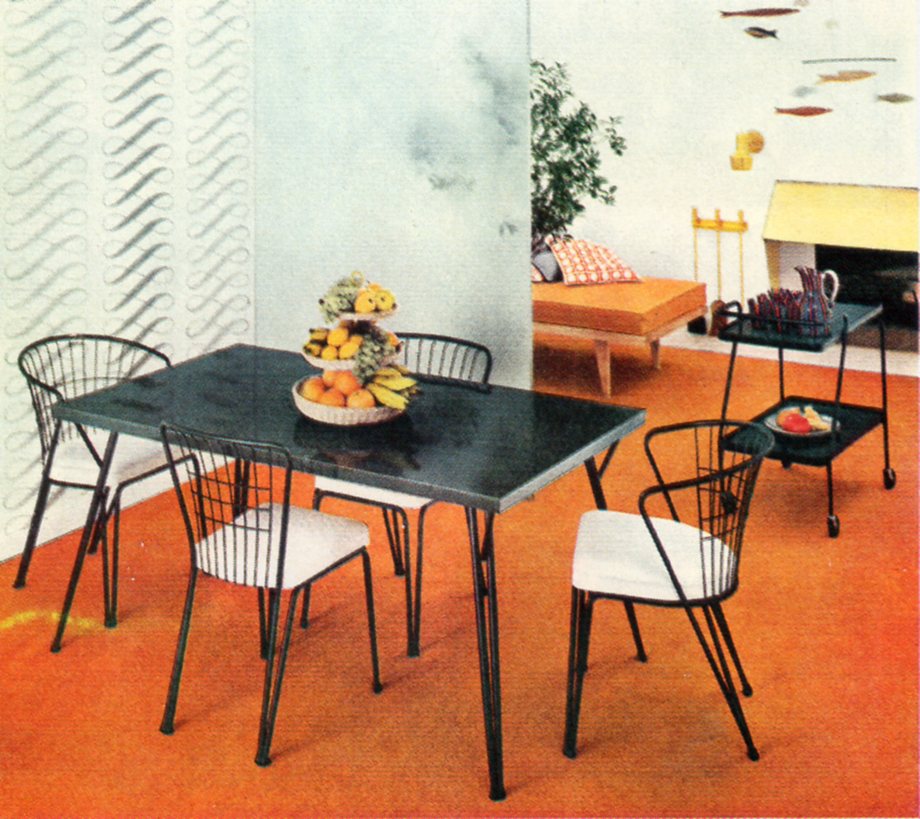
Post WWII, new houses were being built fast, and many didn’t set aside space for a formal dining room. The kitchen had to do double duty; it became a space that was both for cooking and gathering. In that squeeze, the chrome‑and‑Formica dinette became a postwar essential, celebrated for being cheerful, sturdy, and the perfect piece of double-duty-furniture. It was “modern” in a way that made sense to families who wanted convenience without fuss. It was a place where lunch could be served, homework finished, and a pie cooled, all without worrying over water rings or scratches.
These sets were thoughtfully scaled—small enough to tuck into a breakfast nook, but clever about space. Drop leaves bridged the gap between a weekday-for-four and Saturday company. Extension inserts hid under the tabletop in some models, waiting for a holiday roast or a bridge night. The point wasn’t grandeur; it was getting a lot of living into a little room.
Built for the Everyday Bustle
Formica and similar laminates were the stars of the dinette sets, resisting spills, heat, and marker scribbles with an easy swipe. Tubular chrome legs gleamed but didn’t hog the visual space, and those vinyl-upholstered seats? A damp cloth and they were good as new; there was never a fuss over spilled grape juice or jam. Color sealed the deal. Sets came in robin’s-egg blue, butter yellow, cherry red, seafoam, and pebble-gray marbles—often matched across chair seats and tabletops so the whole corner looked put-together even when life wasn’t. (You can see the variety on display in the video below.)
While today these tables may feel like a thing of the past, at the time they were forward-thinking pieces of furniture. The sleek lines and wipe-clean Formica fit the mid‑century modern mood, and makers leaned into it. Names like Virtue Brothers out West, Daystrom in the East, and Chromcraft in the Midwest competed with fresh silhouettes, rounded corners, and sculpted chair backs. You could pick a set to echo your linoleum or to stand out against it—a pop of lipstick red beneath a pastel phone tucked into the wall.
From Daily Workhorse to Beloved Heirloom
Trends shifted as the 1950s trailed into the early ’60s. Houses got a bit bigger; formal dining sets made a comeback; darker woods and new fashions elbowed chrome to the sidelines. For a while, those little dinettes felt “yesterday.” Yet they never quite went away. Many were simply too practical to toss, and their materials—laminate, chrome, vinyl—were tougher than they looked. They soldiered on in basements, lake cabins, and first apartments, hosting pancake breakfasts, jigsaw puzzles, and stacks of schoolbooks long after the Sunday roast had moved to a bigger table.
Today, they’ve come full circle. A huge part of the appeal is the look, of course. That crisp shine and friendly color telegraphs an entire era in one glance. But part of it is the memory baked into the design. These sets were built for closeness. Sitting elbow to elbow wasn’t a flaw; it was the point. They encouraged the quick morning check-in, the half-hour after work that turned into a story hour, the neighbor who popped in and stayed for pie. When we talk about the comforts of a mid‑century kitchen, we’re often really talking about what happened around a small, resilient table.
Plenty of people are rescuing them now—replacing missing leaves, polishing chrome, re-covering seats in period vinyl or playful prints. A scuff here, a ding there, and they’re back to work, right where they always excelled: in the everyday. Looking back, it’s tempting to think of the chrome dinette as simply a style. But to the families who pulled those chairs out every single day, it was reassurance made tangible. The shine might have been the first thing you noticed. The staying power is what you remember.
More to Explore
SKM: below-content placeholderWhizzco for DOT