
The Day the Roads Met and the War Turned: Five Forks, 1865
A desperate stand at a star-shaped crossroads southwest of Petersburg set the Civil War’s end in motion.

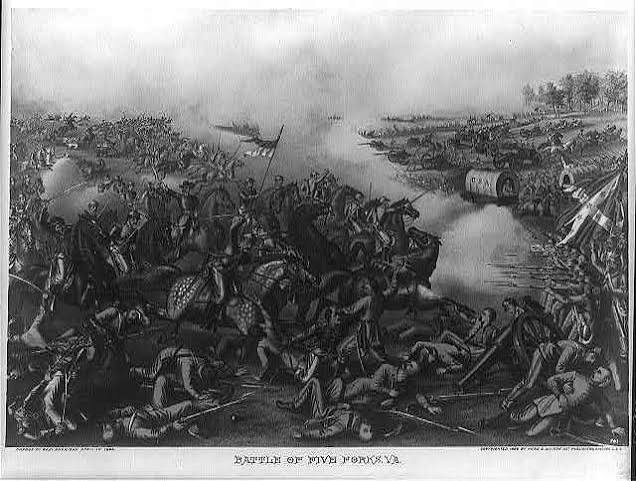
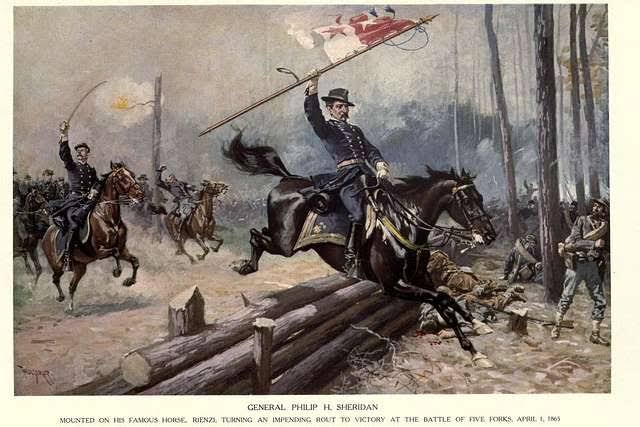
On April 1st, 1865, the sun leaned low over scrub pines and sandy roads as Union horse soldiers slid from their saddles and took to the earth like infantry. The place was Five Forks, a spiderweb of dirt lanes knotted together in Dinwiddie County, Virginia. General Phil Sheridan, a compact figure with a reputation for impatience, pressed his men to move. They could feel it: after months of stalemate around Petersburg, something might finally give. Locals had long guided their wagons through this junction. On April 1, the crossroads guided history itself.
A Crossroads With a Railroad Behind It
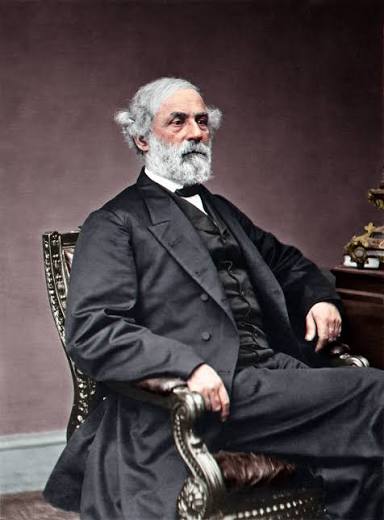
For most of a year, Robert E. Lee’s insurgency clung to a trench line protecting Petersburg and, by extension, Richmond. Soldiers on both sides endured the slow grind of siege war—muddy picket posts, whispered rumors, empty larders. It became clear to both armies that the control over roads and railways was just as important for survival as avoiding a stray bullet. Five Forks sat like a hinge on the far Confederate right, shielding the last great supply lifeline into Petersburg—Lee’s last supply artery, the South Side Railroad. The general knew that if that rail line fell, the whole Confederate position could unravel.

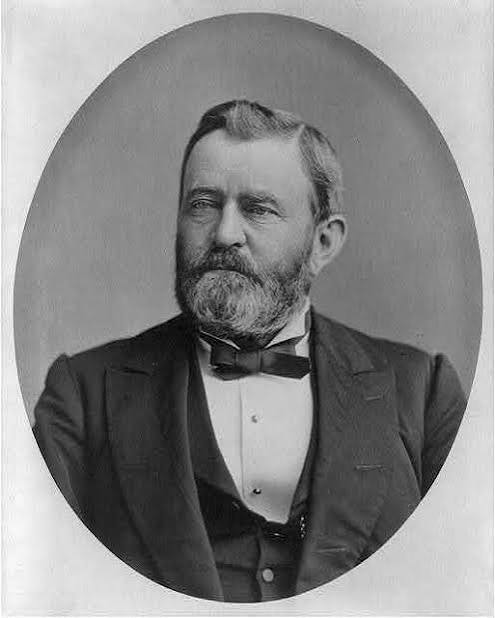
The Union’s General (and future US President), Ulysses. S. Grant, had been tightening the noose since the previous autumn, inching west to outflank Lee and pry open the defenses. His plan for early spring 1865 was straightforward in theory, messy in practice: pressure the lines everywhere, then swing Sheridan’s fast-moving force into the Confederate right to snap it. Five Forks was the weak point worth the gamble.
A Muddled Attack That Worked
The battle that afternoon did not unfold like a parade-ground drill. Sheridan’s cavalry dismounted and stretched across the Confederate front to pin the defenders in place. Behind them, blue-coated infantry slogged forward through woods and soggy fields to deliver the hammer blow. Maps were imperfect, the ground confusing. Units drifted off course; divisions overlapped; some men found themselves charging breastworks they hadn’t expected to see. Veterans later talked about the noise—shouts, rattling volleys, the thud of men moving through brush—and the strange clarity that comes when the line suddenly bends in your favor.
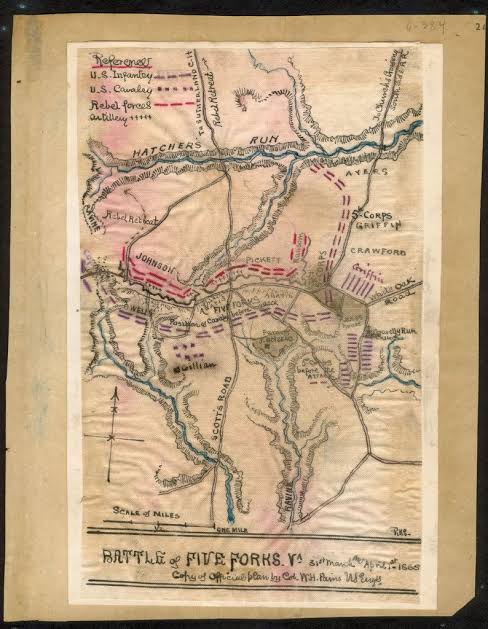
Even with missteps and chaotic conditions, momentum built. Brigades hit the angle of the Confederate works from unexpected directions; a few quick-thinking officers helped pivot lost regiments back onto target. The Confederate line, thin and stretched, began to buckle. By late afternoon, Union troops swarmed the crossroads itself. Five Forks was overrun, prisoners gathered in clusters, and the roads north toward the precious railroad lay open. Some would later call it the “Waterloo of the Confederacy,” a dramatic name for a brief, chaotic clash that nonetheless carried enormous weight.
The Door Swings Open
News of the victory traveled quickly to Grant’s headquarters. Sensing the moment, he ordered a crushing follow-up—a massive assault for dawn on April 2—to split the Petersburg lines once and for all. That Sunday, the siege lines that had resisted for nearly ten months finally cracked. With the road to the South Side Railroad lost, Lee had to do the one thing that he’d tried to avoid all winter: abandon both Petersburg and Richmond and take his army into the open countryside.

Civilians were affected in all this, too. In Petersburg, families who had learned to live under shellfire packed what they could carry to avoid violence. In Richmond, people watched smoke rise as government stores were torched and bridges fired to slow the Union advance. Soldiers on both sides—boys who had left farms, cities, and river towns—marched again, though this time the feeling was different. The end, long unthinkable to many, suddenly felt close enough to touch. For the Petersburg and Richmond communities, this was a massive relief.
Not everything at Five Forks was triumph in blue and disaster in gray; there were tensions within the Union ranks too. In the aftermath, Sheridan controversially relieved Gouverneur K. Warren of command of the V Corps, a move that would be debated for years. Such moments remind us that even victorious armies are made of people with pride, rivalries, and limits.
Regardless of inter-army squabbles, however, Five Forks mattered because it turned a door handle that had resisted for nearly a year. Once open, the path ran straight to the Breakthrough at Petersburg, then to evacuation, pursuit, and Appomattox. Many families trace a story to those first days of April 1865—a great-great grandfather who marched with Sheridan, a distant cousin who retreated with Lee, a letter home that hinted, carefully, that perhaps the fighting might finally stop. The junction itself is quiet today, the lanes paved and the pines taller, but implications of that day still echo, showing us a nation that started to stitch itself back together.
More to Explore
SKM: below-content placeholderWhizzco for DOT