
There are very few people who look forward to a trip to the dentist. Even with all the modern conveniences today it can still be quite uncomfortable or worse. These days, we have drugs to manage the worst of the pain, and most procedures are over rather quickly. But, in the old days dentistry was a much cruder affair, and it was often much more painful. For many tooth problems the main treatment was just to pull the tooth, which was done often without much in the way of comfort aids. As strange as it is there are some photos and pictures from this earlier period in dentistry, but be warned they can be a skin crawling to see.
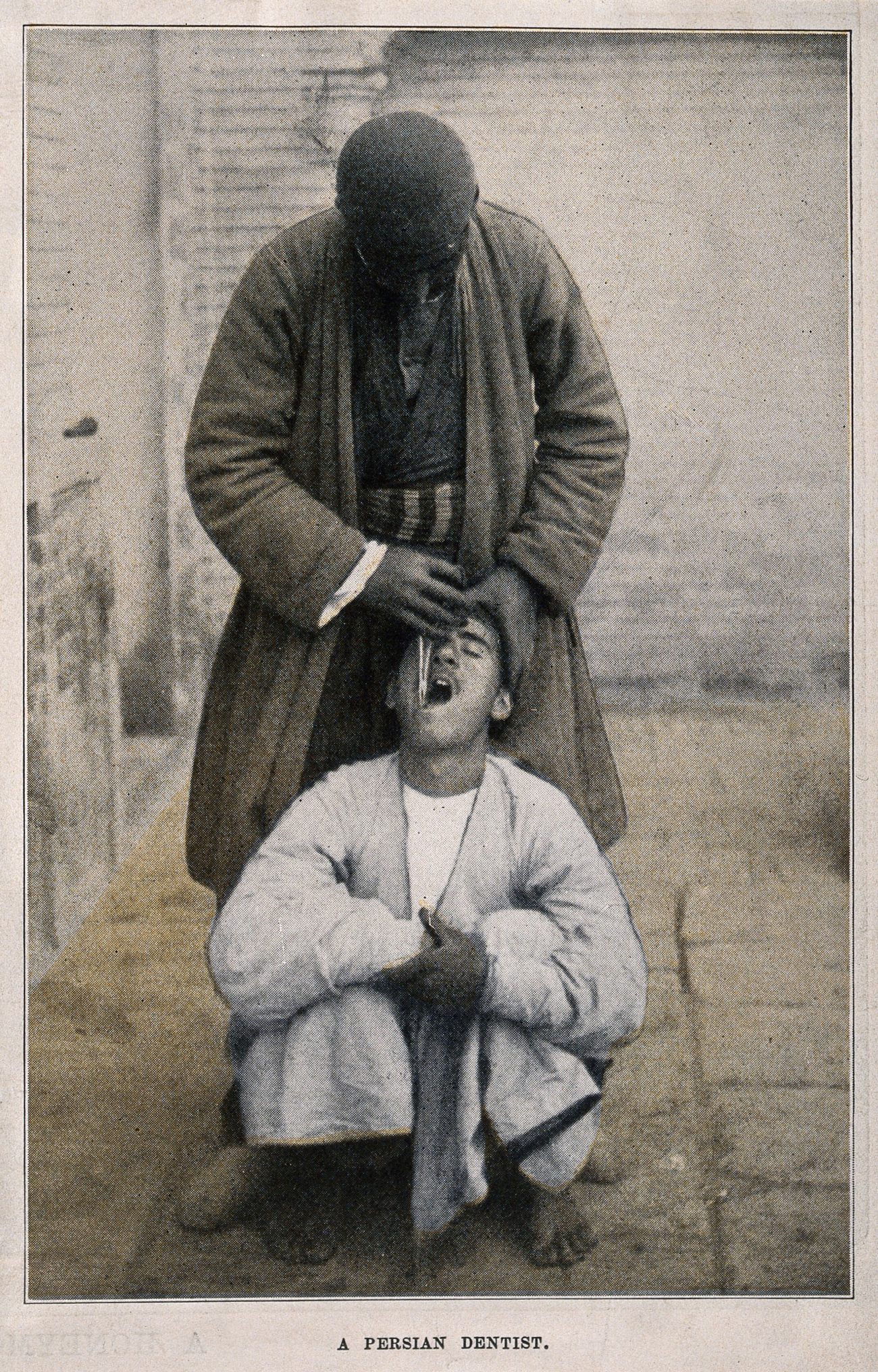
Early lantern slides and stereoscopes from around the world captured the near-universal experience of needing a dentist. By today’s standards procedures were done with rudimentary tools with no pain treatment. Sometimes family members had to hold the patient down as the extractions were performed.
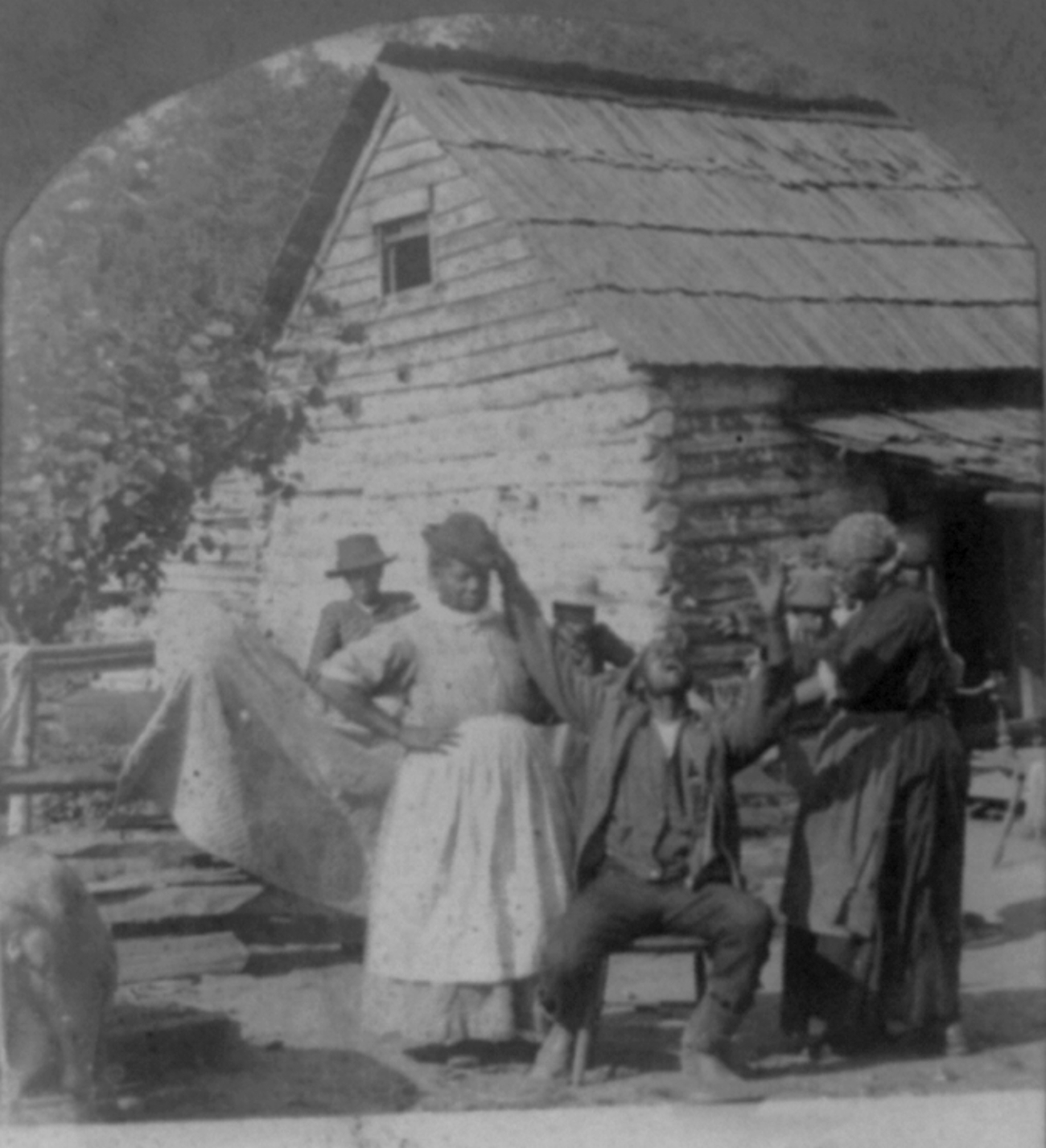
The photo shows the “mountain dentist” performing her duties above. Photo from around 1890.
As early as 9,000 years ago humans were using early dental drills on each other to stop the decay of teeth, as burials show folks with neatly drilled molars in numbers to great to be a fluke. But, it was a long time before comfort and pain relief were standard in dentistry.
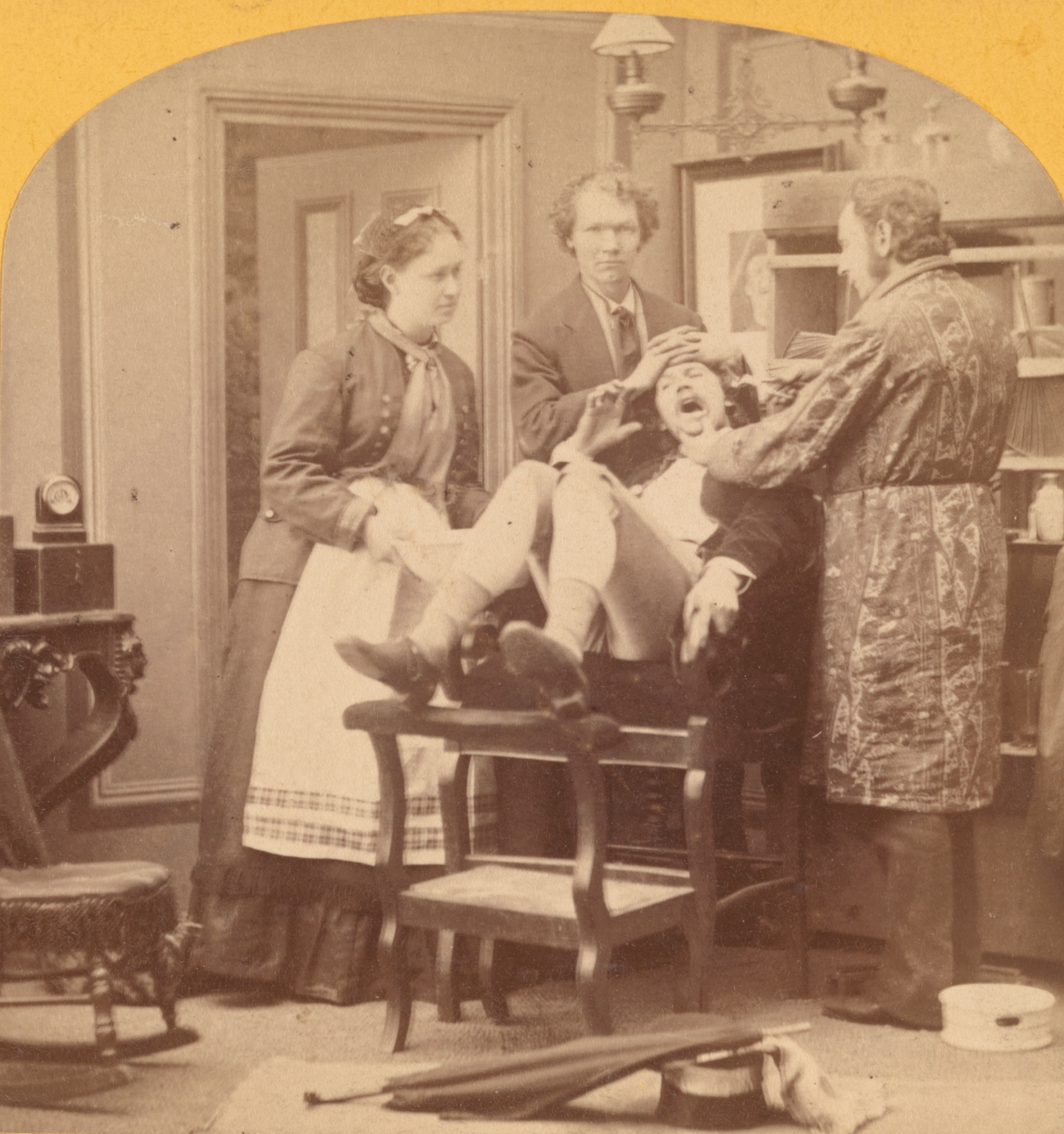
Extractions could be done on the street or at home, showing that the tools were only a small part of the practice. Though some dentists did have offices.
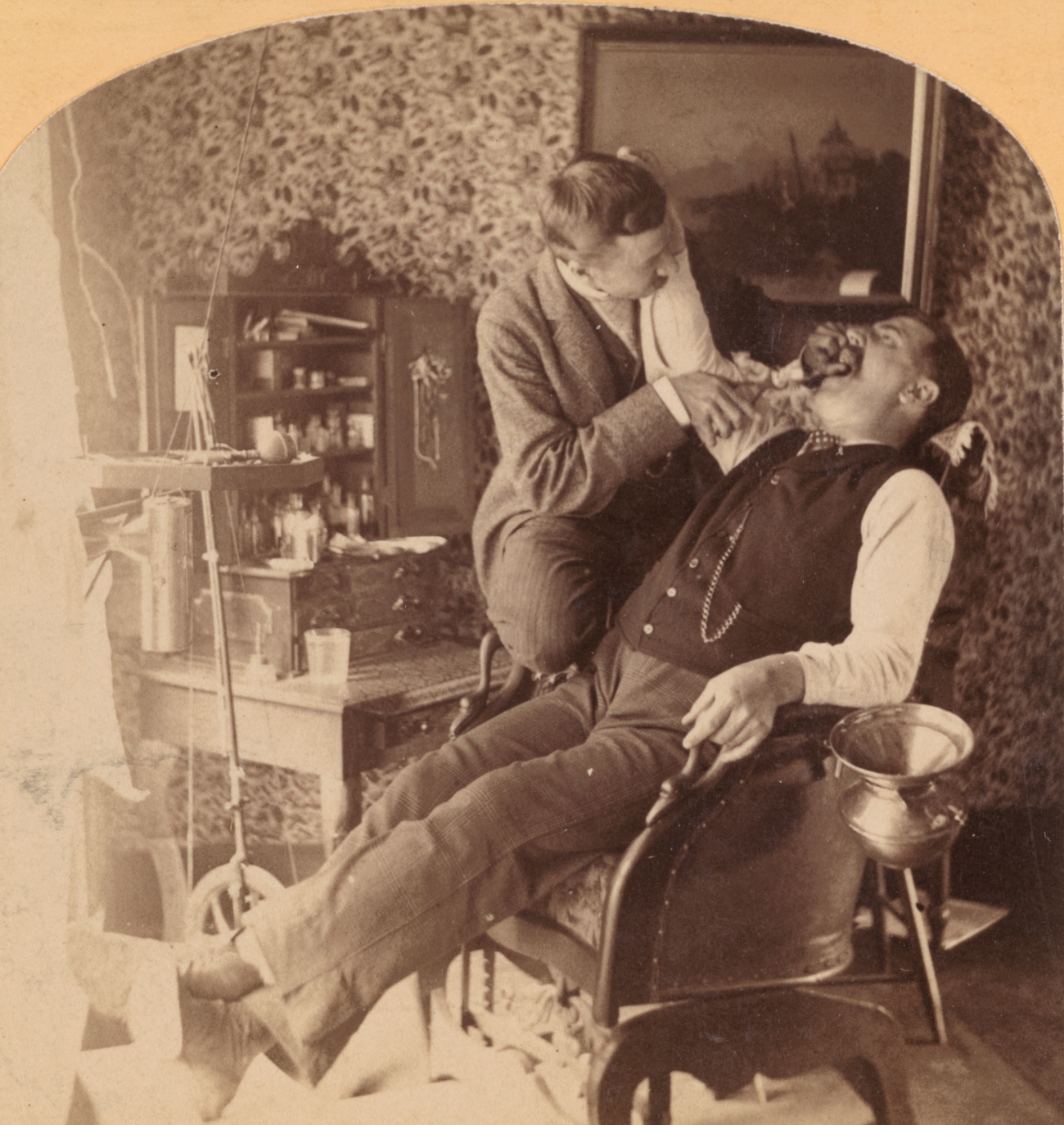
The chap above is seated in what looks like a wooden office chair as the dentist works on his teeth. Since it’s not a true exam chair he’s forced to put his arm on the dentist’s shoulder. What a different time it was.
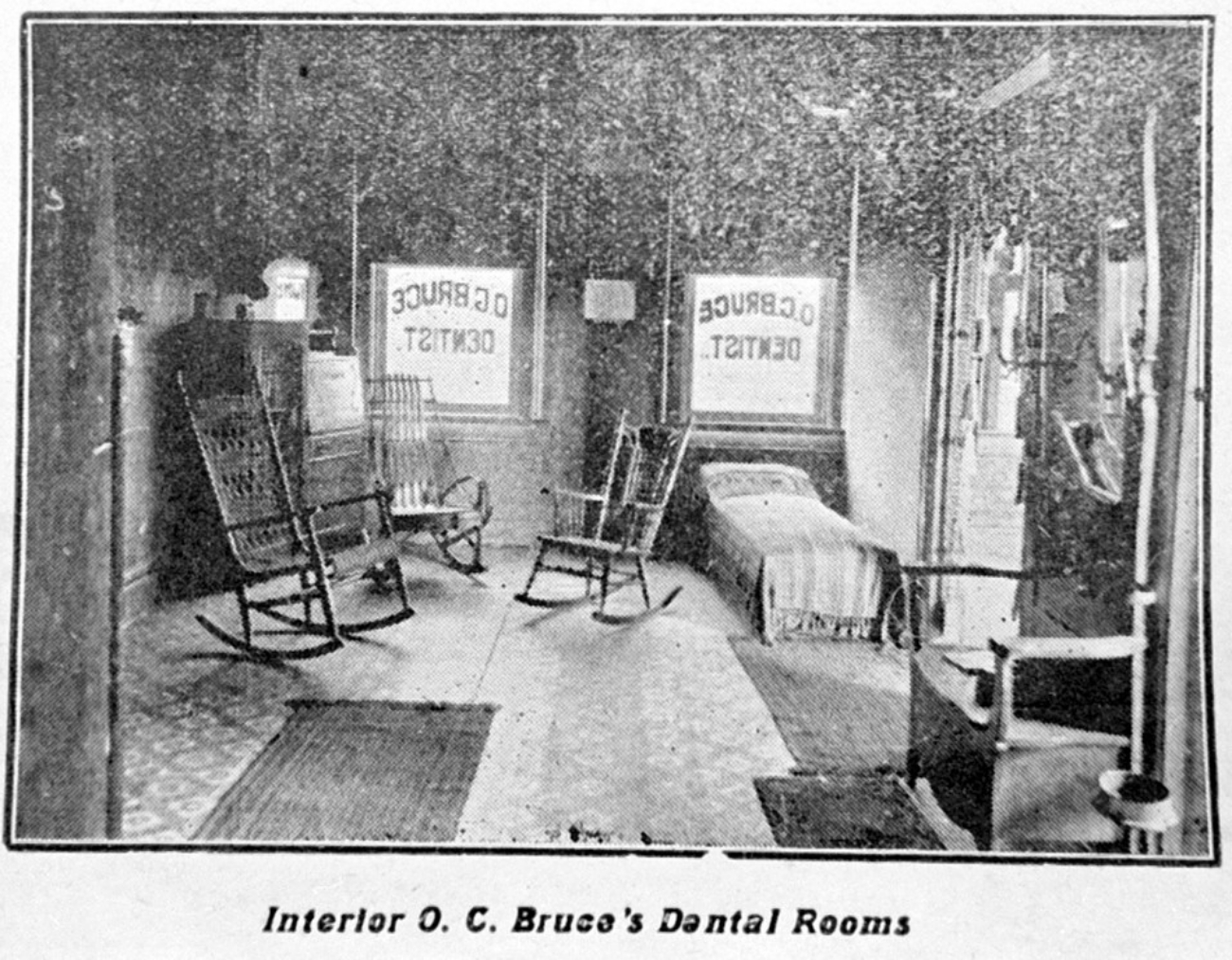
It’s unclear from the photo, but it appears that the dentist office above had rocking chairs as their exam seating. There’s also a day bed should the patient need to be fully reclined.
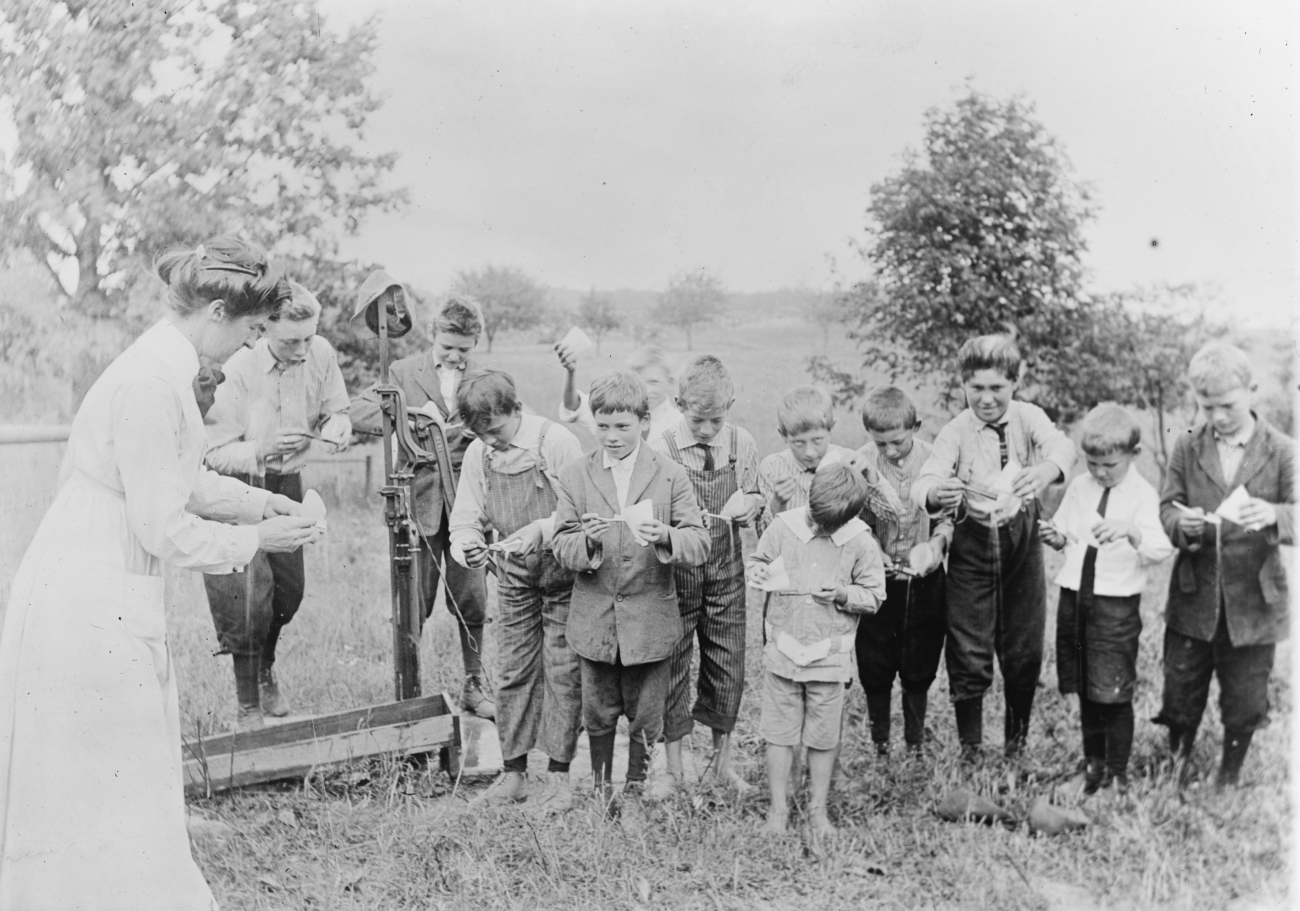
At the time many people would have not had a great dental routine. These children in the early 1900s are learning (some of them for the first time) how to apply tooth powder to their toothbrushes and how to brush their teeth at the local water pump. Preventative care was not necessarily a part of dental care in the early years.
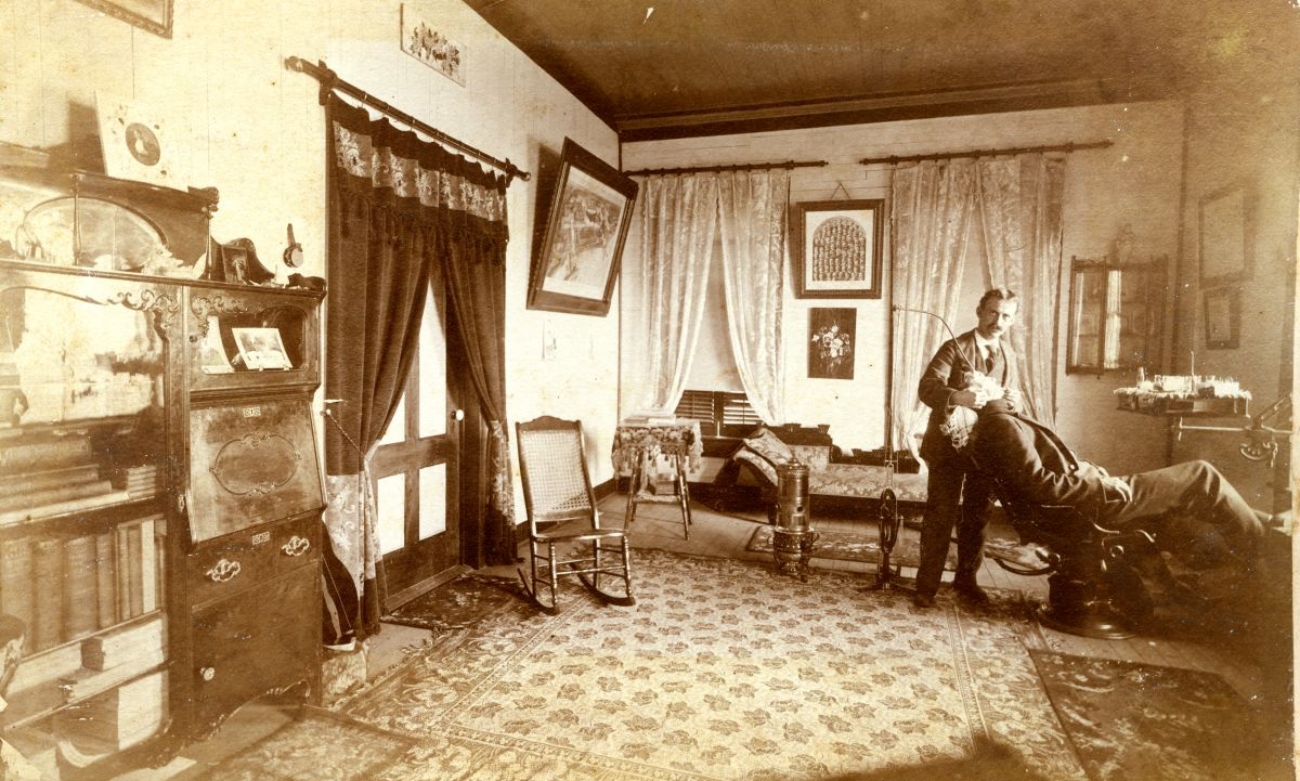
The dentist chairs back then could be quite uncomfortable, as the patient’s relaxation was not as big of a consideration as it is today.
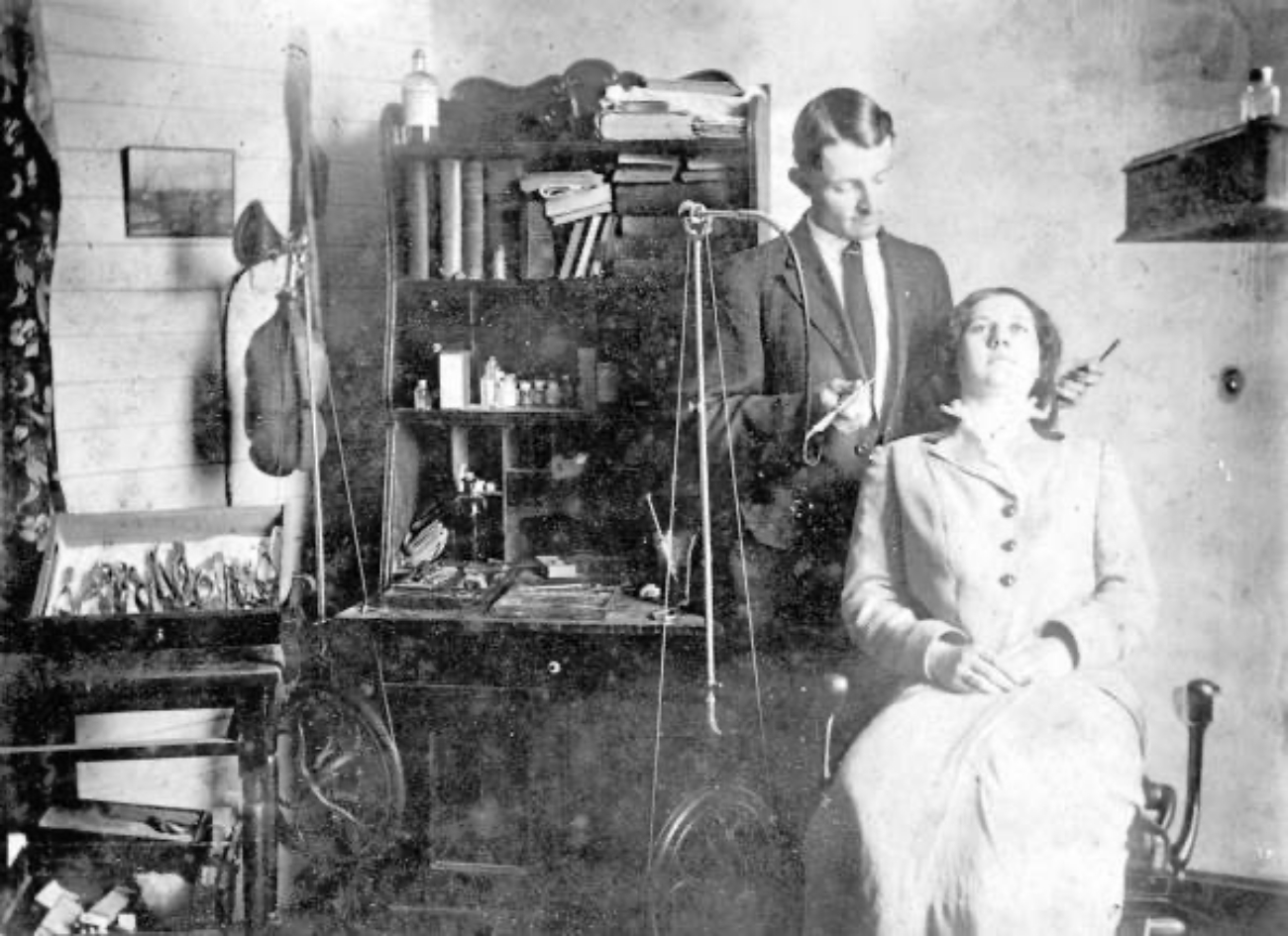
Note on this archival photo above: “Dr. E.N. Atkins working on his sister-in-law, Bertha Jones Atkins, in his office in the Boggs Building. His equipment was hauled by horse and buggy to surrounding communities. Extractions with pain killer was $2.00. Without painkiller $1.00.”
Nitrous oxide was invented in the late 1700s, but it wasn’t used in dentistry until 1844. What became known as laughing gas has helped many patients over the years, but as the note above states, the use of pain relief was optional and cost extra. It does make you feel for those who could not afford the gas and had to endure the procedures without any relief at all.
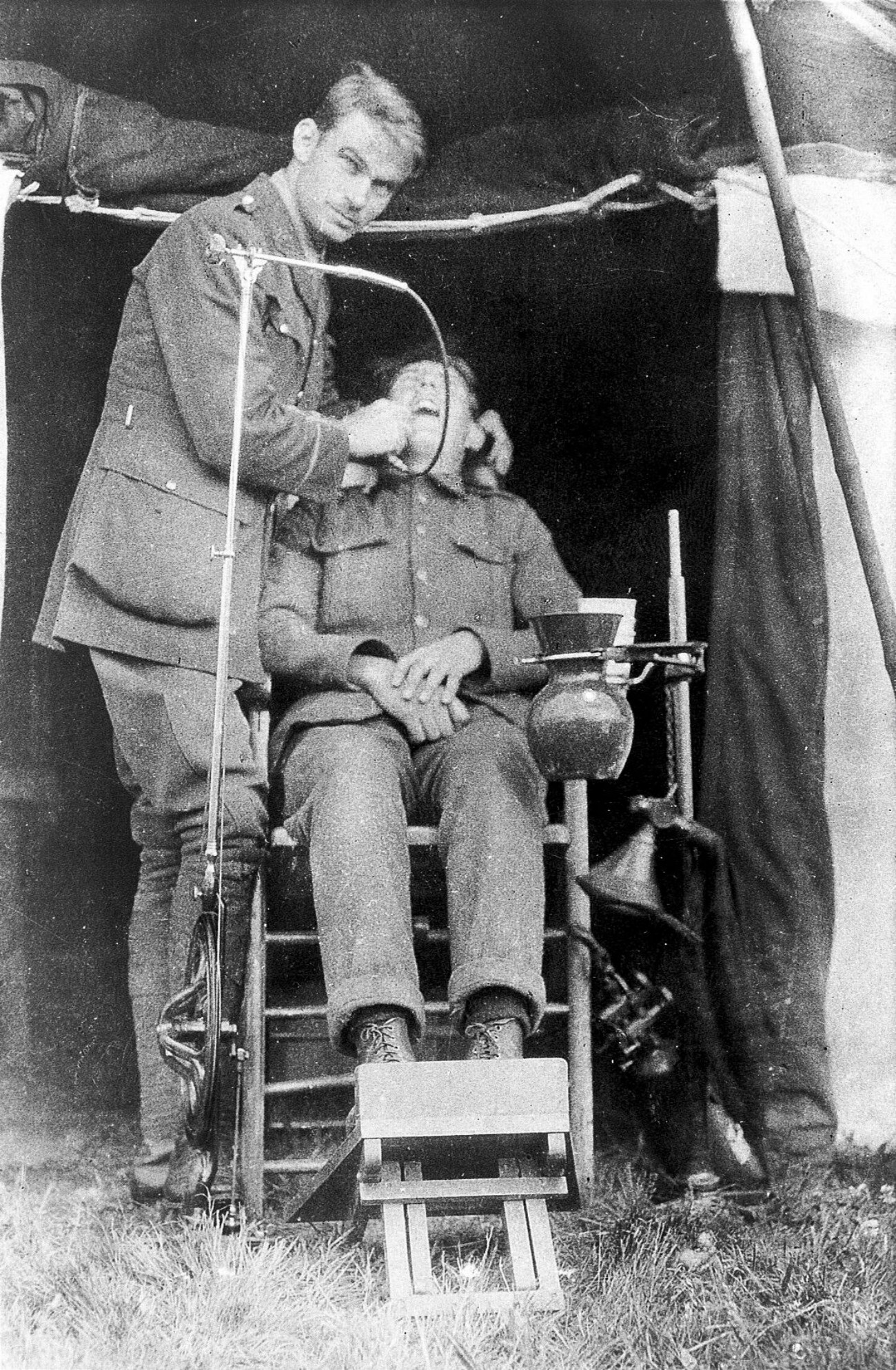
Extractions and dental care did happen on the battlefield as well. We can only imagine how painful an scary it would have been. But, the option to let a rotten become infected and cause great harm or even death made the choice clear. A bad tooth has got to come out or at least have the cavity drilled and filled.
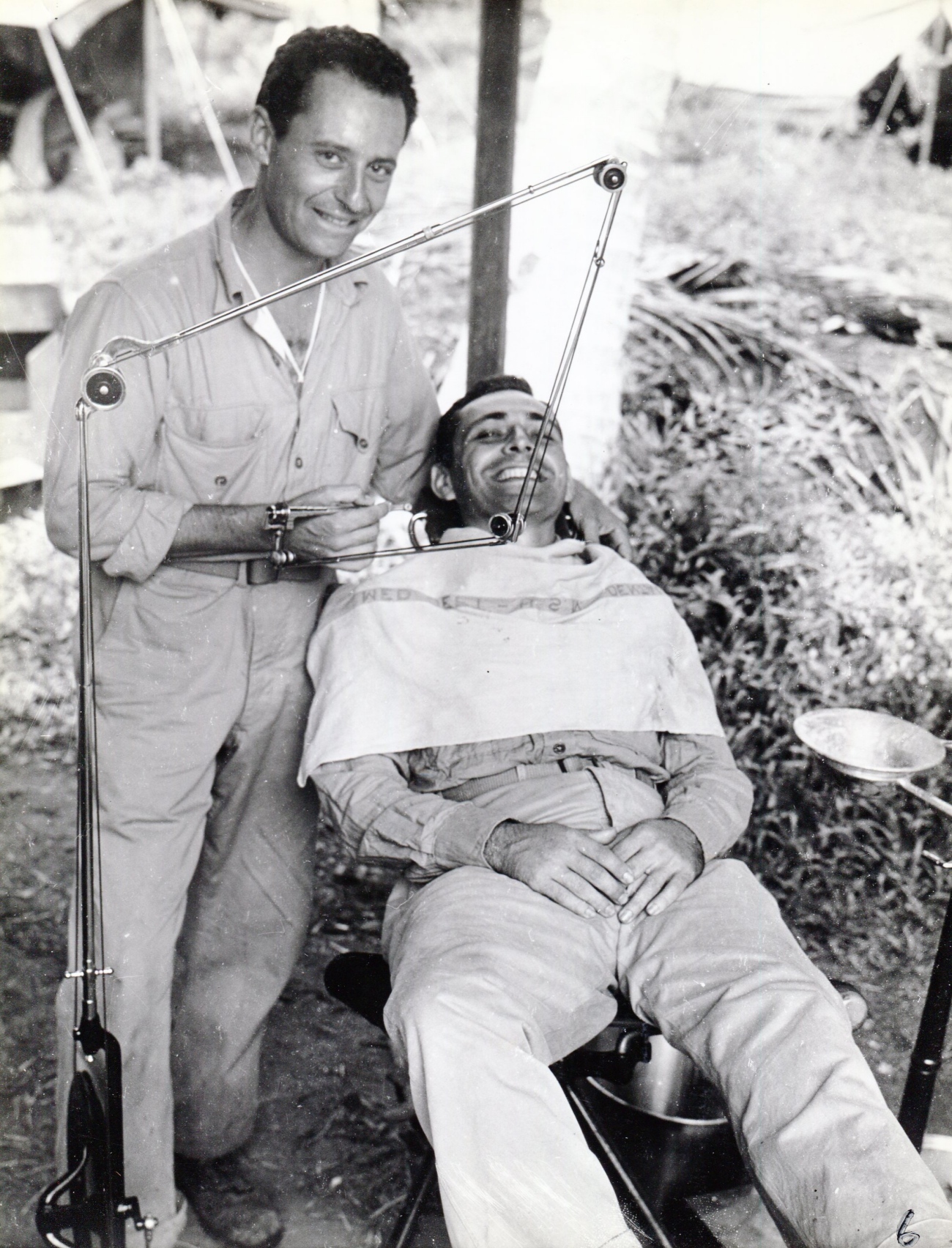
The note on this photo from WWII is that drill was foot operated, presumably meaning it was not only controlled by foot, but also powdered by foot in the same way a treadle sewing machine worked.
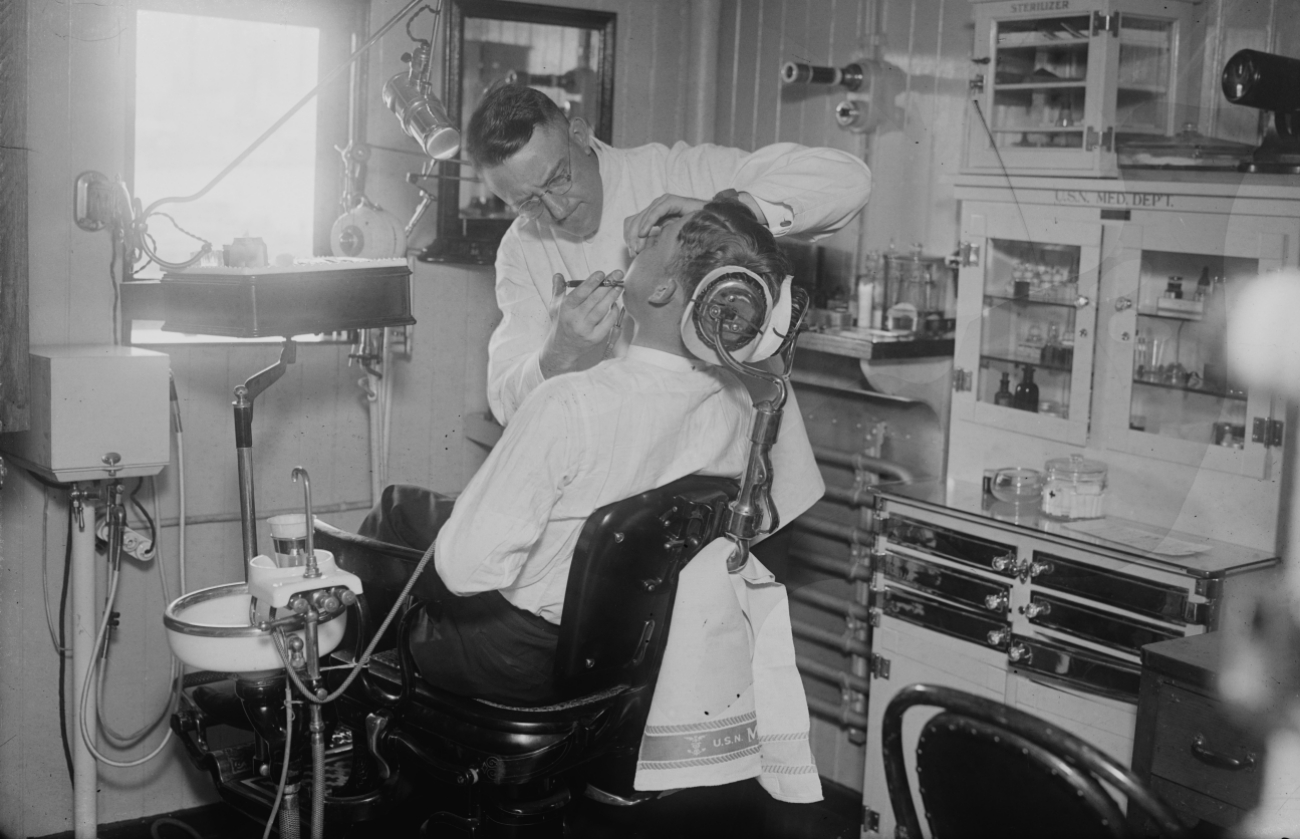
The dentist above is working on the USS Comfort, a hospital ship in operation during and after World War I. The room looks clean, but just imagine getting work done on a moving ship.
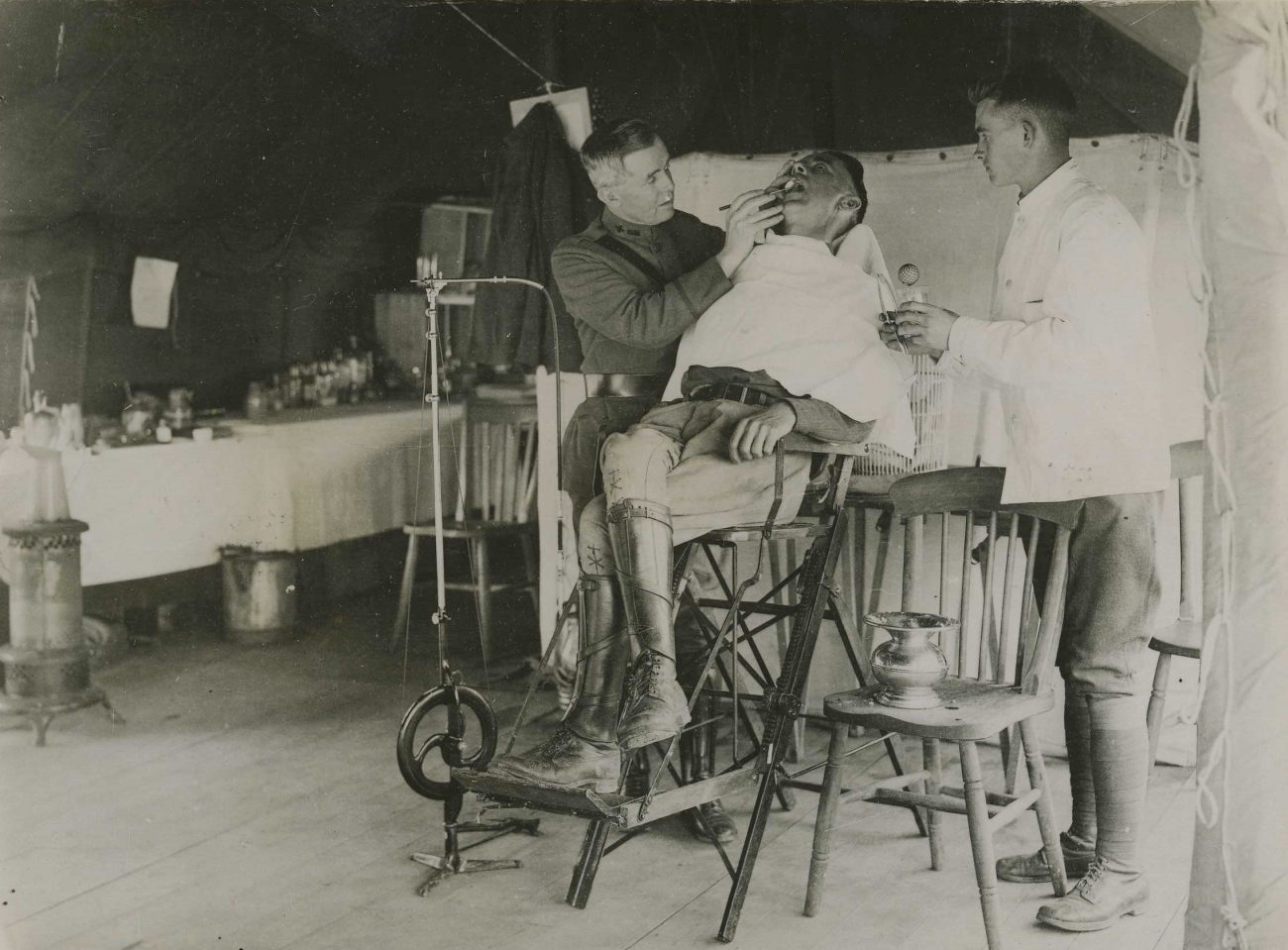
From WWI again is a photo that shows how the drill worked, with no wires for electricity since this was a Red Cross “dental hut” near the war front. Notice the assistant standing nearby with a pair of extractors and the spittoon on the chair near the patient.
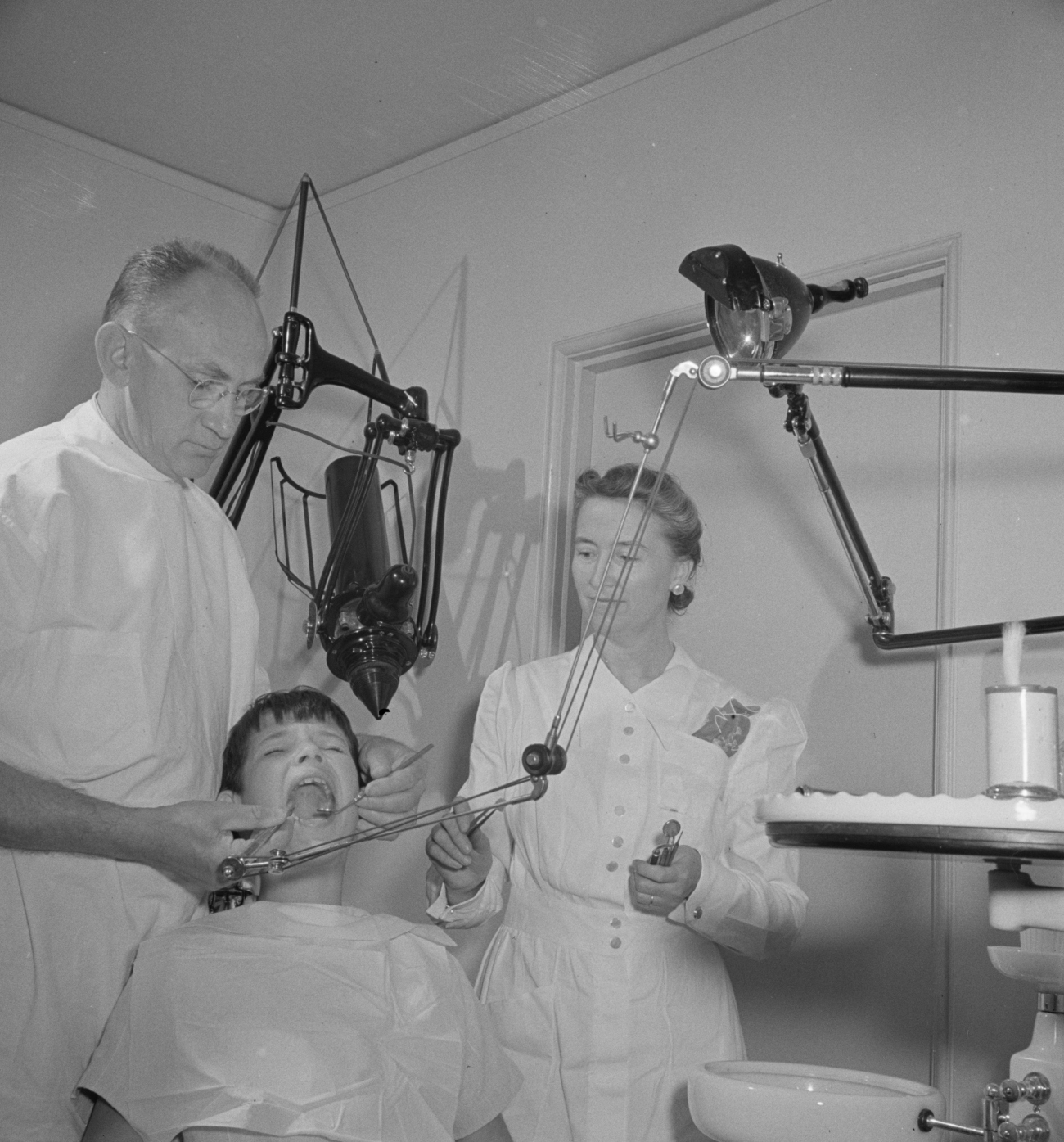
By the 1940s many dental practices started to look more like what we know today with an overhead drill, chair-side sink to rinse at, and more comfortable chairs. Thank goodness for the modern comforts!
More to Explore
SKM: below-content placeholderWhizzco for DOT