
When the Road Belonged to Oldsmobile: A Tribute to the Last Big Sedans
From driveway status symbols to cross-country cruisers, Oldsmobile’s late-’70s sedans were one of the last big cars that felt like an occasion every time you closed the door.

The memory begins with a soft thud — that thick, satisfying door close that silenced the street outside. You sink into a broad bench, arm on the windowsill, the dash stretching away like a horizon. Out front, a Delta 88’s long hood catches the sun; out back, the trunk looks ready to swallow a week’s worth of luggage and a picnic cooler besides. It wasn’t just transportation. In those late-’70s Oldsmobiles, family errands were fun because you wanted to be in the car.
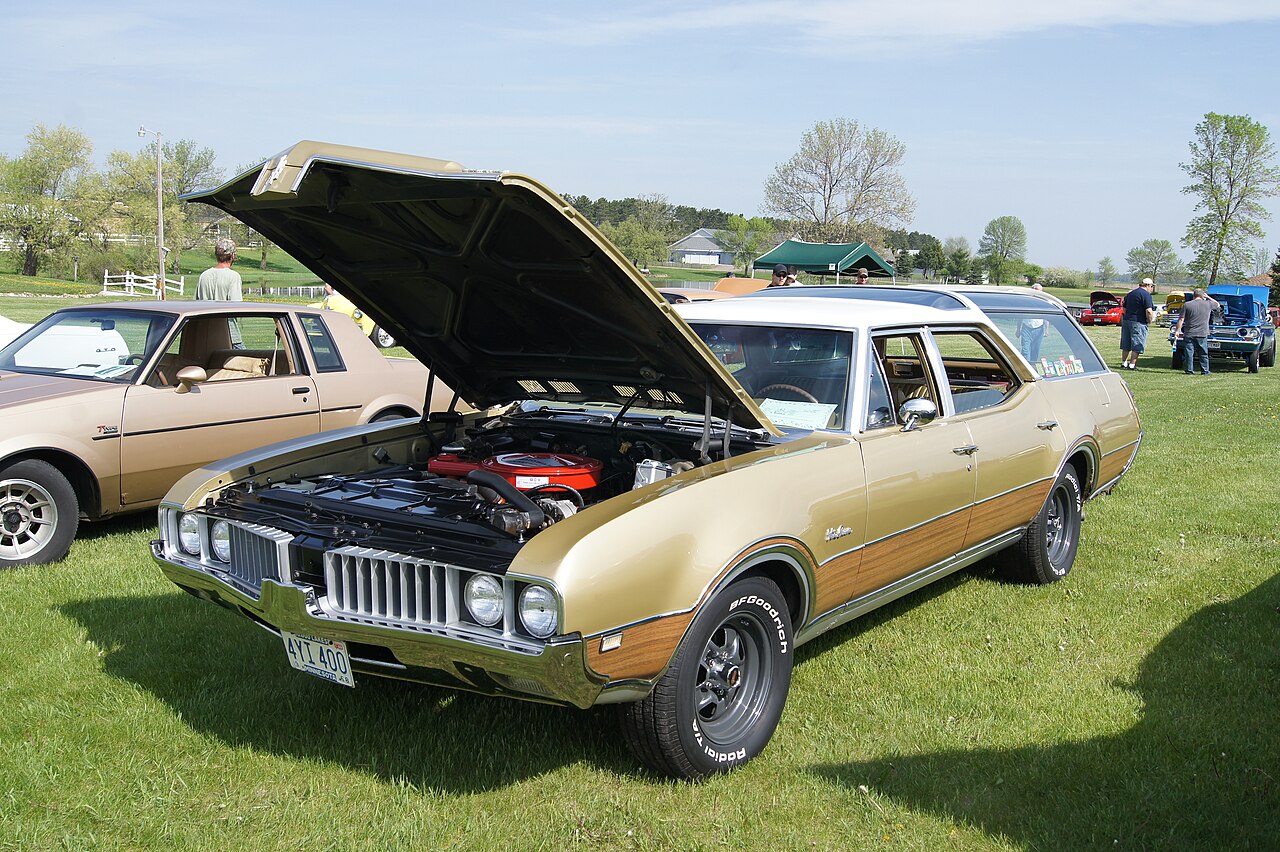

At the time, America’s carmakers were navigating oil shocks, new emissions rules, and a car-buying public pulled between thrift and comfort. Oldsmobile managed to sell a vision of both: big-car serenity without the bank-busting price tag, and a sense that a plush sedan could still be the center of family life. Looking back, it was the last stretch when a full-size family sedan could command cultural attention as well as healthy showroom traffic — and the Oldsmobile was right in the middle of it.
The Big Presence, the Gentle Ride
What people love to remember is the feel. The late-’70s Delta 88 and Ninety-Eight Regency delivered that soft, unruffled ride American buyers had grown up expecting. Steering was light, the wheel big in the hands, and the suspension tuned for glide more than hustle. The cabins felt like living rooms in motion: tufted fabrics, deep cushions, door armrests you could actually lean on. Even the quiet had a quality to it, a low, contented hush that invited conversation.
Oldsmobile’s flagship, the Ninety-Eight Regency, leaned into that experience. Its long, formal lines said grown-up luxury, while the interior met the promise with rich fabrics and what felt like more legroom than many apartments could boast. And while the car felt like indulgence, buyers also found a practical side. Factory literature of the period emphasized space you could use — wide trunks for family road trips and interiors planned around real people with coats and bags, not just glossy brochure photos. The result was a car that made Sunday drives and holiday hauls feel effortless, even elegant. Period materials touted EPA estimates of about 22 mpg highway for V8-powered Regencys, an unexpected figure for something so plush and substantial.
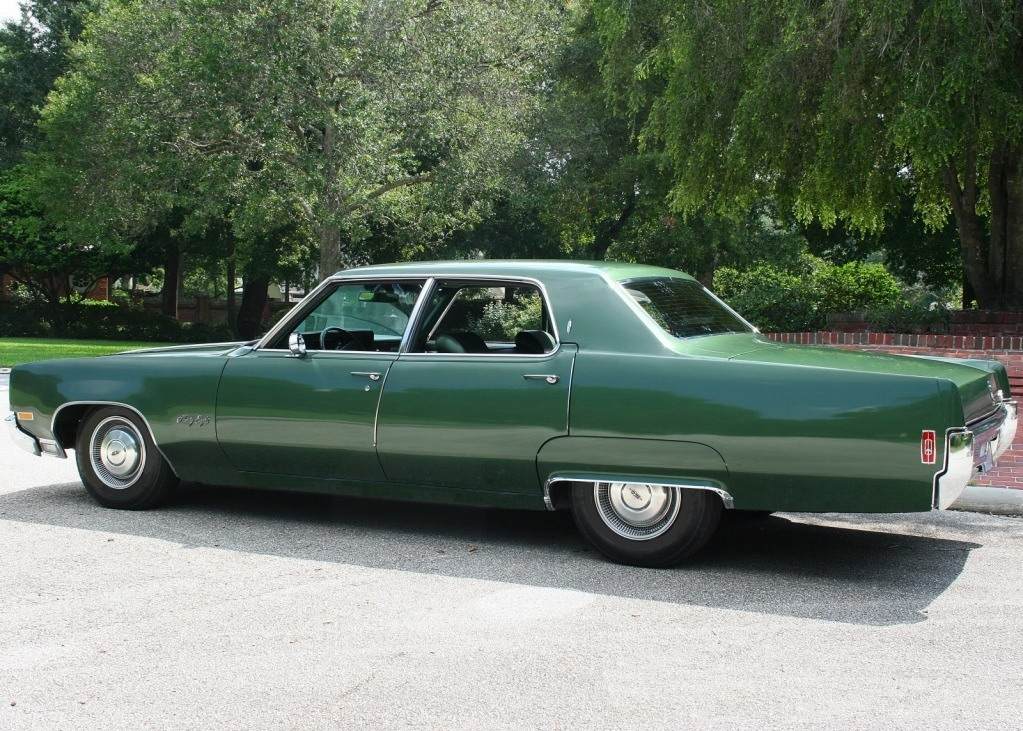

Under the hood, Oldsmobile’s smooth “Rocket” V8 lineage still set the tone. Depending on trim and year, these full-sizers could be had with everything from a well-mannered 350 to a big 455 cubic inch engine earlier in the decade — powerplants known more for torque and easy drivability than headline-grabbing horsepower. That balance, as one retrospective notes, helped quietly set the standard for full-size sedans in an era when raw output was being reined in, but the American highway still called for long, confident strides.
Downsized, Not Diminished
The turning point came in 1977, when General Motors trimmed its big-car lineup stem to stern. Bodies shed serious weight, yet somehow the tape measure inside told a different story. Rear-seat legroom and headroom held steady or even grew, and trunks stayed usefully cavernous. For many owners, the first test drive of the newly lean Delta 88 felt like a revelation: the familiar ride and quiet remained, but the cars were easier to park, thriftier at the pump, and more responsive to a gentle nudge of the throttle. As the brochures liked to say, the engineering had done its homework.
The change didn’t erase what people loved; it distilled it. Big Oldsmobiles still looked stately gliding up a driveway, still felt like a small ceremony when the keys turned. And if the badges on the fenders began to share space with economy-minded gear — smaller-displacement V8s, eventually even V6 options — the experience behind the wheel kept faith with what buyers expected from an Olds: calm, comfort, and that sense of confident abundance.
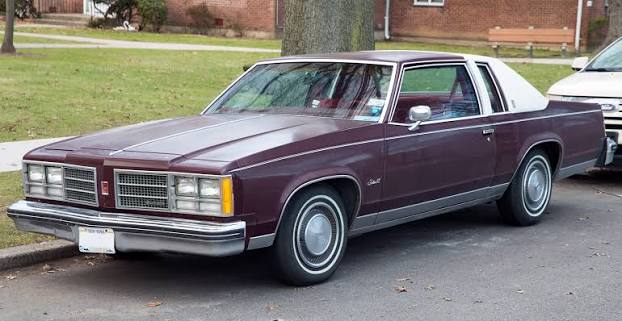

Context matters here. The 1970s had taught American drivers to ask new questions about fuel and value. Oldsmobile’s answer was to keep the spirit of the full-size sedan alive while shaving weight and smoothing the edges. The result was a generation of cars that managed to feel both responsible and indulgent at once.
The Long Goodbye — And Why We Still Smile
By decade’s end, the road was tilting toward smaller imports and changing tastes. Full-size sedans would carry on into the 1980s and beyond, but their cultural moment was passing. Oldsmobile itself would continue to evolve before the brand’s final curtain in the early 2000s. Yet those late-’70s flagships remain vivid in memory because they represent a last, confident chapter of American big-car optimism.
Ask around at a cruise night and you’ll hear the same stories: the family vacation that felt as smooth as the interstate itself; the prom-night photo taken against the regal sweep of a Ninety-Eight’s quarter panel; the afternoon a neighbor tossed you the keys to a Delta 88 and told you not to be late. These are not just car memories — they’re life memories with an Oldsmobile-shaped frame. In a changing decade, Oldsmobile’s late-’70s sedans gave people exactly what they wanted from a big American car — presence, peace, and a promise that the journey could feel as good as the destination.
Maybe that’s why, when one of these land yachts glides by today, faces still turn. We’re not just seeing a car. We’re watching a last great era float past, humming quietly, leaving a comfortable wake of memories.
For a snapshot of that moment — from showroom promises to engineering pivots — it helps to remember that GM’s 1977 downsizing didn’t end the big-sedan dream so much as update it for a nervous decade. Oldsmobile, more than most, made the transition feel like coming home.
More to Explore
SKM: below-content placeholderWhizzco for DOT