
When the Bathroom Hummed: Bonnet Dryers, Rollers, and the Ritual of Big Hair
A tender look back at the at-home beauty routines that turned ordinary bathrooms into little salons — complete with bonnet caps, big rollers, and that unmistakable dryer hum.
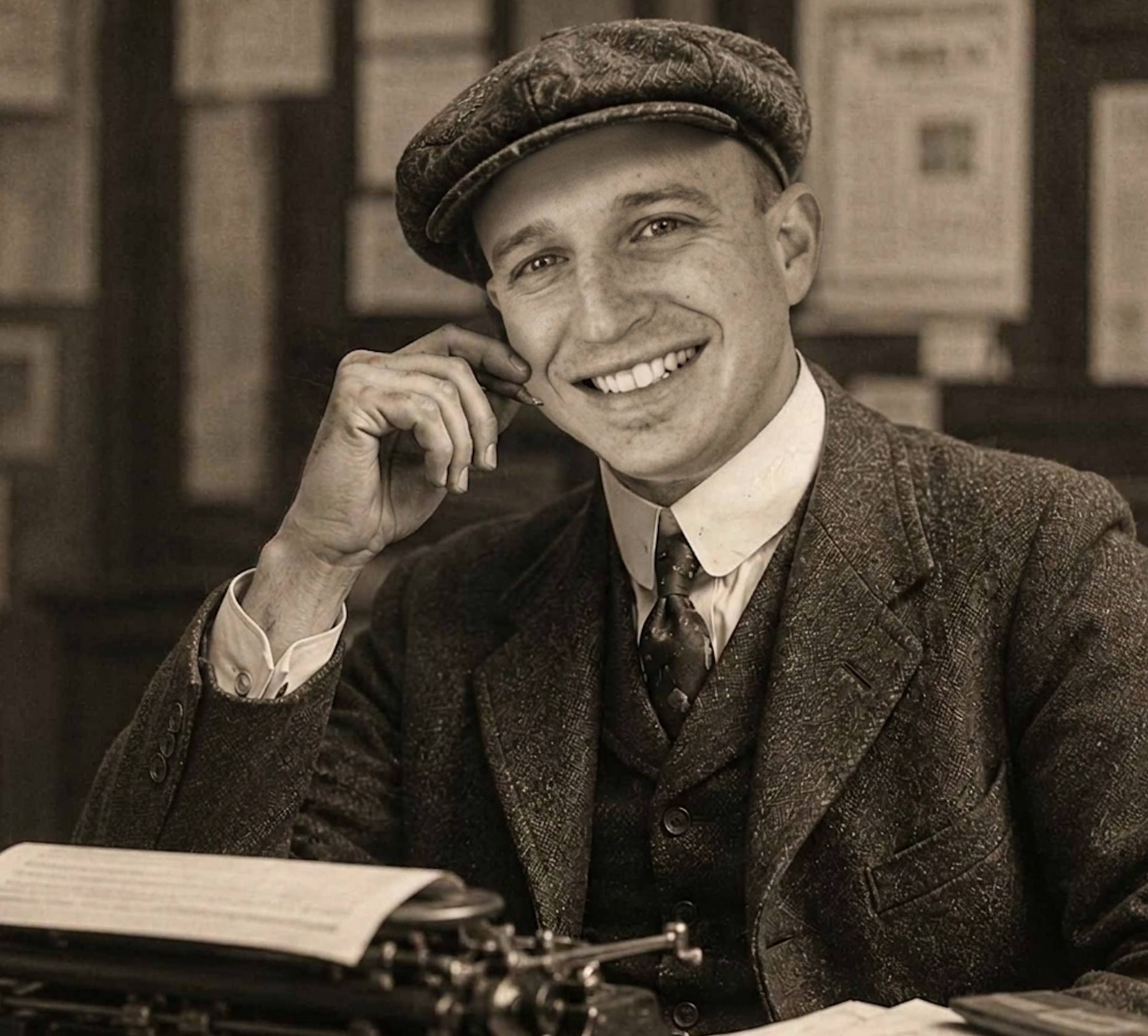
Picture a Saturday night in 1966: the bathroom door is propped open, the mirror’s fogged just a touch, and a gentle whir fills the hallway. Under a pale pink bonnet cap, a crown of jumbo rollers warms as setting lotion gives off its clean, slightly sweet scent. A magazine lays open on the vanity; a coffee percolates in the kitchen. Somewhere between chores and chatter, a hairstyle — and a real confidence — is being set into place.
The Soundtrack of Getting Ready
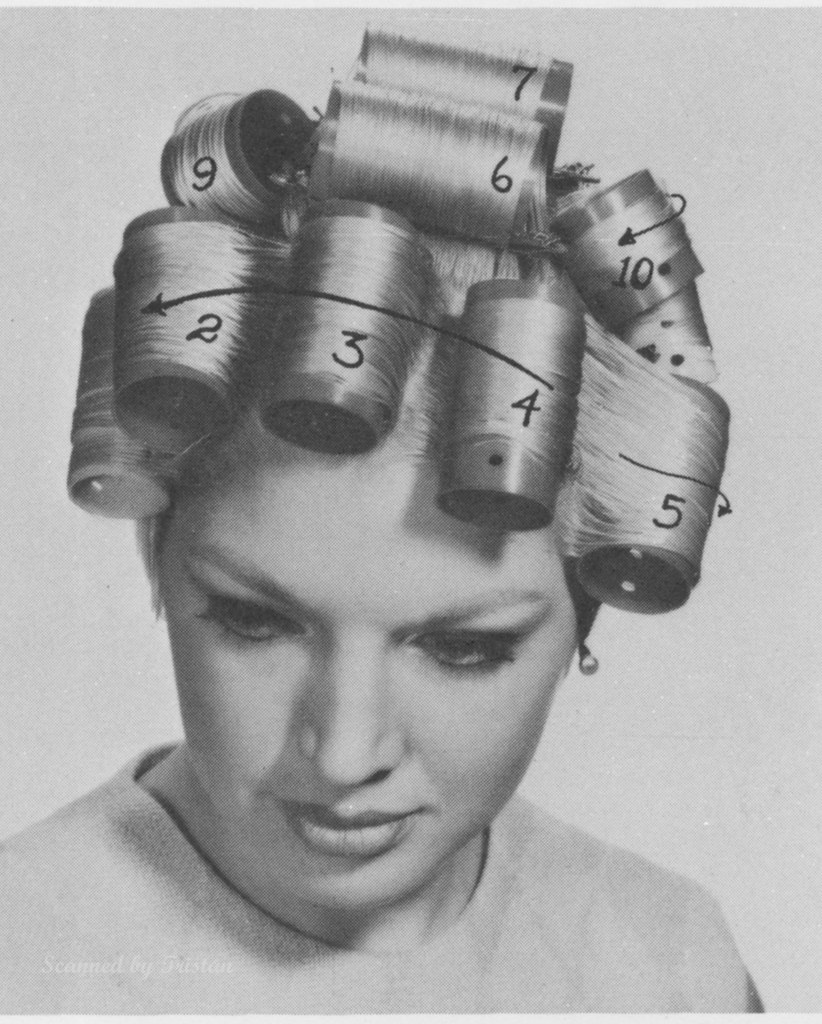
At the time, a hooded dryer felt as practical as a toaster and nearly as essential. The soft-bonnet models packed neatly into tidy cases, the hose coiling like an extension cord to a cap that puffed gently with air. Heat dials ticked across low to high, and the newest bonnets were roomy enough to sit comfortably over the giant rollers needed for bouffants and beehives. Women learned the rhythm of it: set, clip, cap, and hum. The hair routine was long enough to fold laundry, write a letter, or touch up a manicure while the curls took shape.
It was a world of small strategies. If you had fine hair you used smaller rollers and a lower heat; coarser hair could handle a bit more warmth, the dryer turned up just a notch. Some swore by plastic brush rollers, others kept a drawer of foam ones for sleeping. And for the truly innovative bouffant, there were famous household hacks. Many young American women pressed empty juice cans into service as makeshift jumbo rollers when seeking a big, wavier look.

How the Home Salon Arrived
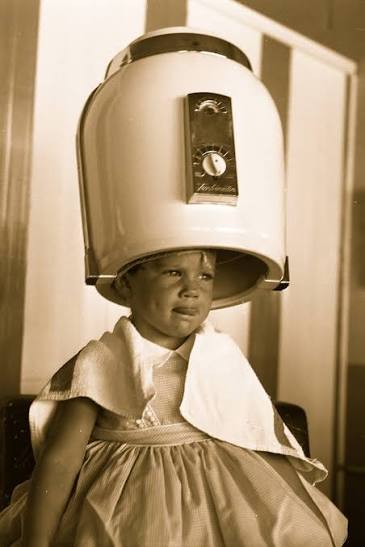
This kind of hair care started in real salons, where sturdy hooded dryers — first metal, later plastic — entered widespread use in the 1930s. Postwar, that sit-and-read-a-magazine ritual became a social hour as much as a beauty treatment; conversation and the warmth of a steady machine felt as comforting as a fireplace.
Bringing that experience home took a clever leap. In 1951, General Electric introduced a portable soft-bonnet hair dryer — a cap that fit over a head full of rollers, powered by a small motor you could carry from room to room. Soon, brands were competing on comfort and convenience. Buyers wanted softer caps, quieter motors, and, perhaps the most important, even heat. By the turn of the 1960s, the home dryer had become standard, even costumizable. Designers dressed some bonnets in jaunty prints, and cases traveled like chic little hatboxes.
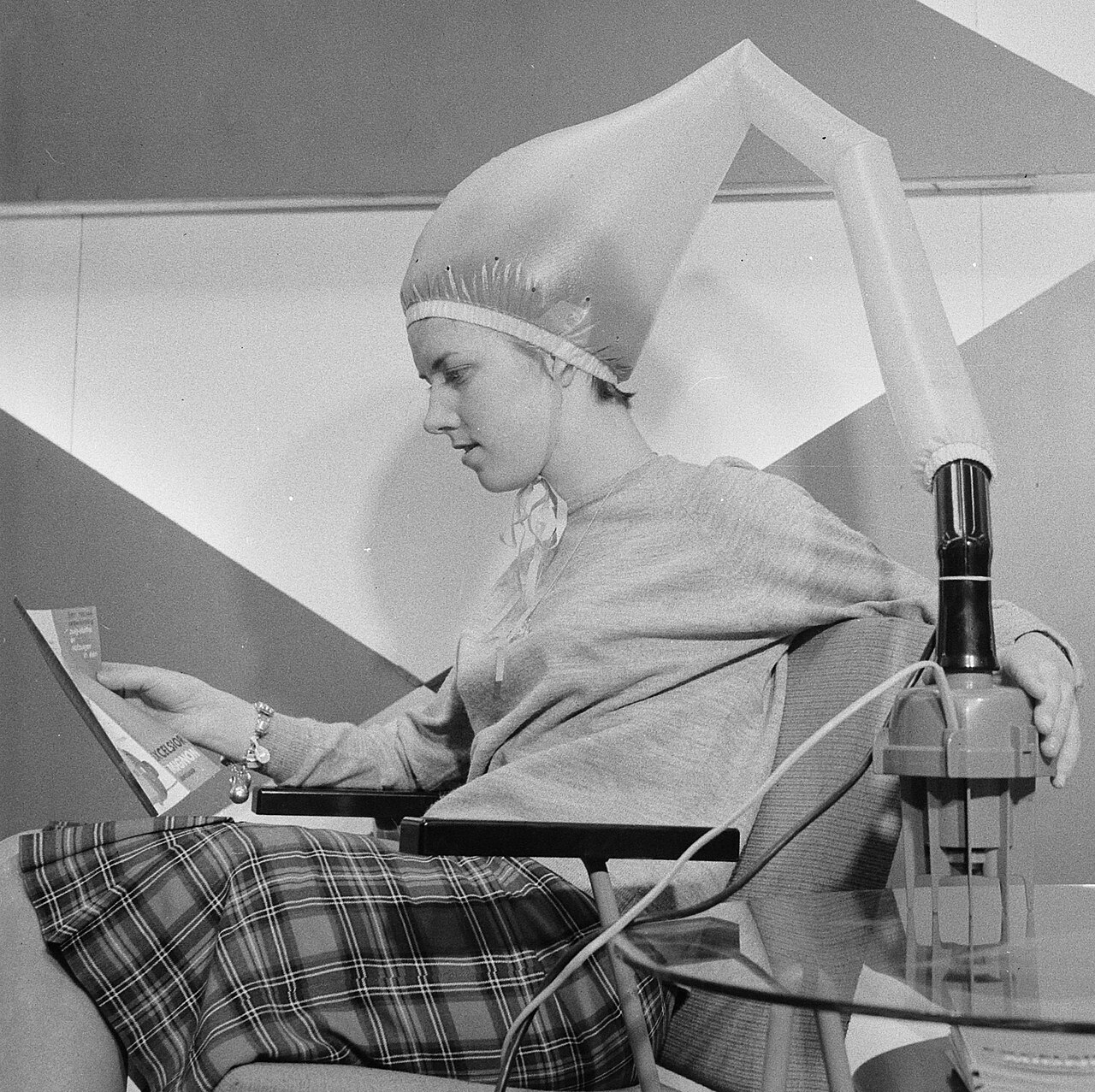
What made the hooded dryer stick for consumers was the gift of time. Instead of sleeping on hard rollers, many could set hair after dinner and be ready by bedtime. The machine’s warm hum emptied out part of the day — enough to read to a child or phone a sister — while still keeping up a hairstyle that felt, for a moment, movie-star polished.
From Bouffant Dreams to Feathered Freedom
Through the 1960s, rollers got bigger and bonnets roomier, and the weekly routine settled in: shampoo on Friday, set and dry, tease and spray for height that could last a few days with clever pinning. Late in the decade, some home units added mist features to refresh a set without a full wash, and a few even borrowed spa language with facial-steam attachments. It was a promise of full-package care all placed into one tidy appliance.
Then came a new mood. By the mid-to-late 1970s, hair moved toward looser, swingier shapes — the kind that depended more on a round brush and air directed by hand. As styles shifted, the handheld blow dryer took over American bathrooms through the 1970s, and bonnet dryers eased into the background. They never vanished — plenty of roller devotees kept theirs — but the center stage had changed.
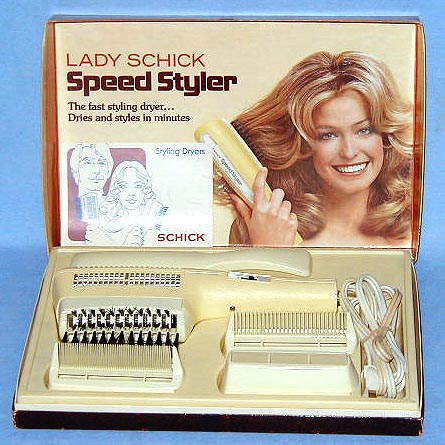
Looking back on the change, it feels less like a loss and more like a chapter ending. The bonnet years taught a delightful patience of waiting without really waiting, letting a machine do its work while you did yours. Many remember the sound as the soundtrack of growing up — a mother under the cap reminding a child to finish homework, a teen practicing a cat-eye flick in the mirror, the phone tucked between shoulder and bonnet as gossip and heat swirled together.
Today, bonnet attachments and standing hooded dryers still have their fans, especially for roller sets and deep-conditioning days. However, the deeper nostalgia isn’t only about volume or shine. It’s about the ritual. It’s about the way ordinary bathrooms turned into little salons, and everyday women became their own stylists with a few tools, a little know-how, and the gentle hum that said: Just a few more minutes, and you’ll be ready to face the world.
More to Explore
SKM: below-content placeholderWhizzco for DOT