
The Couch With a Secret: How Hide‑A‑Beds Made Homes Feel One Room Bigger
It always began with a tug on a hidden handle. A soft shudder, a glint of cool metal, and suddenly the lamplit, paneled living room turned into somebody’s bedroom for the night.

For so many families from the 1940s through the 1970s, the Hide‑A‑Bed wasn’t just a piece of furniture. It was a promise that there’d be room for Grandma at Thanksgiving, for the cousins on a cross‑country visit, or for the best friend who missed the last bus. Looking back on those times bring about the kind of memory that is rich with small details: the rustle of a chenille bedspread stored in the linen closet, the click of a latch releasing, and that triumphant moment when the frame settled into place and the living room transformed. With the Hide-A-Bed, there was always space for one more.
Making Room When Space Was Tight
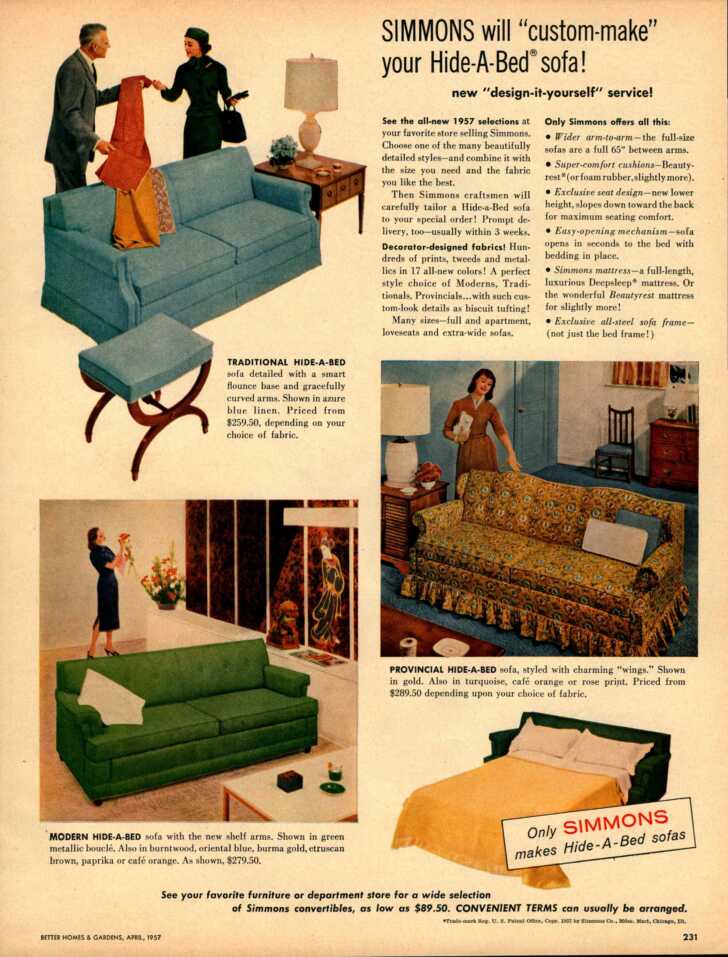
During the mid-century (as it is for many today), space was a family’s greatest puzzle. The Great Depression and then World War II nudged so many households into smaller apartments or modest starter homes where every square foot mattered. The idea of tucking a real mattress into a sofa wasn’t brand‑new, but it hit its stride when the Simmons Mattress Company introduced the Hide‑A‑Bed in April 1940, a fold‑out that let sleepers lie lengthwise like in a regular bed.
Convertible sofas quickly proved themselves less a novelty than a necessity. Plenty of entrepreneurs built businesses on the promise that one room could do the work of two. After the war, returning GIs and baby‑on‑the‑way plans met a national housing crunch. Ads leaned into that reality, promising your home could feel as if it had an extra bedroom without the need for a new mortgage. The practicality sold itself: in a small place with a big heart, a well‑made sofa bed was simply the smartest thing in the room.
Early designs showed off real variety. There were Chippendale silhouettes for traditional parlors, clean Lawson lines for tidy bungalows, and later, boxy tuxedo arms to match the crisp optimism of the mid‑century look. By the early 1950s, the selling point wasn’t just the magic trick but comfort; sleeping on a real innerspring mattress instead of across cushions was something to brag about.
From Tweed to Floral: A Style for Every House
Through the 1950s and 60s, Hide‑A‑Beds marched neatly across catalogs and showroom floors. Apartment dwellers gravitated to compact loveseats; suburban families eyed full and queen sizes for hosting in a den or rec room. Fabrics told the story decade by decade; tweed and velveteen in the 50s, fresh stripes and golds in the 60s, and the full bloom of 70s florals alongside earth‑tone leathers. Some models paired the sofa with a well‑known mattress upgrade, a wink to shoppers who’d tested a Beautyrest at a department store and wanted that same springy sleep folded into their living room.
By the early 1970s, choice seemed limitless. Catalogs bragged about hundreds of fabrics and scores of models, from Early American to Mediterranean shapes, priced from a few hundred dollars into four figures depending on size and finish. The ads were witty and relentlessly practical, a gentle reminder that when friends decided to stay after the big game, or when your brother’s flight got canceled, the nicest looking sofa was the one that could rise to the occasion at bedtime.
And rise it did, in busy houses everywhere. Teenagers sprawled there for slumber parties; holiday guests shrugged into borrowed pajamas; an uncle with a snore claimed the den so the baby could sleep down the hall. People remember the small sensory snapshots: the soft give of the mattress, the slight metallic scent of the frame, the neatly stacked blankets waiting in a cedar chest. Few objects wore the role of good host quite so well.
Why the Hide‑A‑Bed Faded
What changed? Nothing exactly, but a new way of living. From the 1980s on, many new houses were built bigger, with proper guest rooms. Long road trips increasingly ended at motels tucked off the interstates. Motor homes rolled into family driveways for reunions. And at home, lighter solutions such as futons and air mattresses offered a quick fix without the heft of a metal frame. In time, even the makers admitted that futons and air mattresses chipped away at the market for the traditional fold‑out.
Of course, comfort was part of the debate all along. Some sleepers swore by the hidden mattress; others remember a stubborn center bar. Yet even that disagreement is part of the charm now. The Hide‑A‑Bed was a good‑faith solution in a practical age, a way of saying yes to one more guest without fretting over square footage.
A Core Memory…and Why We Still Smile
It’s easy to see why we’re nostalgic. The Hide‑A‑Bed made hospitality effortless, even in modest homes. It hid its extra kindness in plain sight. And while today’s sleeper sofas are sleeker and the mattresses kinder on the back, the old stories remain: basements turned into bunkhouses, cousins giggling past curfew, that gentle household rhythm as the living room took a bow and the bedroom took the stage. Just as it was in 1957, sleeper sofas do more than save space. They make room for our loved ones, and that’s a trend that will never go out of style.
More to Explore
SKM: below-content placeholderWhizzco for DOT