
Pull the String, Hear the Magic: How Talking Dolls Won 1960s Hearts
A simple tug, a tiny whirr, and suddenly the room had a new voice.

Picture a living room on Christmas morning, 1962. Wrapping paper drifts like confetti, the smell of pine mixes with the warm hum of a tube TV, and a little girl pulls the ring on her brand-new doll. “I love you,” the doll says, in a small, certain voice. Adults laugh, someone claps, and a new ritual is born. Ask a question, pull the string, wait for the answer, and build a friendship from there.
At the time, play was a wide-open frontier with few rules and imagination led the way. Wish lists were dog-eared from flipping toy catalogs, and a doll that could actually talk felt like something just shy of magic. It wasn’t just a feature; it was an invitation to believe.
The Ring That Sparked a Conversation
Talking toys weren’t brand-new in 1960, but earlier attempts (19th‑century dolls with tiny phonographs, for example) were delicate, expensive experiments. What turned everything around was a sturdy pull‑string mechanism tucked into a child‑sized companion. When Mattel introduced Chatty Cathy around 1960, kids discovered a doll that answered back. Inside, a small record and spring-loaded coil took a spin each time a child tugged the ring, serving up a handful of short phrases at random. The unpredictability was the point; you never quite knew what she’d say next, which made every pull feel like a real conversation starter.
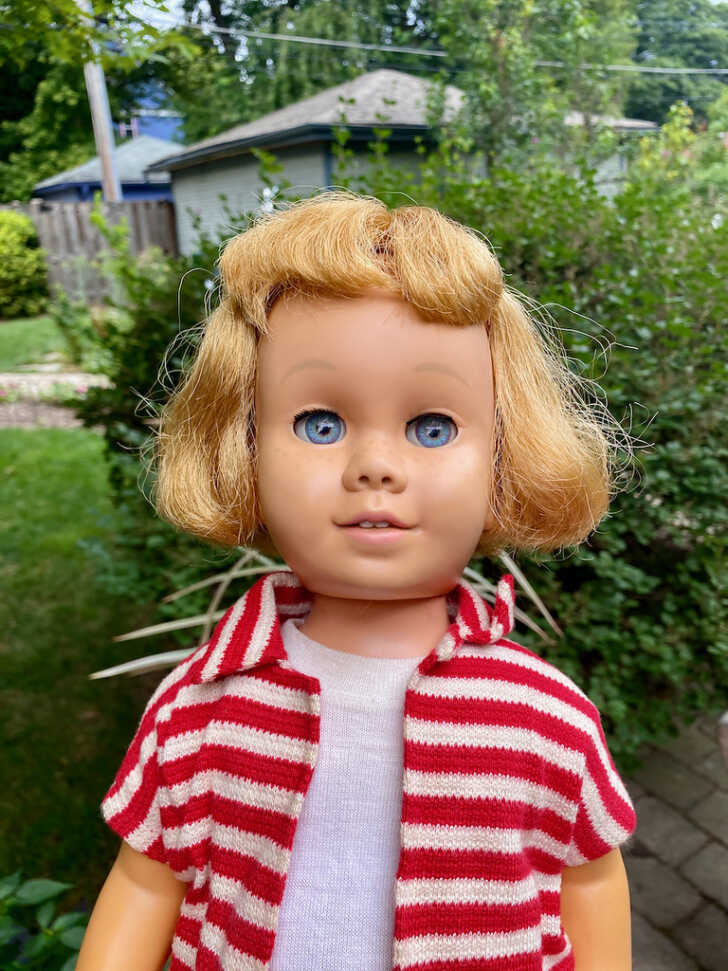
Voice mattered, too. It wasn’t a beep or a buzz but an actual performance. By the early ’60s, June Foray recorded the voice associated with Chatty Cathy, adding warmth and personality that turned a plastic face into a believable playmate. For many children, those simple phrases became the soundtrack of afternoons spent setting tiny tables, playing school, and telling secrets.
Success brought sisters and cousins. New “chatty” babies and brothers arrived, and then came the clever twist: a larger doll with swappable records that changed what she could say, like a friend with a thousand stories. Crossovers followed, turning familiar characters into talkative cuddle buddies. Television even lent its star power; one season you could bring home a talking Julia doll modeled on Diahann Carroll’s TV nurse or the bespectacled Mrs. Beasley from Family Affair. These weren’t just props; they were extensions of shows and stories kids already loved, all ready to chime in during make-believe.
From Catalog Pages to Living Rooms
Then came a quiet evolution. In 1964, a colorful wheel invited kids to choose instead of chance. With the See ’n Say, a pointer landed on a cow or a letter, and a pull of the string rewarded the choice with a sound or a phrase. It was, by many accounts, the first talking toy that let children pick a specific phrase by turning a pointer. Suddenly, the thrill of surprise made room for a new kind of agency—kids curated their own mini-lessons in animal sounds and simple words, one click at a time.
Of course, half the magic lived on paper. Catalog spreads glittered with tidy hair bows, tiny rompers, and accessory sets promising tea parties, pajama gossip, and birthdays that never had to end. Children circled their favorites, compared wish lists with friends, and practiced what they’d say back when those little voices finally came home.
When the Voices Faded, and Why They Still Echo
As sturdy as those pull‑string pals were, their hearts were still made of moving parts. After years of enthusiastic tugs, belts could dry out and snap, leaving dolls to quietly retire on closet shelves. By the end of the decade, a refreshed voice here and a new design there couldn’t quite stop the march of technology. The 1980s brought electronic voice chips, and the spinning records that once felt so futuristic gave way to tinier, more reliable circuits.
Yet the affection never really left. Some collectors tracked down reproductions in later years; others simply kept their childhood companions, even if the strings no longer worked. What kept the memory bright wasn’t a perfect mechanism, but the feeling of being answered. Those dolls taught kids to play host and caretaker, to ask and listen, to make room in their afternoon for another point of view, even a pretend one. The pull‑string voice was a prompt, but the conversations that followed were all child-made.

A Time to Remember
Looking back, it’s easy to see why a few small phrases could mean so much. In a world with fewer buttons to push, imagination filled the gaps—and a talking doll didn’t replace make-believe; it energized it. If you were lucky enough to open one on a birthday or a snow-dusted December morning, you probably remember that first tug. The ring clicked, the record spun, and a new friend said hello. Even now, somewhere between the crinkle of old catalogs and the hush of an attic, those tiny voices still have a way of being heard.
More to Explore
SKM: below-content placeholderWhizzco for DOT