

It’s Christmas morning, somewhere, around 1974. A small hand nudges a painted egg on the shag carpet. It tips, wobbles in a comical arc, then pops back to attention—undaunted. Cue the giggles. And then, of course, the nudge happens all over again.
For a generation of kids, that tiny magic trick was enough in the entertainment department. Weebles didn’t need batteries, sound chips, or flashing lights. They had a jingle in the air and a promise in the box—“they don’t fall down”—that felt true the moment you tried it.
The Clever Balance That Made Them Beloved
Parents saw a cheerful little figure; engineers saw a lesson in balance. Weebles debuted in 1971 under Hasbro’s Romper Room banner. The trick comes from a weighted base that never lets the toy surrender to a push. Tip one over and, as the toy’s center of mass is raised, gravity returns the toy to its original upright position. Kids didn’t care hugely about the how. They cared that it worked every single time. Science felt like magic.
Part of the charm was practical. In an era when toy safety was a growing topic at the kitchen table, Weebles were smooth, round, and gentle on furniture and foreheads alike. No sharp corners, no tiny bits to lose beneath the couch. The thunk-thunk of a Weeble rocking itself right-side-up quickly became its own kind of soundtrack in houses where the TV and the stereo were already competing for attention.
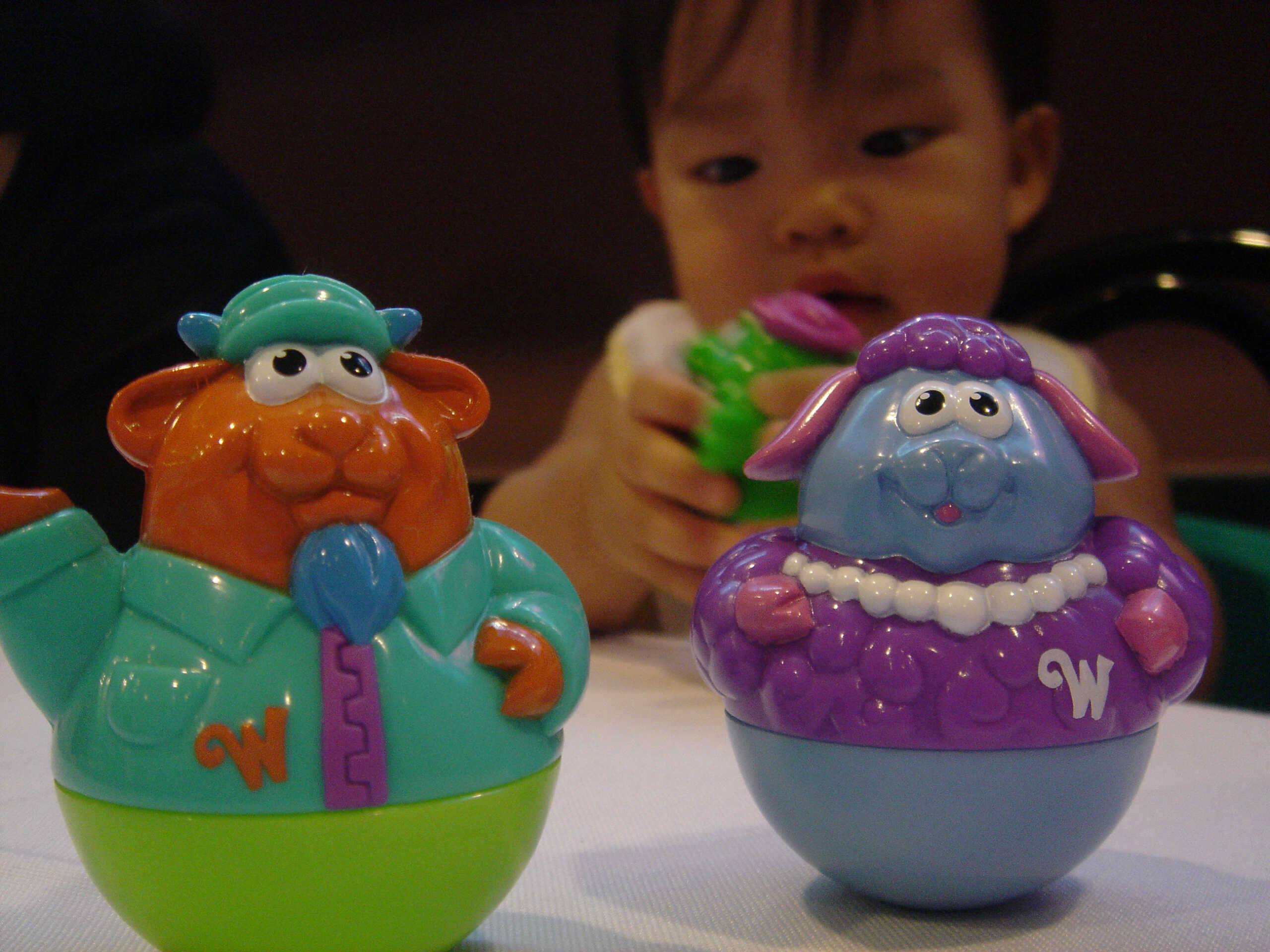
The toy’s aesthetic was Scandinavian in its simplicity. They had painted faces, bright colors, and a shape that felt friendly to little hands. It was easy to imagine each one as a character, and just as easy to start building a world around them.
Treehouses, Haunted Mansions, and a Whole Weeble World
The early playsets were the kind kids could set up in minutes and keep revisiting for hours: a family cottage, a treehouse with a basket elevator, a marina with tiny boats. The line soon exploded into a whole town—a western street, a circus, even a haunted house that, in many homes, turned into a favorite “lights off” game thanks to a glowing ghost and a mischievous witch.
Everything was scaled for those rounded bases. The seats were shaped like little crescents; the chairs rocked without tipping; even that famous treehouse “elevator” basket perfectly cupped to a Weeble’s bottom. It wasn’t just cute design. It was a gentle invitation to keep collecting, to add a campsite here and a car-and-camper there until your living room carpet looked like a tiny county fair.
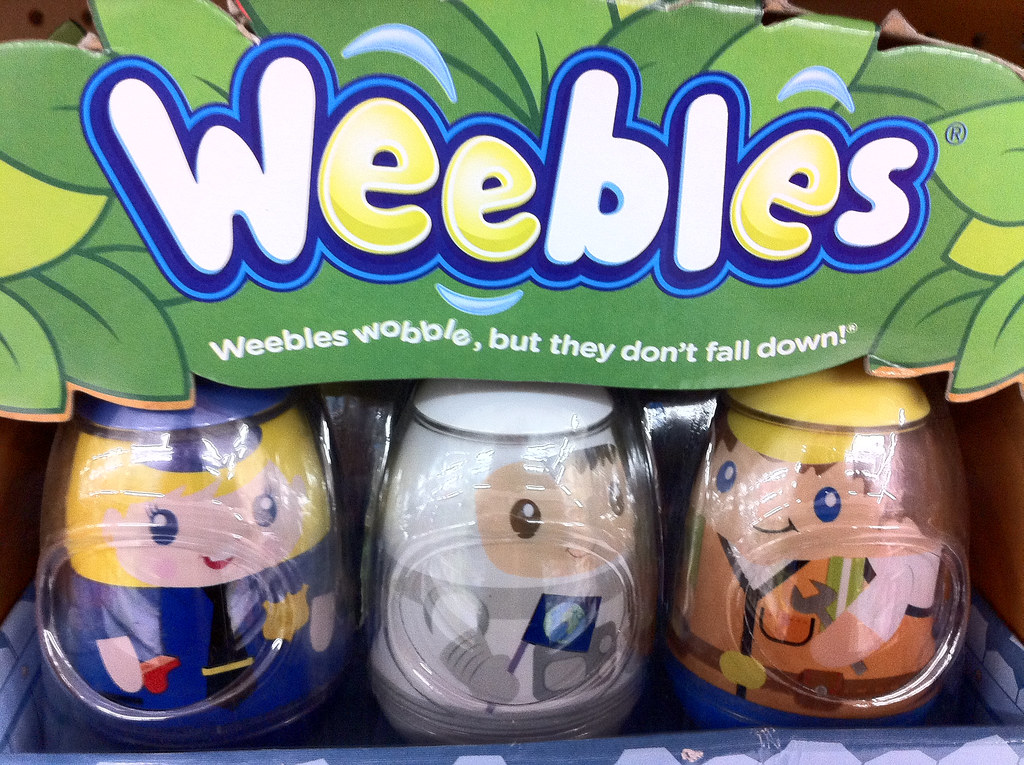
The audience was clear: toddlers and preschoolers. And while there were other small figures on the market, Weebles were competing directly with Fisher-Price’s Little People in those years. The wobble gave Weebles an edge—more forgiving in rough-and-tumble play, less likely to vanish under a radiator, and endlessly funny to knock and watch rebound. Because it was the perfect toy for their target audience, Weeble’s beat the competition.
What’s more, parents noticed something: these sets encouraged the kind of open-ended storytelling that didn’t require rules or batteries. The structures were simple, the pieces were durable, and the rest came from a child’s imagination. One more push, one more wobble, one more “Let’s make the Weebles go camping again!” Every new time that the Weebles were taken out, a new story line was created by the kids.
From Parade Balloons to Lasting Memory
Then came a moment that felt like a coronation. In 1975, Hasbro sent a 40-foot Weeble balloon down Broadway in the Macy’s Thanksgiving Day Parade. The brand had climbed out of the toy aisle and into holiday tradition. For some families, seeing that giant wobble on TV was the nudge that put a Weebles set under the tree a few weeks later.
Like most classics, Weebles had their peaks and pauses. The original run wound down in the early ’80s, only to bob back up in new forms over the decades—chunkier figures here, updated playsets there, a modern relaunch for new toddlers who discovered that a good wobble never gets old. The name eventually lived under the Playskool umbrella, and the essence stayed the same. The Wobble will always be a friendly egg that insists on righting itself.
What made Weebles stick? Maybe it’s the small, satisfying resilience built into every figure. A Weeble doesn’t roll away or sulk off the table; it laughs in round little arcs until it finds its footing again. For kids, that’s a game. For grown-ups who remember, it’s a feeling. The memory is of thick carpet, the soft thunk of plastic on floorboards, a playset handle in one hand and a couple of Weebles in the other.
Weebles captured what many 1970s toys did best: simple ideas executed with care, built for small hands and big stories. Their wobble was a physics trick, sure—but it was also an invitation. Push, play, repeat. And that’s why they never really fell down in our memories, either.
More to Explore
SKM: below-content placeholderWhizzco for DOT