
The Singing Cabinet: How the Victrola Made Itself at Home
One turn of the crank, a soft whir, and the room filled with voices that had never set foot in town. Opera arias at midday Sunday, a Sousa march on a Tuesday, and a comic monologue that had the children in stitches. Tucked behind polished doors, the Victrola made a home feel like a small concert hall.
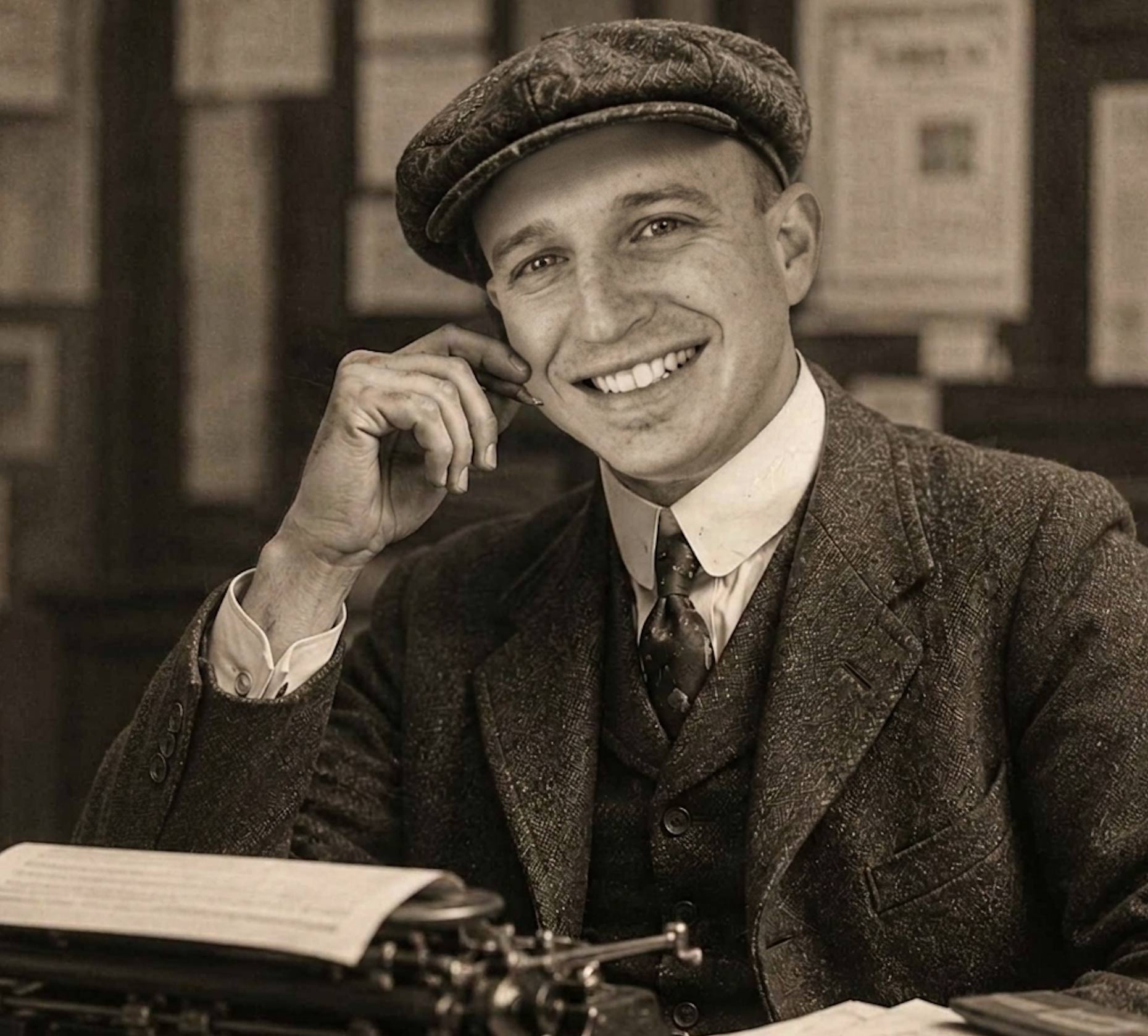
In the late 19th century, recorded sound still felt a little like a magic trick. What had been curious laboratory gear became, in 1906, a handsome wooden cabinet with a hidden horn and a knack for fitting into the parlor. By the end of the decade, its very name stood in for the thing itself. People didn’t just play the phonograph; they played the Victrola. When the enclosed-horn Victrola debuted in 1906, the brand became the word on everyone’s lips.
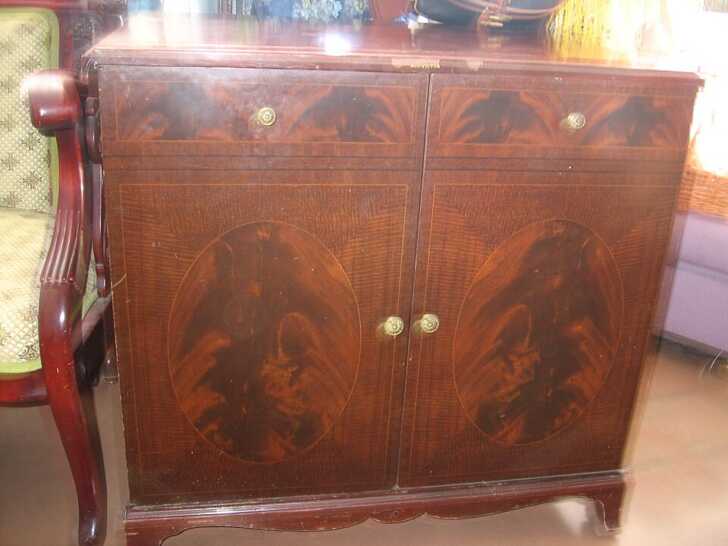
The Victrola’s genius was as much about design as it was about sound. Early talking machines wore their metal horns like trumpets. They were certainly fascinating, but were more workshop than warm parlor. Victor’s cabinet folded the horn inside, turned the crank into a discreet ritual, and polished the whole affair until it resembled a proper piece of furniture. You could place a vase on top, stack records behind little doors, and then coax great music out of a needle and a groove.
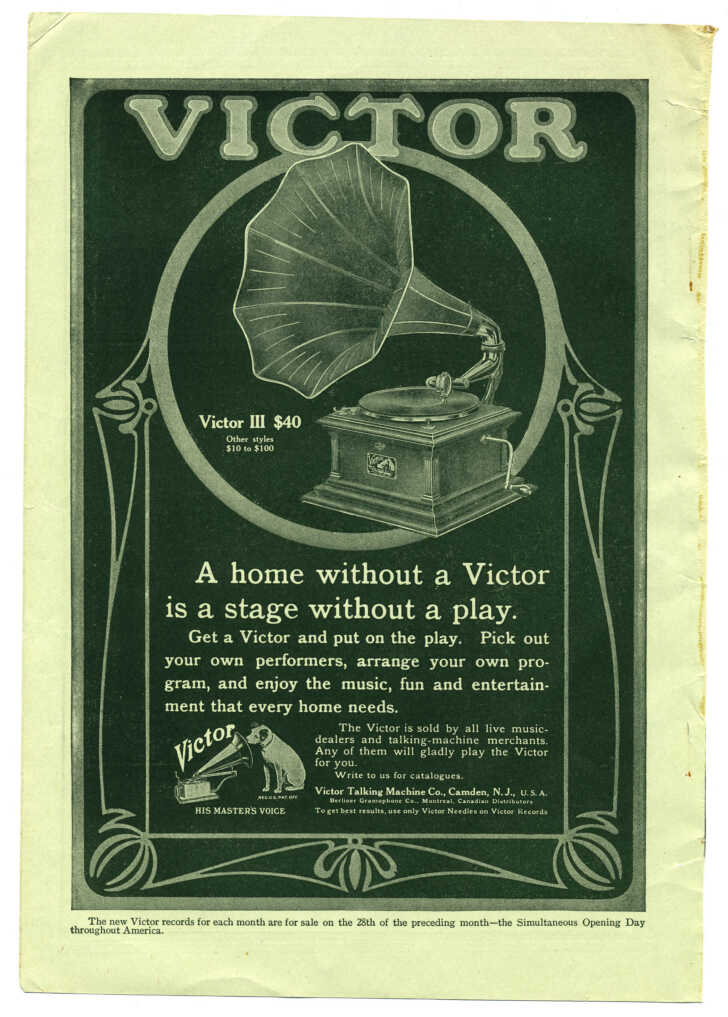
A Cabinet That Belonged in the Parlor
The backstory stretches across a few inventive minds. Thomas Edison proved sound could be caught and played back on cylinders; Emile Berliner flattened the idea into discs that could be stamped and shared; and an industrious Camden machinist named Eldridge Johnson helped make the mechanism steady and strong. Together, their efforts funneled into the Victor Talking Machine Company at the turn of the century. Victor gave the world one of advertising’s most enduring images — Nipper the terrier with a cocked ear — and gave American households something just as enduring: regular access to music that once required tickets, travel, or a church pew.
In practice, the Victrola was wonderfully tactile, but a little finicky. The spring needed winding. The speed needed setting. Needles were cheap but short-lived, swapped out often for the sake of the records and the sound. And yet the very act of lowering the sound box into the outer groove felt ceremonial, a small domestic theater between supper and bed.
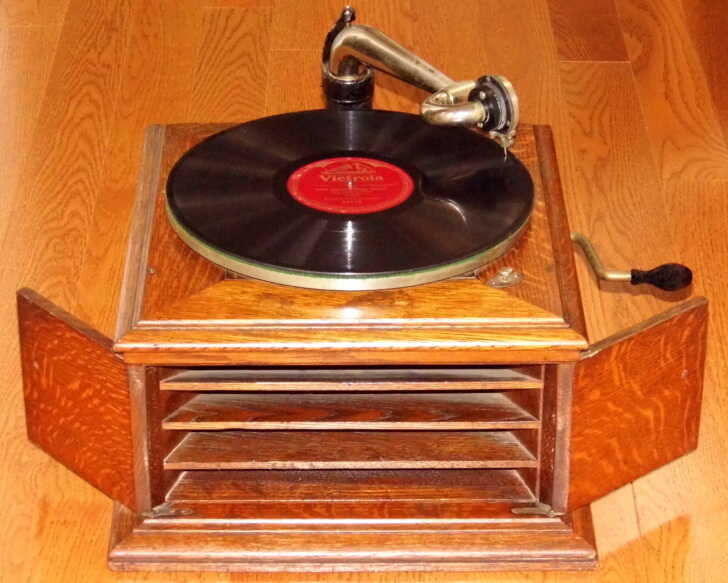
Saturday-Night Music and Tuesday-Afternoon Lessons
Families made a night of it. In farm towns and city flats alike, the Victrola gathered people close: parents humming harmonies to hymns, children giggling through dialect stories now long out of fashion, and dancers pushing back the rug to try a foxtrot. The record cabinet often held a whole community’s taste in miniature; everything from soldiers’ songs, parlour ballads, barnstorming bands, and gentle trios that drifted like a Sunday afternoon breeze.
The Victrola didn’t need electricity to work its charm, which made it a companion in places and years when reliable power was still finding its way down the road. But convenience kept nudging the machine forward. Before the First World War, Victor offered a version with an electric motor so owners could skip the crank; the first electric motor option arrived on the Victrola XVI in 1913, and models with power were tellingly called “Electrolas.”
Regardless if the model was electric or needed to be cranked, the Victrola was more than entertainment. It was a schoolroom and a passport. A family in the Midwest could hear an Italian orchestra; a child might learn to match pitch with a famous soprano; a couple could “bring the band home” for an anniversary waltz. In newspaper reminiscences decades later, heirs would describe inheriting a tall, side-winding model and falling into the past the moment the needle touched down, rediscovering the exact songs that had once filled a small-town parlor with laughter and enjoyment.
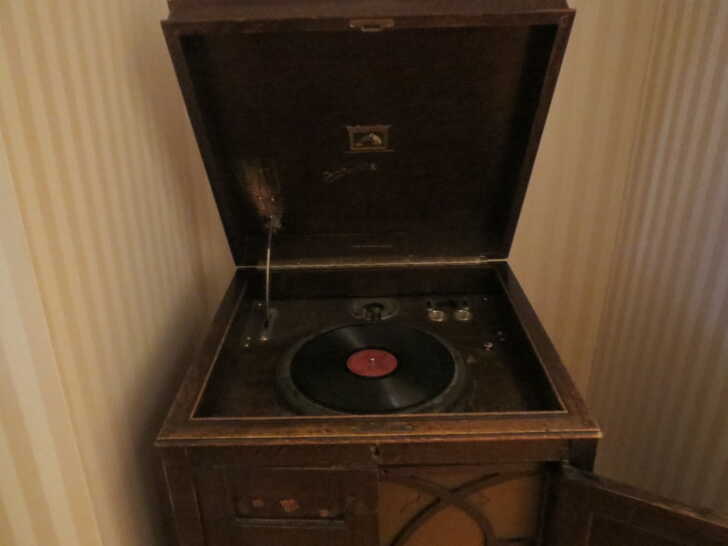
From Victrola to Vinyl And Back Again
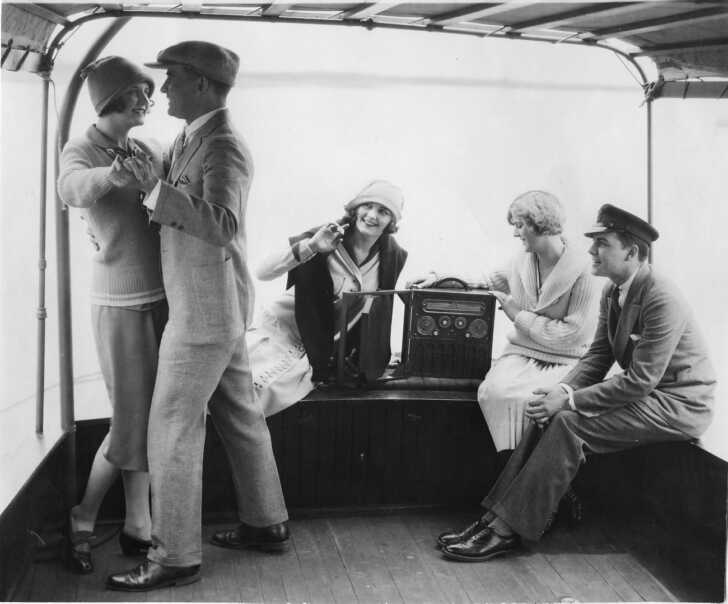
As often happens, tastes and technology moved on. By the mid-1920s, microphones and electrical recording sharpened the edges and brightened the volume; radio then swept in with its free and far-reaching voices. Victor adapted where it could, but the era when a wooden cabinet ruled the room had already taken on a golden glow.
Even as formats changed (shellac to vinyl, 78s to LPs and 45s), the habit the Victrola taught stuck: gather, choose a record, and give it your attention. In the decades after the company became RCA Victor, families met a new kind of Victrola in name and spirit: sleek suitcase portables for teenagers, low-slung consoles that anchored mid-century living rooms, and, later, the belt-driven tables that sent many of us hunting for a favorite side two.
Still Making Sounds
Today, the ritual has returned in fresh clothes. If you’ve ever cracked the seal on a new LP and felt that flutter of anticipation, you’re part of a revival that treats recorded sound not as background, but as an occasion. Even the modern Victrola brand leans into it, describing a mission to bring the warm, classic sound of vinyl to homes everywhere.
What survives from the Victrola years isn’t just the hardware. It’s the way the machine shaped an evening. The careful lift of the tonearm. The shushing hush before music blooms. The way one song invites a story, and one record becomes three. Whether the horn is hidden in mahogany or the stylus is tracked by a counterweight, the promise is the same one a century old: in this room, right now, the world will sing for you.

More to Explore
SKM: below-content placeholderWhizzco for DOT