
When the Grocer Knew Your Name and Carried Your Bags
Before blinking kiosks and self-checkout, grocery shopping was a neighborhood ritual. It was part list, part social hour, and always included a friendly nod from the person who bagged your groceries.
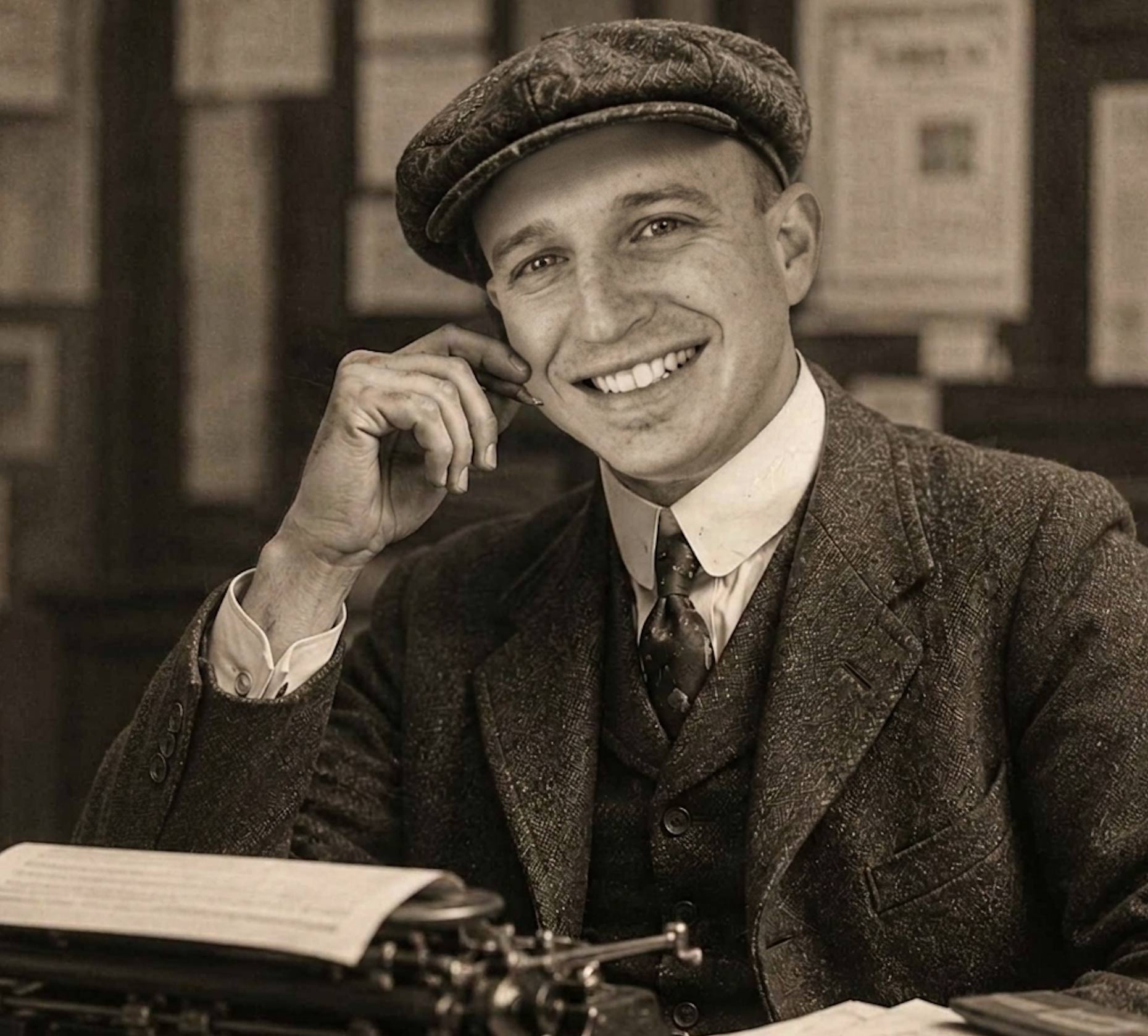
The bell over the door chimes and Mr. Lawson looks up from the scale, a well-worn pencil tucked behind his ear. He greets you by name and asks after the kids, then reaches for butcher paper while your roast is cut to order. At the front, a checker totals your bill right on the brown paper sack. A bag boy ties twine into a tidy handle and walks your groceries to the curb, rain or shine. It wasn’t just shopping; it was seeing your week fall into place, one measured scoop of coffee and one neighborly chat at a time.

The Ritual of Full Service
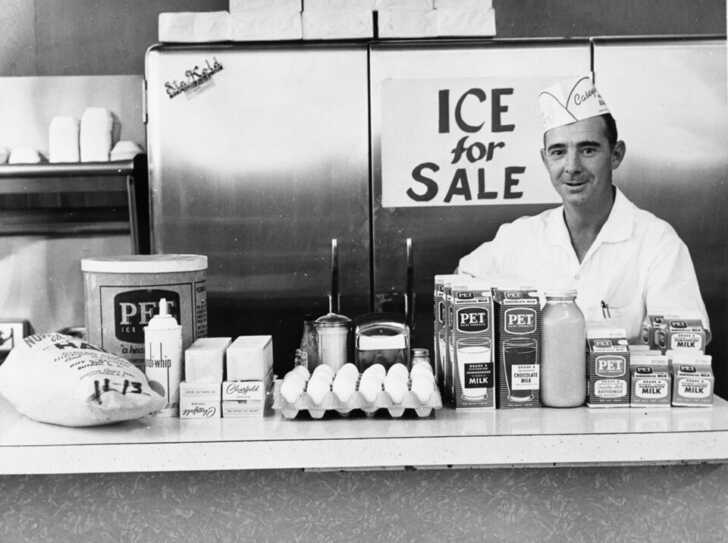
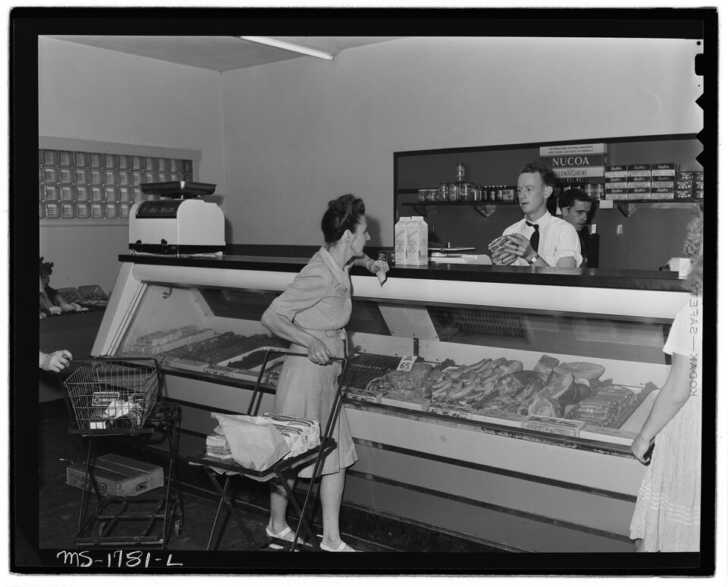
In grocery’s golden age, a trip to the store unfolded like a small performance. You handed over your list and a clerk did the legwork — measuring sugar, scooping beans, fetching tins from high shelves, and sliding the heavy cheese wire across a wheel just the way you liked it. The meat counter was its own world: wax paper, chalkboard cuts of the day, and a butcher who knew what to recommend for a Sunday roast. If you were in a hurry, you could leave the list and come back later. If you had a full cart, a carryout boy insisted on loading it gently into the trunk. And for many families, the tab was kept on file, settled weekly or monthly, with a nod and a handshake.
Looking back, it’s easy to forget how personal those counters made the experience. Produce was eyed and talked over; bread was picked up, weighed in the hand, and wrapped while you chatted about the weather. For kids, the visit was a sensory parade. There was the cool clink of milk bottles, the deliciously fresh smell of the bakery rack, and the meat counter with butchers making small talk while they worked. The tempo felt different than it does today. It was more neighborly than transactional, more conversation than command.
Aisles You Could Walk Yourself
That version of intimacy had an earlier counterpart, too. At the turn of the 20th century, most groceries were fully clerked: you gave your list, they gathered. The great shakeup came in 1916, when a Memphis innovator named Clarence Saunders turned the model on its head with a self-service store where shoppers picked up their own goods and paid at a single checkout. The swirl of fixed price tags, open shelving, and a final register was revolutionary. It was the innovation that slowly nudged Americans from the counter to the aisle.
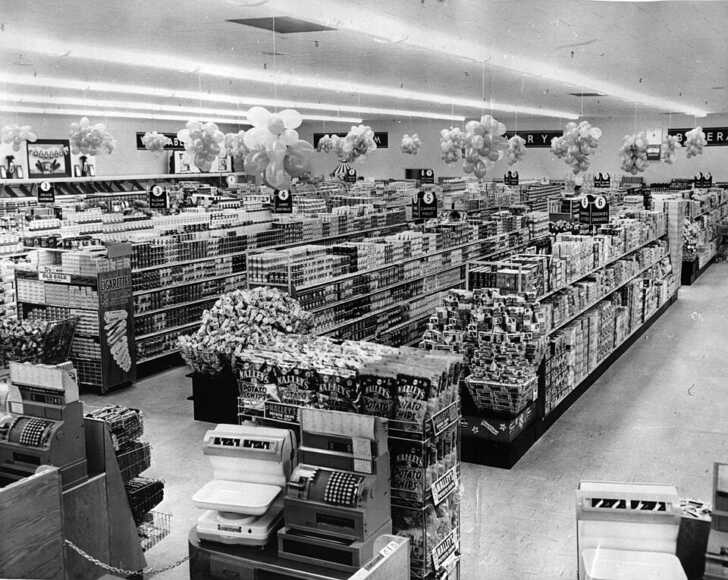
Even as supermarkets grew larger through the mid-century, traces of the old rhythm lingered. Checkers learned your name. Baggers packed eggs on top, slid bread in last, and offered a second paper sack if the first looked strained. Many stores kept robust service counters where meat and fish were wrapped fresh, and deli clerks shaved cold cuts to a whisper. And behind the scenes, grocers still did neighborly things like setting aside a prized cut for a faithful customer, calling when the first summer peaches came in, or letting a harried parent run a forgotten item out the door with a promise to pay next time.
Some grocers dreamed bigger about how much of the process shoppers might handle themselves. Saunders later tinkered with a futuristic concept called a “giant robot store,” known as Keedoozle. It was an all-vending-machine dream that imagined almost no staff at all, a vision that captured the long arc of retail’s push toward automation. Recently, Amazon brought Saunder’s dream to reality with their fully self-service stores.
From the Checker’s Smile to “Unexpected Item in the Bagging Area”
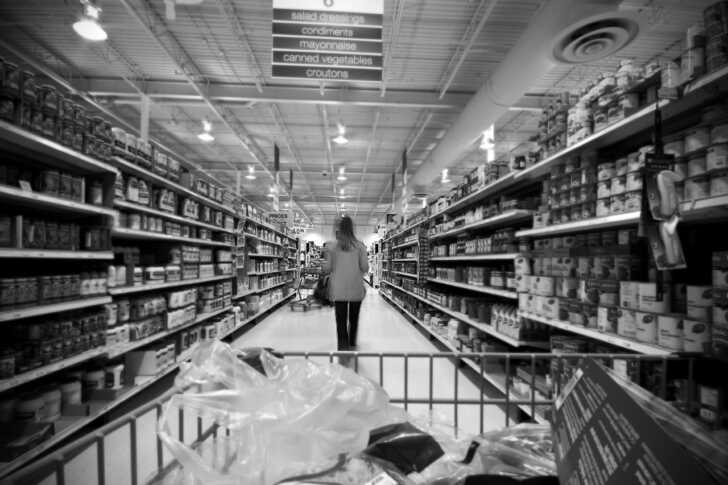
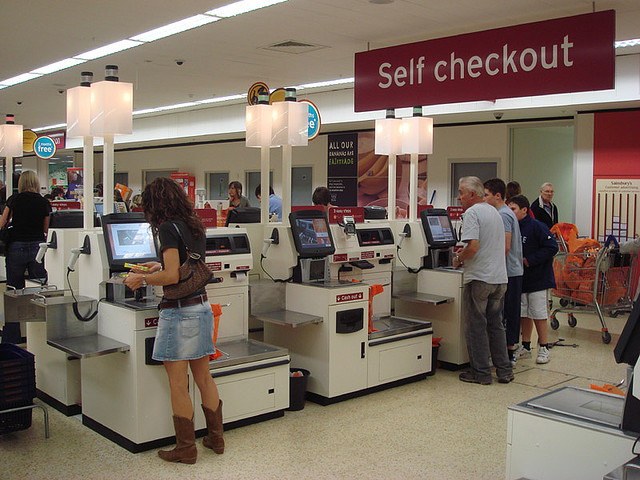
Decades later, the final frontier shifted to the register itself. Self-checkout, introduced to retailers in the 1980s, promised shorter lines, fewer clerks, and a faster glide out the door. Adoption flickered at first, then accelerated in the early 2000’s, and many shoppers got used to scanning, bagging, and paying without a cashier. During the pandemic, the push for fewer face-to-face moments gave the format another boost, as grocers leaned on contact-light options and new tech to keep lines moving.
Yet even the shiniest solution comes with trade-offs. Many of us have met that fussy scale that flags a head of lettuce as contraband, and some chains have quietly rebalanced the equation. They’ve returned to adding more help in self-checkout zones, or restoring lanes with human cashiers when the pendulum swings too far the other way. The bigger question remains: what do we lose, and what do we gain, when speed outruns familiarity?

The Way Things Used to Be
For those who remember, the old model’s magic wasn’t only service; it was comfort and community. A grocer who knew your favorite coffee. A butcher who’d set aside bones for your faithful family hound. There was the feeling that your dinner started at the counter, with someone who cared how it turned out. Today, plenty of independent markets and service counters still carry that torch, even as we tap cards and bag our own bread. Maybe that’s why the smallest gestures still feel like the best kind of progress. It’s the kind that allows us to remember where we started.
What do you remember most about full-service shopping? The butcher’s pencil marks on wax paper? The carryout boys jogging to the curb? Or the way a simple “See you next week” made a store feel like a second kitchen?

More to Explore
SKM: below-content placeholderWhizzco for DOT