
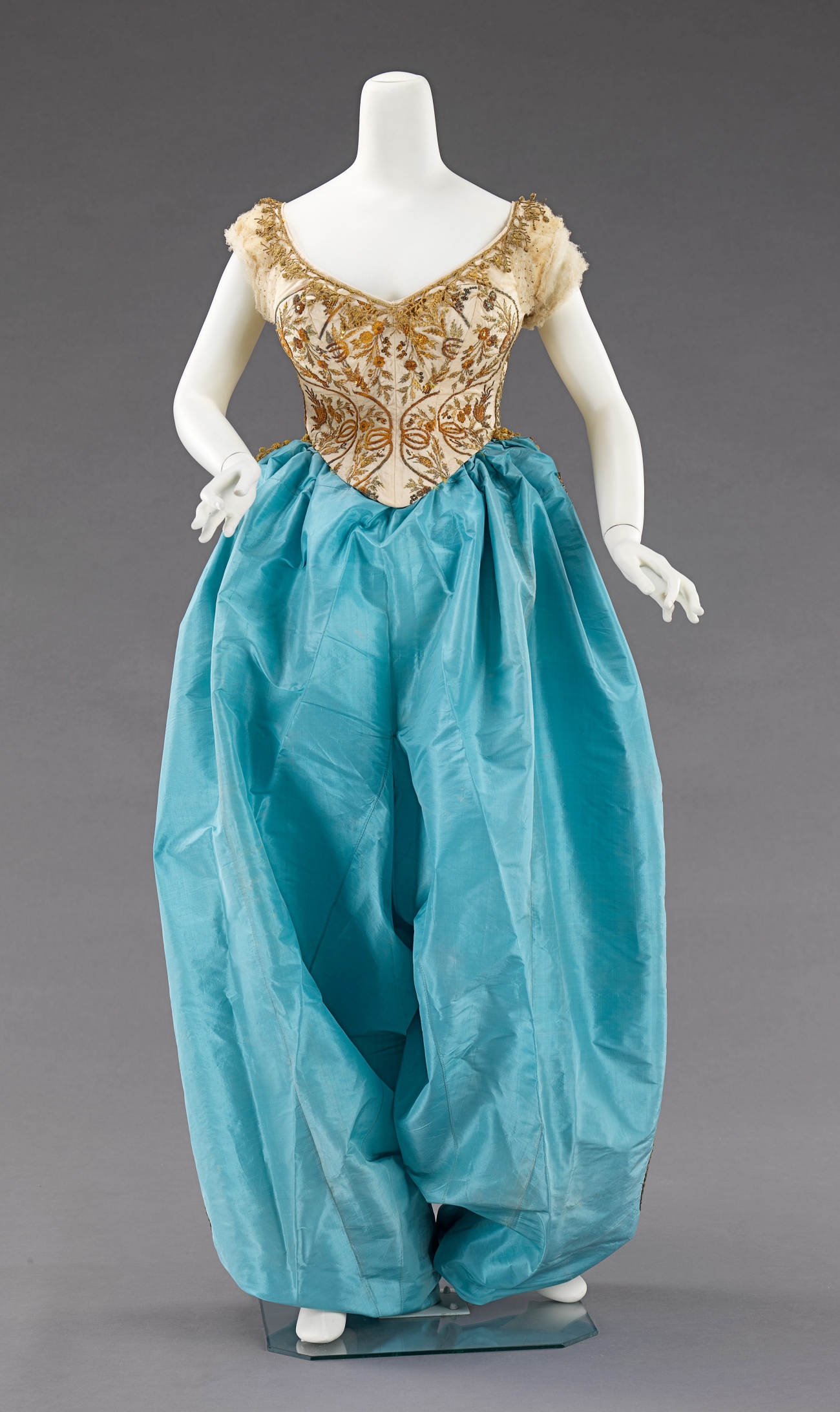
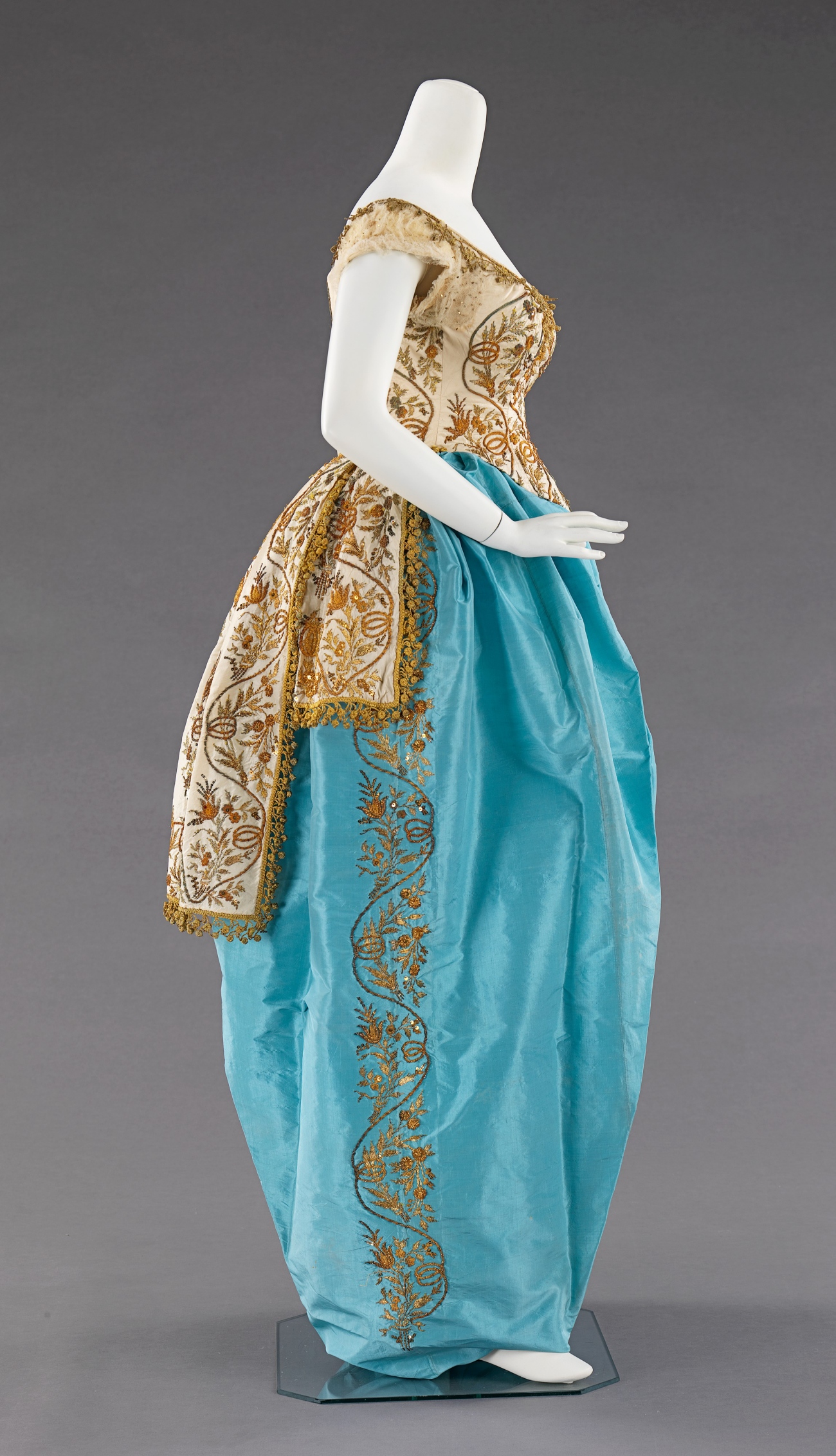
The Metropolitan Museum of Art has in their collection a House of Worth harem pants “dress” that would have been quite controversial at the time it was produced in 1870. Like the barrel pants of today, the huge trousers were sewn with multiple panels for extra volume and shape. This design of embroidered gold on the bodice is original, as the garment was a true Turkish piece that Worth re-fashioned into something more suitable for his customers. The gold thread embroidery along the sides makes the pants feel special, as do the delicate pompoms along the edges of the bodice. In the TV show Downton Abbey one of the female characters wears a similar outfit in the first season and the likeness is so astounding we have to wonder if the Worth dress was the inspiration.
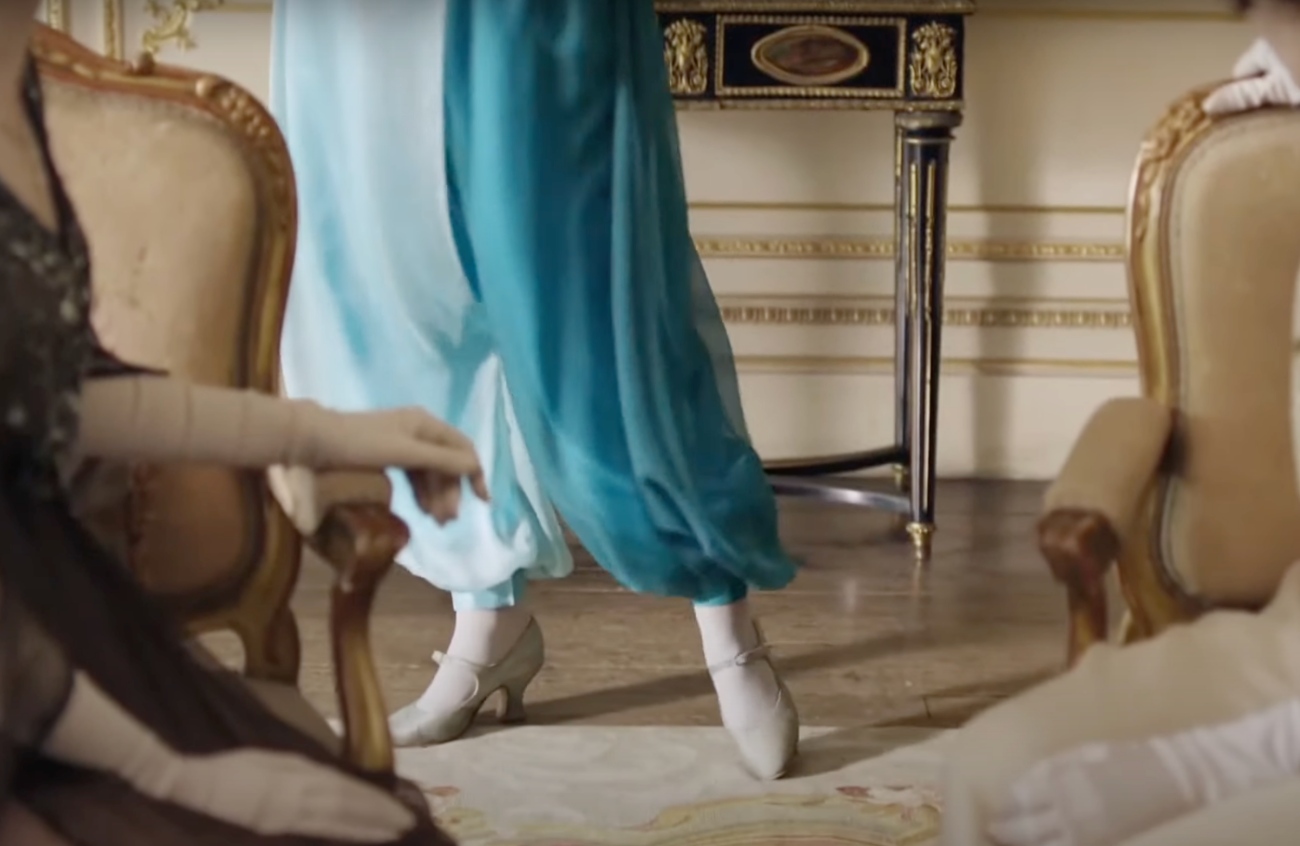
Lady Sybil in Downton Abbey confidently wears her controversial “frock” down to a family dinner, showing off her new pants. However, the time period this takes place in is much later than its potential inspiration – around 1913. If the show costume was inspired by the Worth gown then just think how shocking the original would have been in 1870! During this era women were wearing hoop skirts, bustles, corsets, and petticoats to form the ideal silhouette of the time, which did not include pants.
These elaborate structures allowed the wearer, whatever their natural shape, to conform to the trends of the day through the support garments underneath. However, in a billowy pants suit (almost a romper we might call it today) there was little in the way of structure. So, the woman wearing it would not only have been breaking the social norm of wearing skirts, she would have also been shunning the modern frills and fashions of her day.
Bloomers had been a political form of dress in the 1850s with writer Amelia Bloom popularizing the pants (and where they get their name). It did not catch on for everyday wear, but nevertheless, did not completely fade away either. The concept of loose pants for ladies intrigued modern women who were looking for freedom, comfort, and style in one garment.
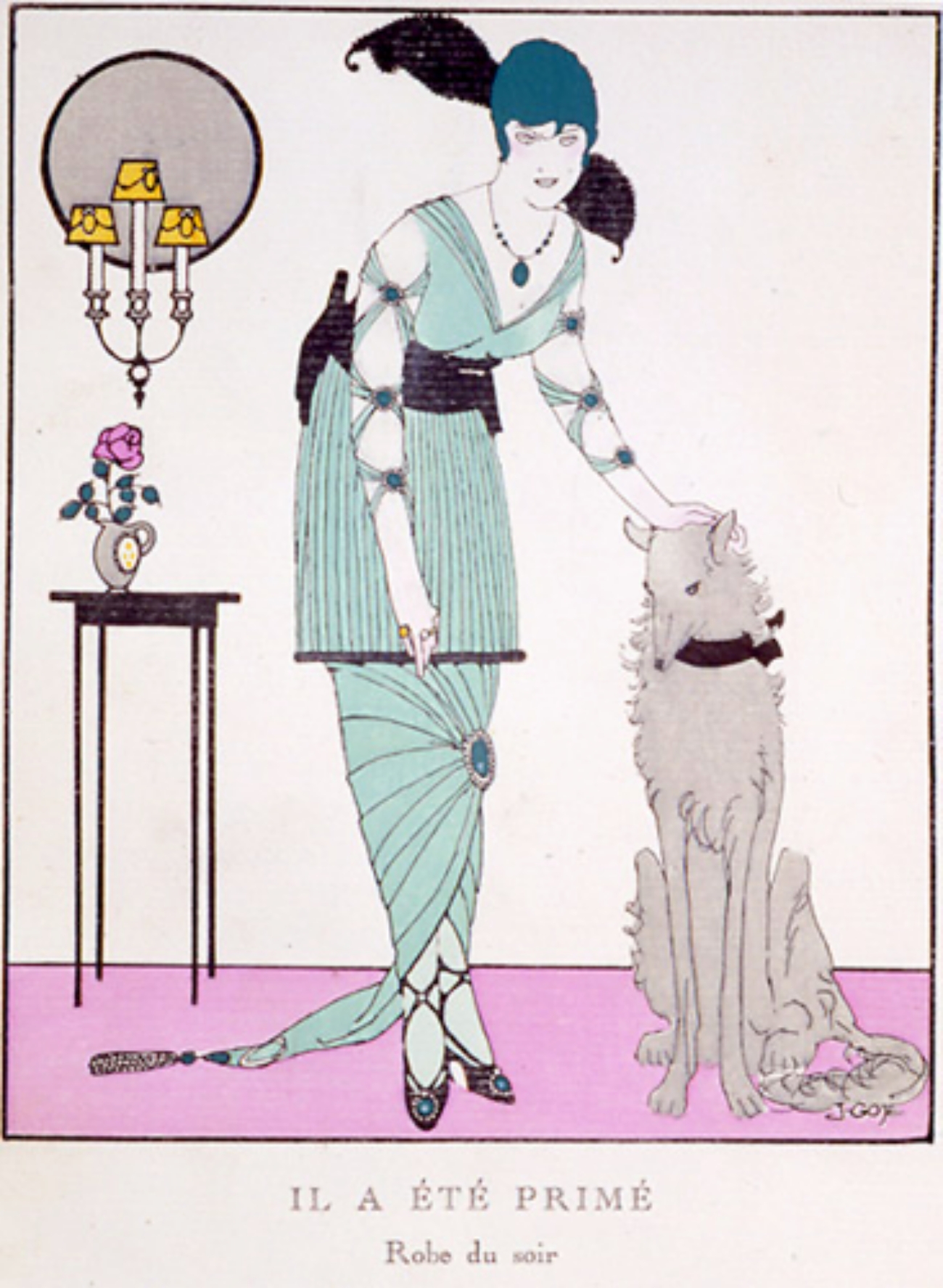
In 1911 couture designer Paul Poiret (who had worked for Worth) made harem pants for a 1001 Nights costume party and the trend was revived once more. The style became known as a jupe-culottes, French for skirt-pants. And, in the fictional world of Downton Abbey Lady Sybil she debuts her custom-made version. But, unlike the costume party, Sybil wears her pants to dinner with the family, and receives shocked glances for her bold fashion.
When this style of dress was en vogue the streets of Paris were buzzing with the excitement the “split pants” brought. They were known by many names, including harem pants, pasha skirt, skirt with breeches, and divided skirt. They not only were divided in the physical sense, but the concept divided the public. Some longed for the day when a lady’s ankle was a sweet surprise to see, while other thought the harem style could be useful for walking or sports, but had no place in formal settings like ballrooms and dinner tables. Worth was supposed to have remarked that the split skirt was “the logical outcome of the hobble skirt, as though one had slit on a skirt in anger because it prevented one from walking up stairs.”
The hobble skirt was a short-lived fad that saw voluminous ladies’ skirts scooped back in at the bottom so that only small steps could be taken. Think a pencil skirt, but floor-length and you’ll have some idea of how difficult it would have been to move around in these skirts. By comparison the harem pants must have seemed like pure comfort!
So was Worth the inspiration for the outfit Sybil wears? The costume designer for the show at that time was Susannah Buxton. We may never know all her inspirations, as Buxton sourced many images for each character before creating their costumes. In an interview from 2012, Buxton said that the costumes for the show were a combination of constructed, rented, and original pieces. But, in the case of the harem pants dress, the top was made from original Edwardian fabric and began to split during filming due to the fragility that comes with cloth of that age. She said that it was “pretty scary” to watch the dress come apart in real time, but that “fortunately we did have another piece” of the fabric.
In an interesting turn the harem dress from Downton Abbey has now been exhibited in museums around the world while the harem gown by the House of Worth lives at The Met: both dresses destined for the museum.
See the infamous harem pants from Downton Abbey in the clip below.
More to Explore
SKM: below-content placeholderWhizzco for DOT