
Today, those wishing to send a covert message can use disappearing messages or videos that only last for a day. But, in the 1700s and 1800s lovers of great means had a different approach. If you had enough money you could have your eye or eyes painted on a brooch or another piece of jewelry. You could send it to your lover without giving away your identity fully. But, there were other reasons to have a piece of jewelry like this made as well.
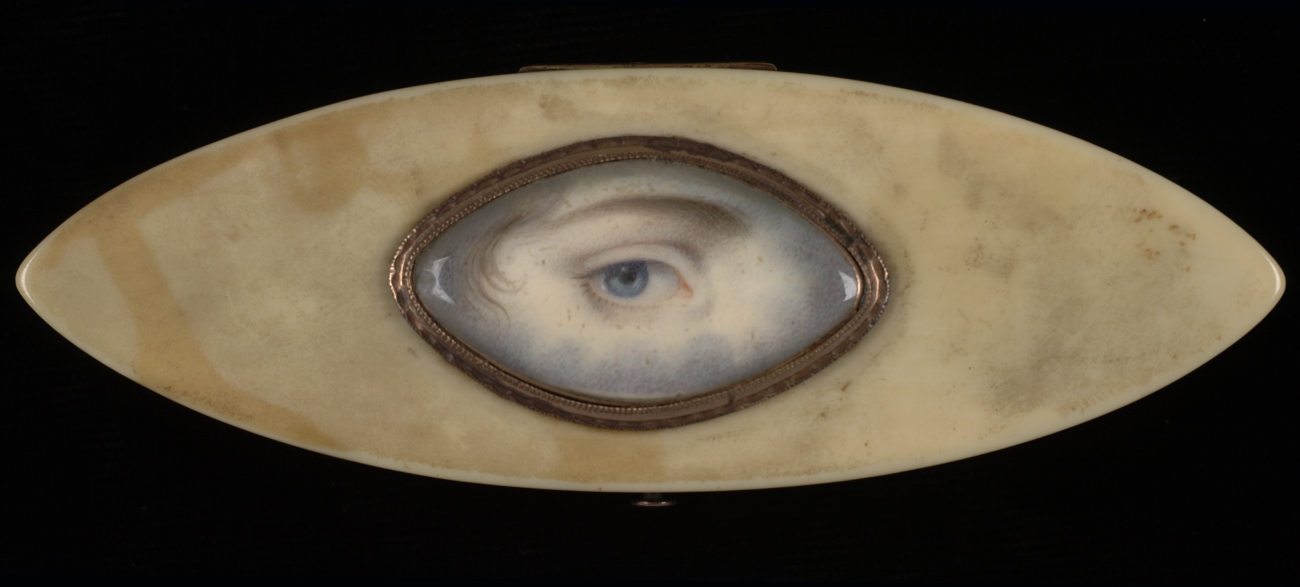
Known as Lover’s Eyes, these types of miniatures became quite the trend among the upper classes of Europe in the late 18th century and continued into the early 19th century. They could be made into brooches, lockets, rings, or even bracelets.
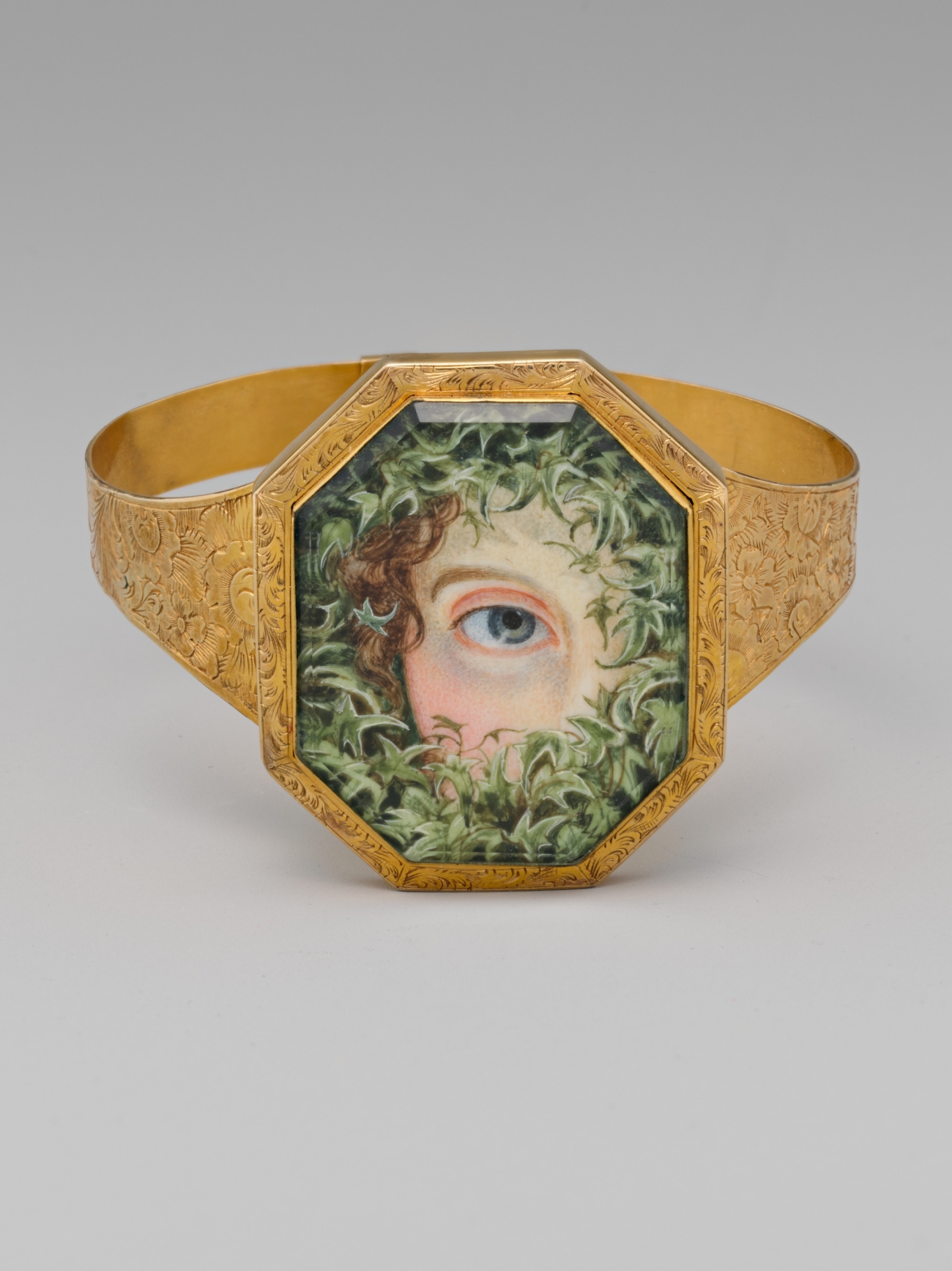
Paintings could be one eye from angle or both eyes, but in each case attempted to capture something precious about the subject. After all, eyes are said to be the window to the soul. And, in an era before photography was common, these tiny images allowed people to gaze into the eyes of their loved ones even when they were far away.
Previously miniatures of a beloved would have included the entire face and even torso, but the fad for the only the eyes gained popularity between the late 1700s into the 1860s.
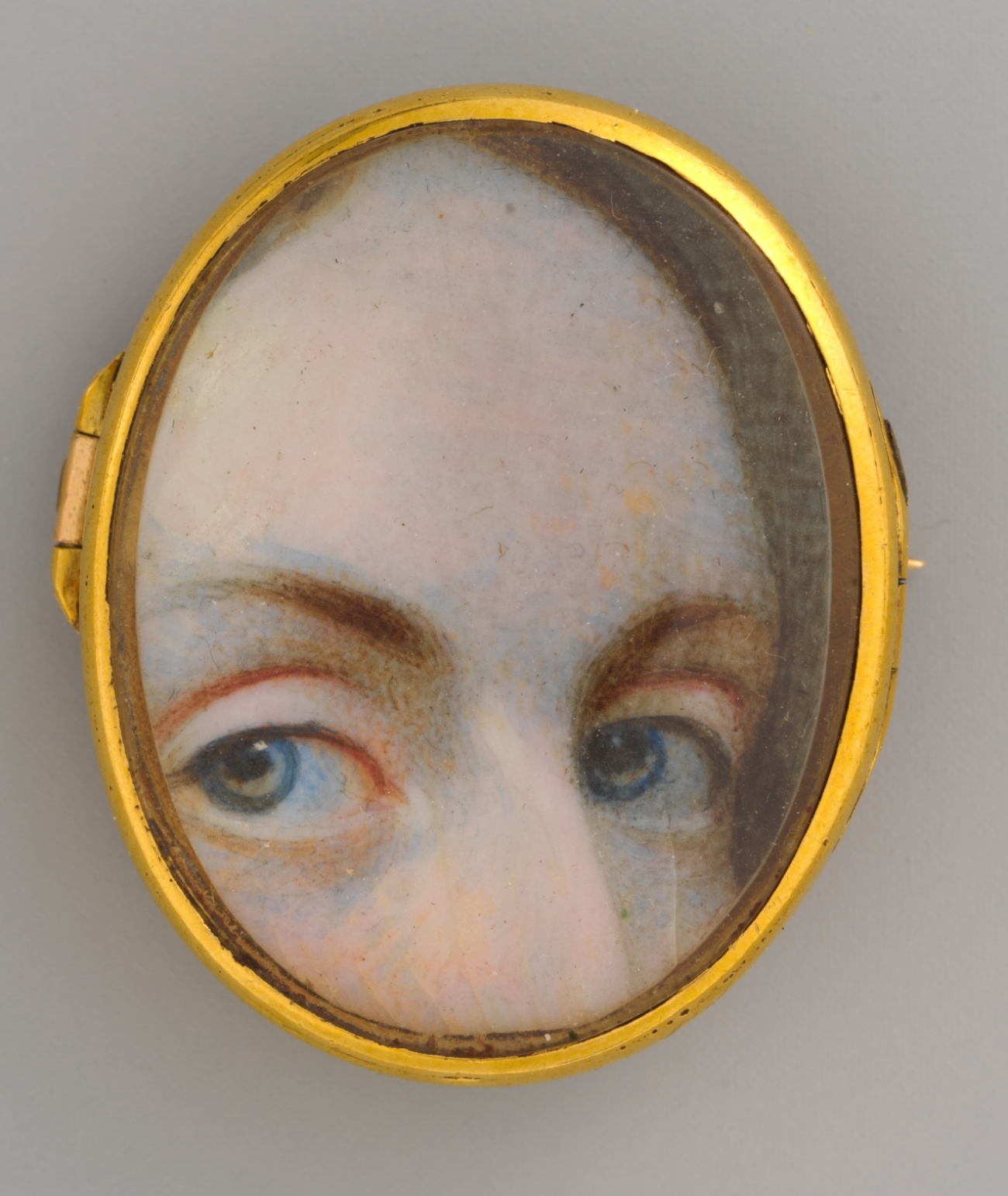
The trend spread across Europe and to the US as well. And during the Victorian era these pieces were used to remember loved ones, with some pieces painted specifically as mourning eye portraits rather than as living resemblances. This brooch below was painted to remember Princess Charlotte of Wales, granddaughter to George III and next in line to success her father, George IV, for the Throne of England. However, she sadly died at only 21-years-old in childbirth, leaving a stunned family and nation. Many eye portraits were created to remember her by, sometimes with locks of her hair or the impression of hair on the pieces as well.
One of the earliest known lover’s eye portraits was created in 1786 for King George IV prior to his succession to the throne of his then-mistress. She was touched and later married him in a secret ceremony which was later nullified by the British government on grounds that she was Catholic.
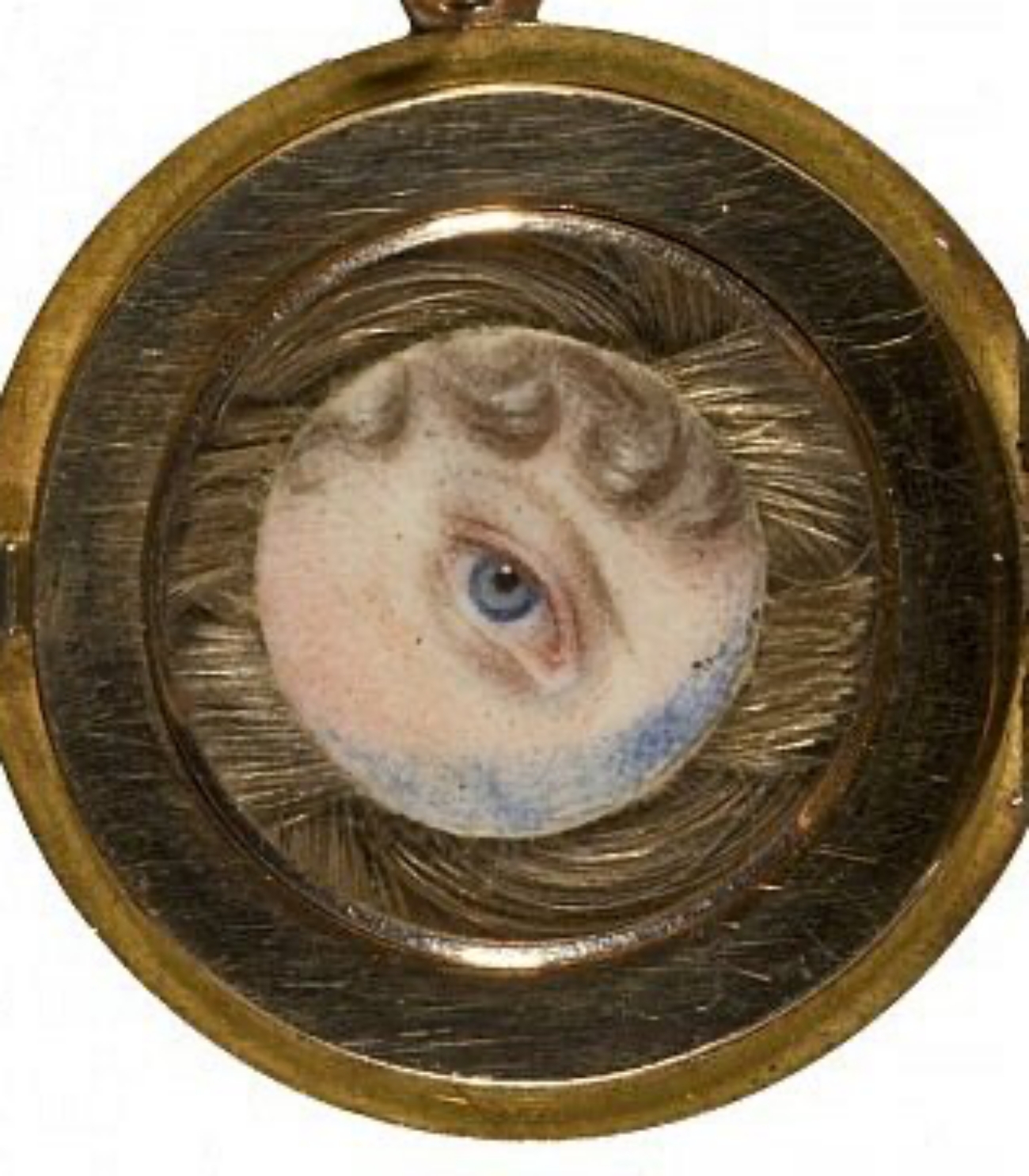
The little paintings could be watercolor on ivory or painted or small tiles or on another material placed under glass or clear crystal. There were different budgets for these pieces, from extremely pricey to slightly more modest commissions – though each piece would be have been a luxury item.
If you really wanted to splash out as it were, you could have a diamond or sapphire installed as the tear drop on this expensive eye portrait. This was usually reserved for a mourning piece. Likewise, a border of pearls often signified that the loved one was dearly departed since pearls were associated with purity.
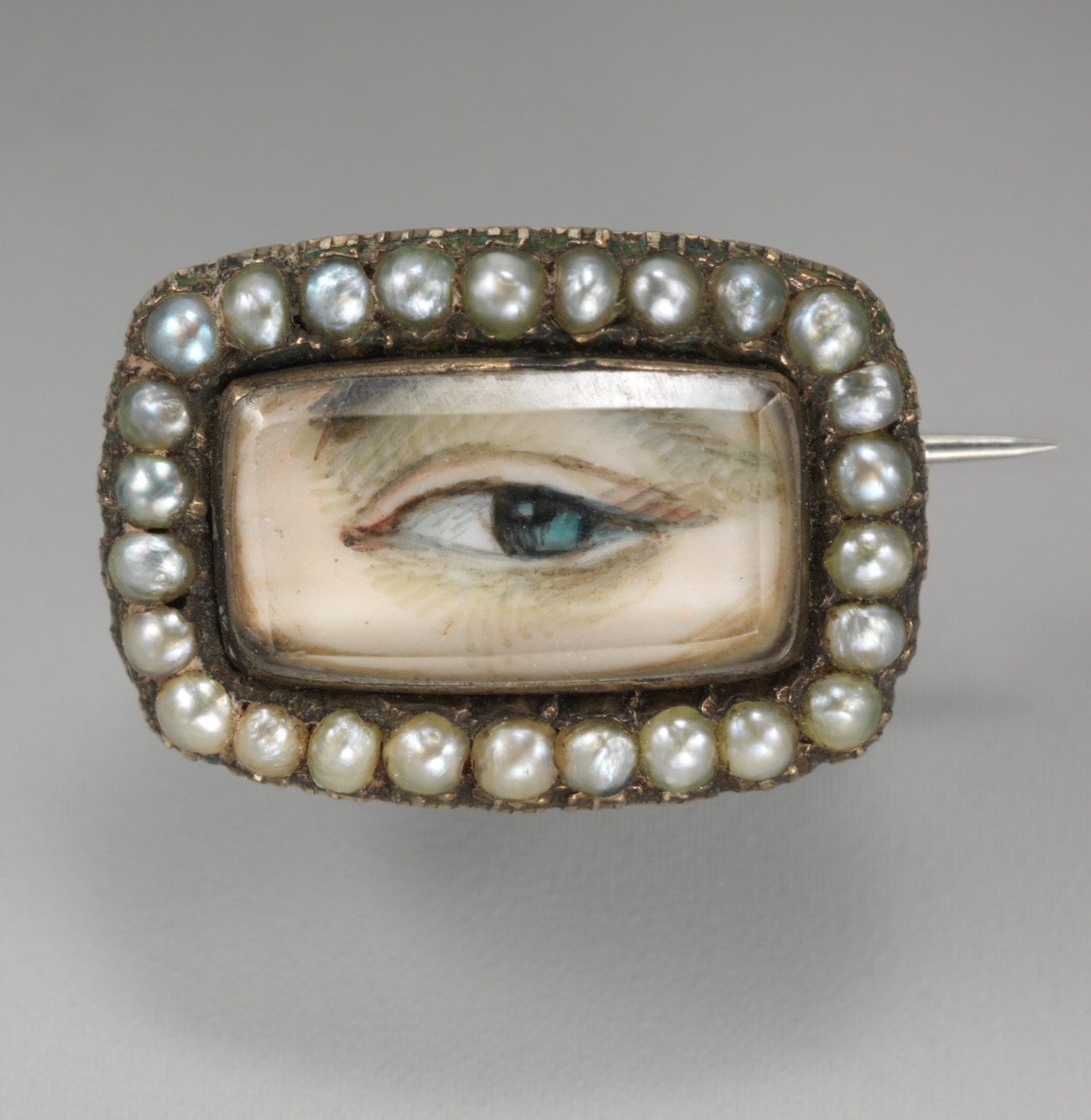
Some theorize that these minis gained popularity in part because men and women had largely segregated lives that led to expressive looks carrying almost as much weight as words spoken aloud. This could have been particularly true for those engaged in affairs or secret loves. Back then it was not uncommon for a young person’s family to forbid any association with suitors or lovers they did not approve of.
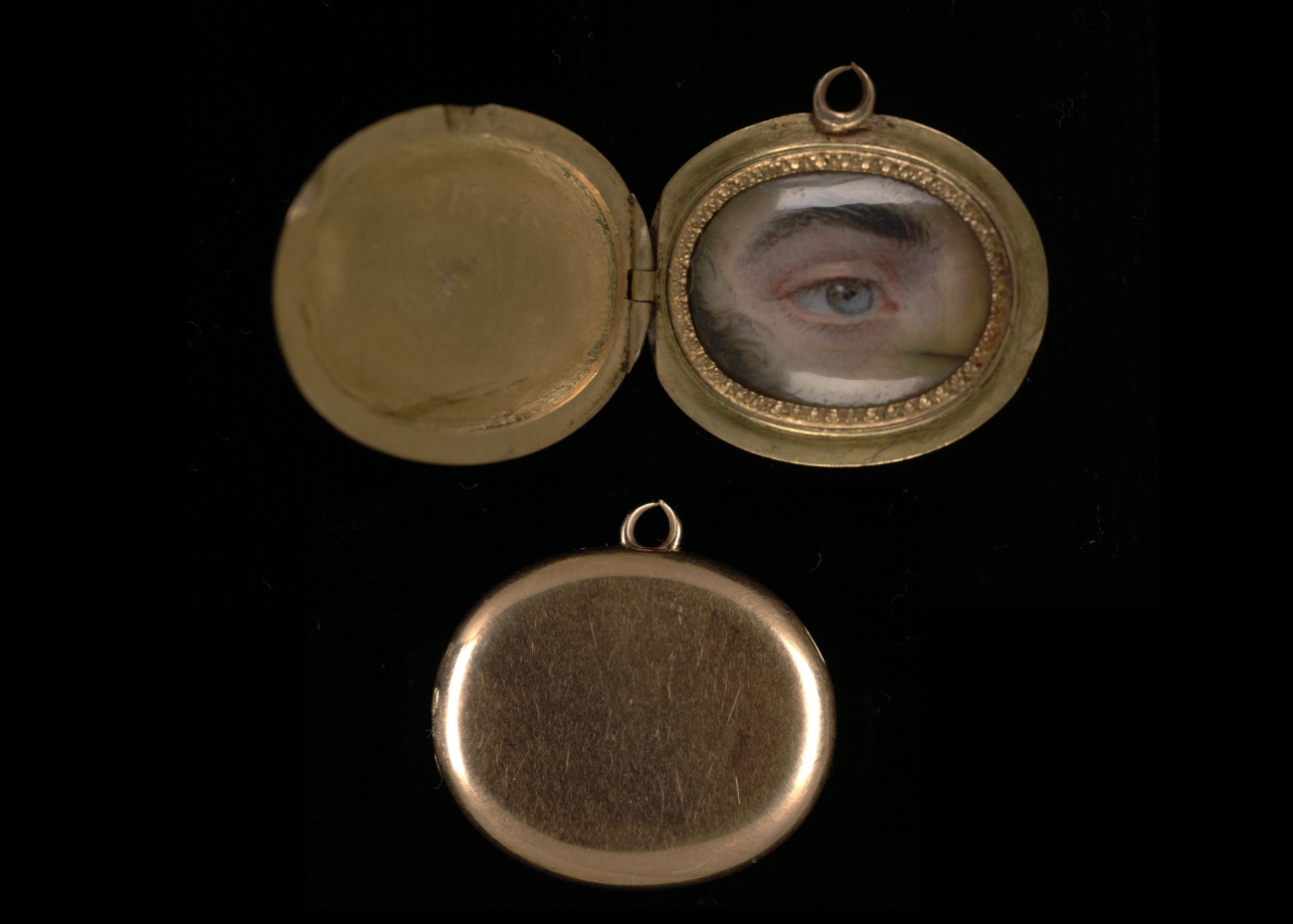
When photography became widely accessible and more affordable in the mid-to-late-1800s it became the main way that people remembered their loved ones, both in life and in death. And, it was far cheaper and easier to make copies of.
Today these little pieces of history are collector’s items, often valuable for their materials and craftsmanship alone, but made extra special by their sentimental and mysterious qualities. In 2024 an enameled lover’s eye brooch decorated with pearls sold through Bonham’s in Sydney for $8,610 AUD (around $5,567 USD). However, pieces without pearls or gems can sell for significantly less money.
Reproductions do exist so look for signs of age in the real thing. If a piece looks too clean or neat it could be modern. Many of these lover’s eye pieces were painted in watercolor on ivory so look for the signs of ivory striations and discolorations in a piece.
As Katherine Van Dell of Heritage Auctions on Antiques Roadshow points out in the clip below these pieces are all too easy to fake.
More to Explore
SKM: below-content placeholderWhizzco for DOT