
Edwardian Wedding Dresses: Modesty and Elegance in Early 1900s Bridal Fashion
Explore Edwardian wedding dresses and trousseaux, revealing modesty, evolving silhouettes, and accessories shaping bridal style from 1900 to 1910.

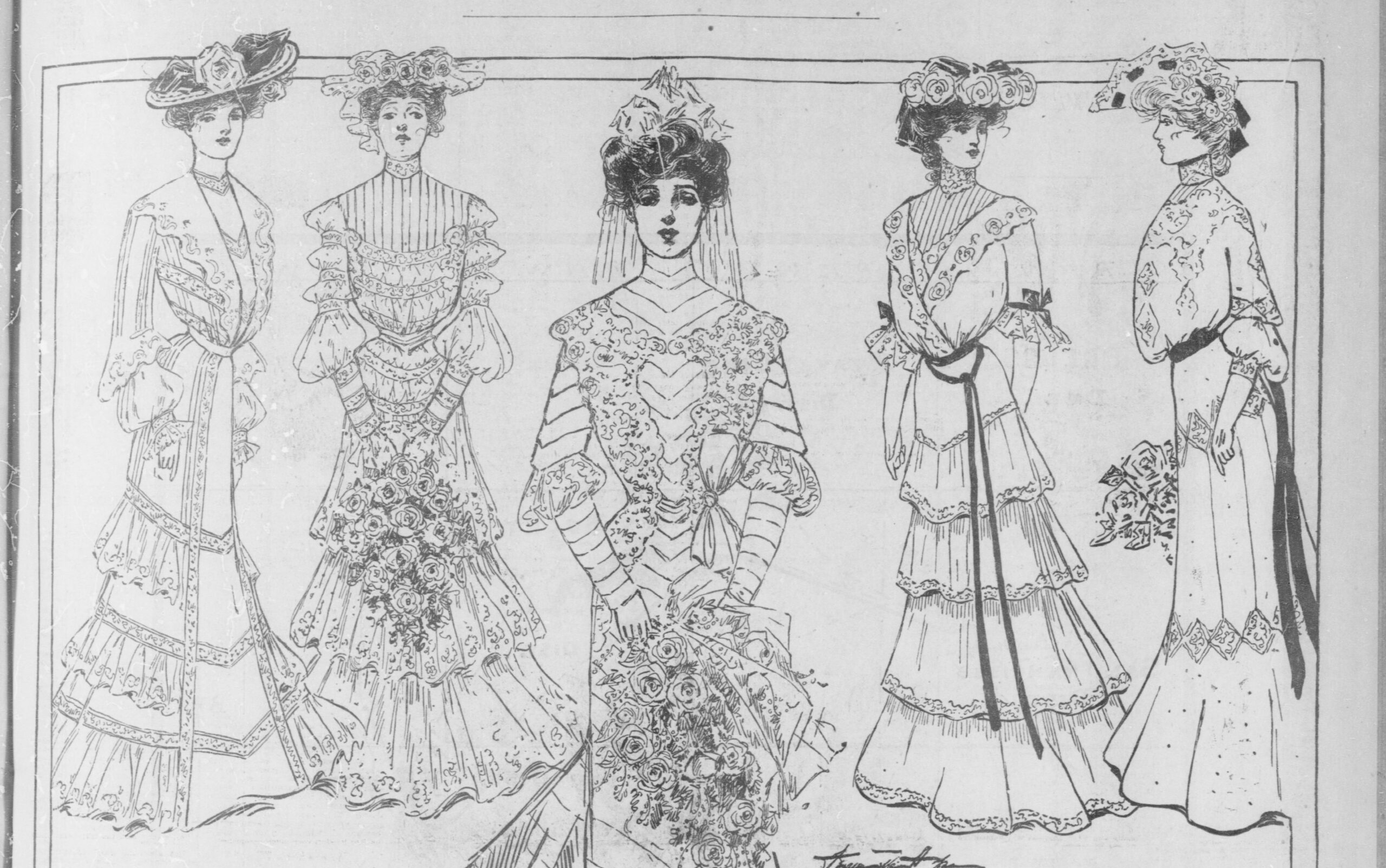
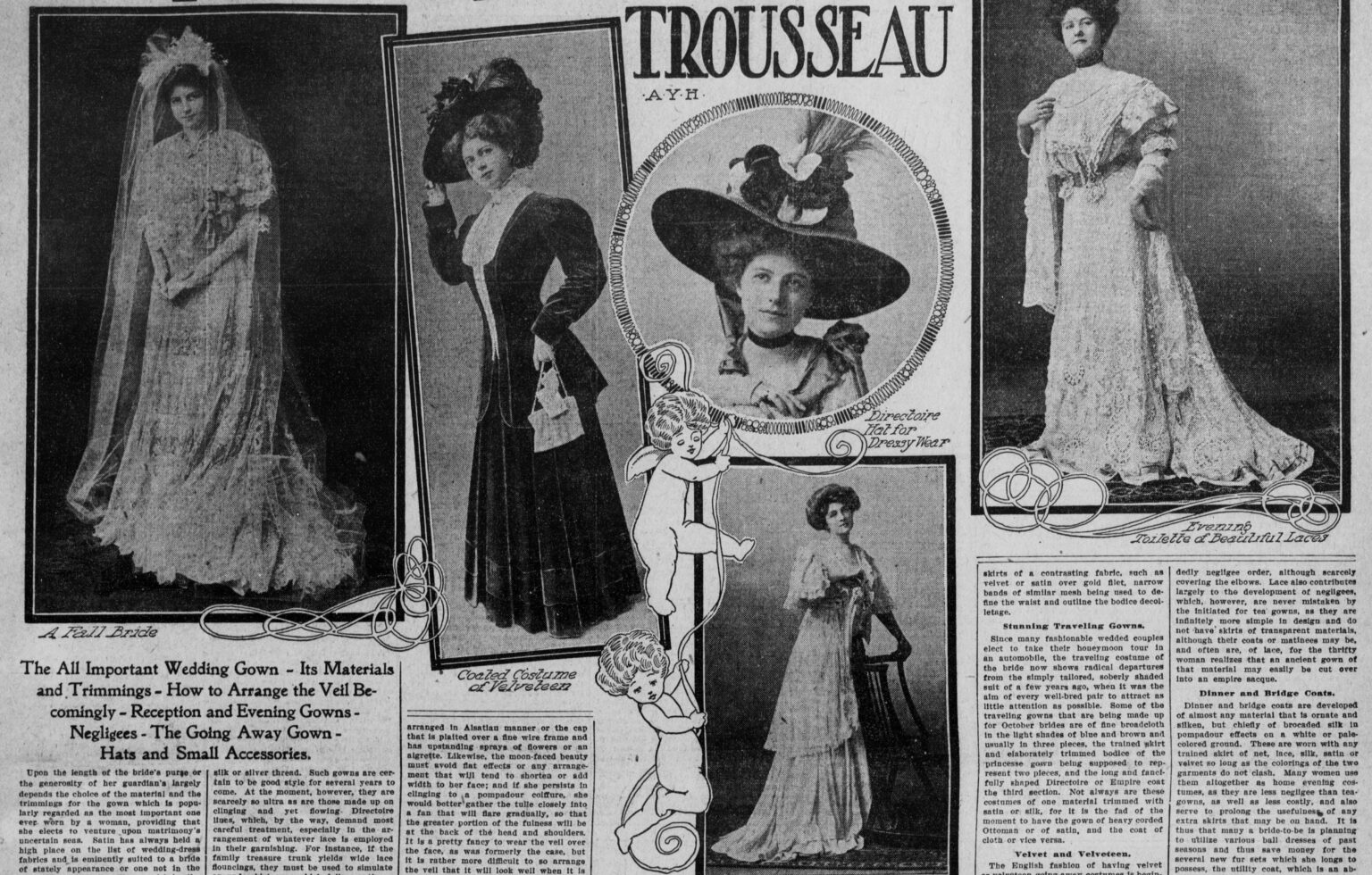
At the dawn of the twentieth century, the American bride stepped into marriage wrapped in silk, lace, and an ideal of modesty that defined the entire look of women’s wedding fashion from 1900 to 1910. High necklines, long gloves, and layers of ruffled petticoats created the sense of coverage expected from an Edwardian bride. Together, newspaper illustrations and descriptions from the period show a decade when satin, ruffles, and lace reigned, and when bridal fashion reflected both rapid modern change and a deep attachment to tradition. For anyone interested in Edwardian wedding dresses or the evolution of the bridal gown, this era offers a fascinating snapshot of style, technology, and social expectations.
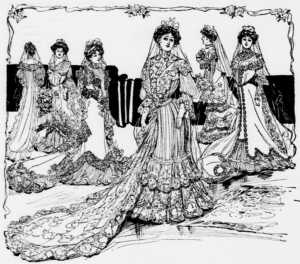
At the turn of the century, the United States was in what many contemporaries proudly called an “age of optimism.” Industrial growth and new technologies such as electricity, telephones, sewing machines, motorcars, and aeroplanes transformed daily life and fueled a booming manufacturing economy. American fashion in these years did not develop in isolation. It absorbed and echoed European influences, particularly those associated with the transition from the Victorian era under Queen Victoria to the Edwardian era that began with the reign of Edward VII. Society observed strict formal boundaries between men and women, and clothing helped signal those roles.
In this context, the fashionable figure of the day emphasized a mature silhouette with a tiny waist, full bosom, and generous curves. The celebrated Gibson Girl shape captured the early Edwardian ideal. Brides and fashionable women achieved this look with the S-shaped corset that thrust the bosom forward and the hips back, creating a strong visual line. Wedding gowns followed this silhouette with long, flowing skirts that draped smoothly over the hips, added fullness at the back, and often ended in a ruffle or small train. Bodices were characteristically high at the neck, full and blousy across the front, richly trimmed with lace or ruffles, and cut with a waistline that dipped forward. Sleeves tended to be full and puffy, finishing between the elbow and wrist and usually accented with lace.
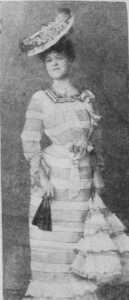
The Look of the Edwardian Bride
For the Edwardian bride, modesty was more than a personal preference. It was an aesthetic principle. Bridal dresses were typically constructed from chiffon layered over satin, cotton, or silk to produce a soft, ethereal appearance that still ensured coverage. Sheer fabrics were carefully managed with lace or embroidery that allowed lightness without revealing too much. The bodices that appeared soft and airy often contained bone linings for structure, while skirts relied on multiple petticoats and ruffled hems to create the fashionable volume expected at a formal wedding.
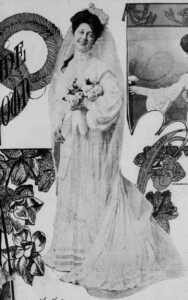
A full trousseau reflected family finances, a woman’s skill in domestic arts, and the symbolism of leaving home for a new life.
Many brides, especially from wealthier families, prepared for marriage through the tradition of the bridal trousseau. This collection of clothing, accessories, and linens functioned as both practical wardrobe and social signal. A full trousseau reflected family finances, a woman’s skill in domestic arts, and the symbolism of leaving home for a new life. Descriptions from the period show that an Edwardian trousseau might include the wedding gown itself, bridal shoes, a morning robe for the wedding day, a tailored traveling gown and hat, and a negligee for the honeymoon and early married days. Handkerchiefs, jewelry, family heirlooms, and fine bedding rounded out the picture of an ideal start to married life.
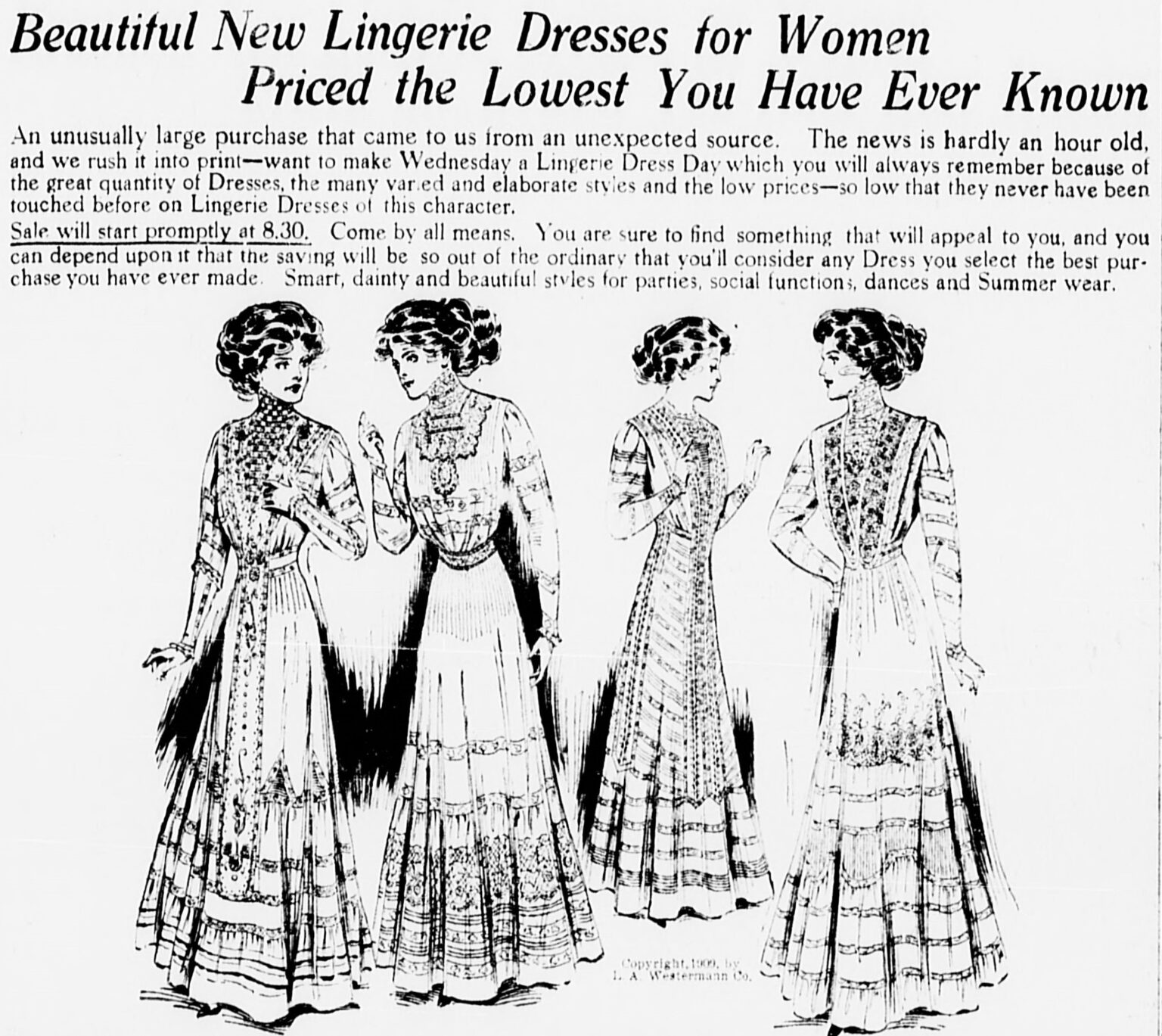
While hand sewing still dominated wedding dress creation at the beginning of the decade, change was on the horizon. Many bridal gowns were made by the bride, female relatives, or a professional dressmaker. By the middle of the 1900s, however, department stores in large cities began advertising ready-made “lingerie dresses.” These dresses used thin, lightweight fabrics, combined high necklines and full sleeves with decorative embroidery and lace, and signaled the growth of the ready-to-wear industry. In white, the lingerie dress quickly became an economical and popular choice for brides from the middle and lower classes.
Many brides continued to wear their wedding dress long after the ceremony, a practical approach that reflects a different relationship to the bridal gown than the more single-use mindset common today.
The versatility of the lingerie dress added to its appeal. Bridesmaids often wore similar white dresses accented with satin sashes at the waist or a brooch at the collar to distinguish their roles. Some lingerie dresses were designed as two pieces, with a separate bodice and skirt that could be mixed and matched. Newly married women then reused these garments for the many social events and formal occasions that followed the wedding. Many brides continued to wear their wedding dress long after the ceremony, a practical approach that reflects a different relationship to the bridal gown than the more single-use mindset common today.
The Accessories That Completed the Look
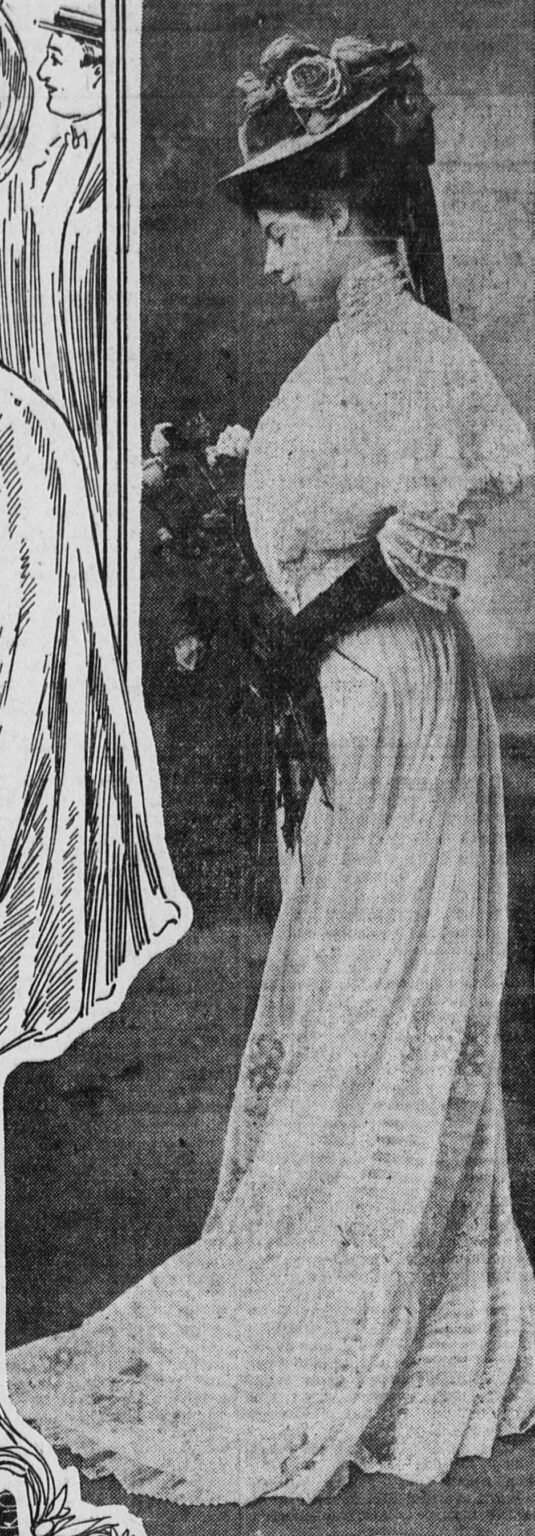
Accessories completed the Edwardian bridal ensemble and were considered essential. A proper lady of the time wore a hat and gloves whenever she stepped outside. On her wedding day, her gloves might be short or long, matched to sleeve length, with the goal of keeping the arms fully covered. Some brides selected fingerless gloves to simplify the exchange of wedding rings. Bridal hats followed the fashion of the era, perched on upswept hair and often lavishly trimmed with chiffon, tulle, soft feathers, silk flowers, or even a full bouquet. Headpieces varied but were always designed in harmony with contemporary millinery trends.
Around 1907, a notable shift occurred in women’s fashion that affected bridal wear as well. Corsets changed shape, and the preferred silhouette moved away from the dramatic S-curve. Skirts became plainer and less full, adopting a more straightforward A-line shape. The exaggerated emphasis on bosom and hips softened. Necklines on wedding gowns remained high and sleeves stayed relatively full, yet bodices lost much of their earlier blousiness. Hemlines rose slightly, by about one or two inches. Brides in the later years of the decade often gravitated toward simpler dresses with fewer embellishments. Embroidery did not disappear, but it became more restrained, focused around the waistline and the lower edge of the skirt. Sleeves frequently gathered at the elbow and finished with a generous lace ruffle, while elbow-length fingerless gloves remained a favored accessory.
Orange blossoms had been a popular bridal ornament since Queen Victoria’s wedding in 1840 and remained a potent symbol of marriage.
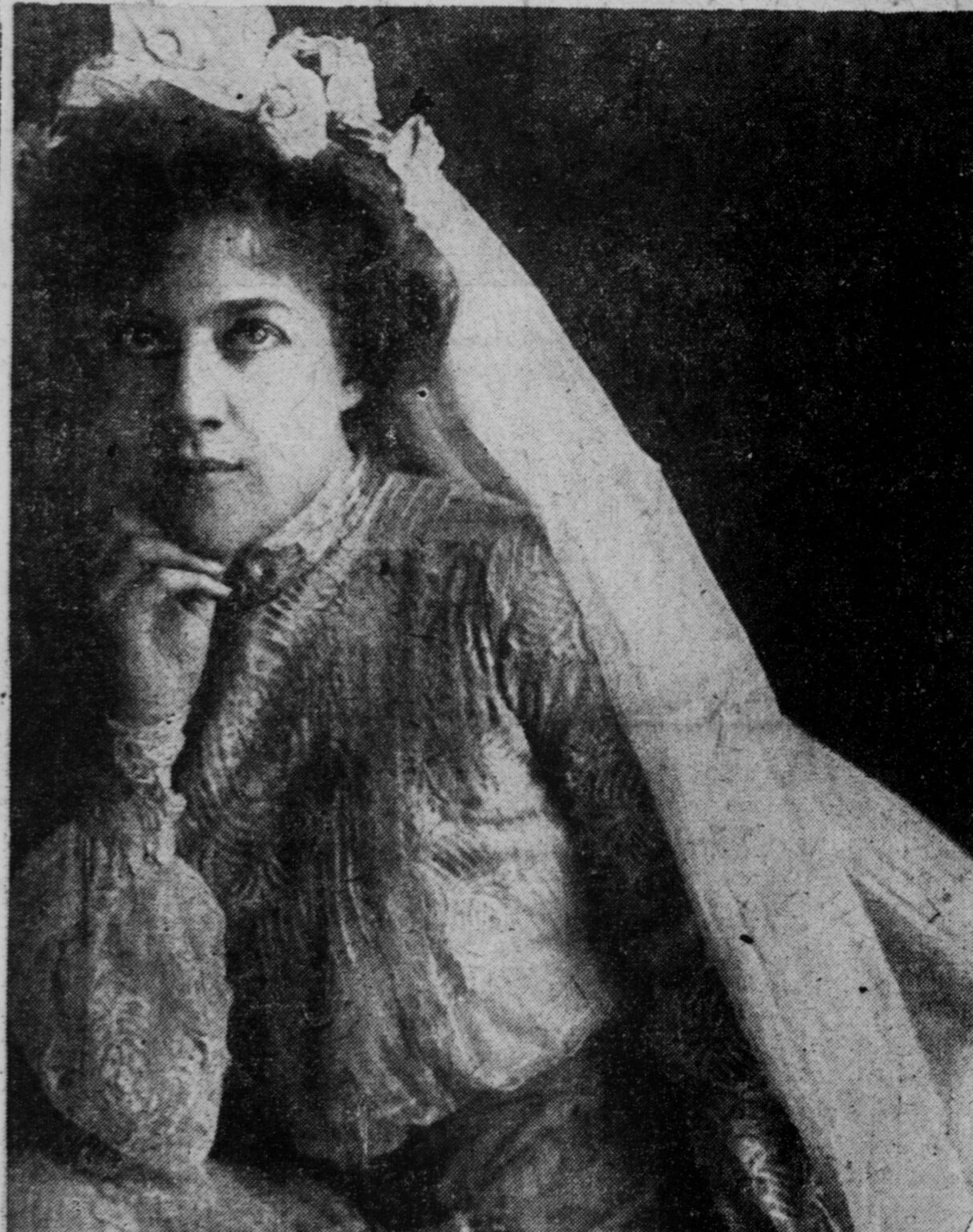
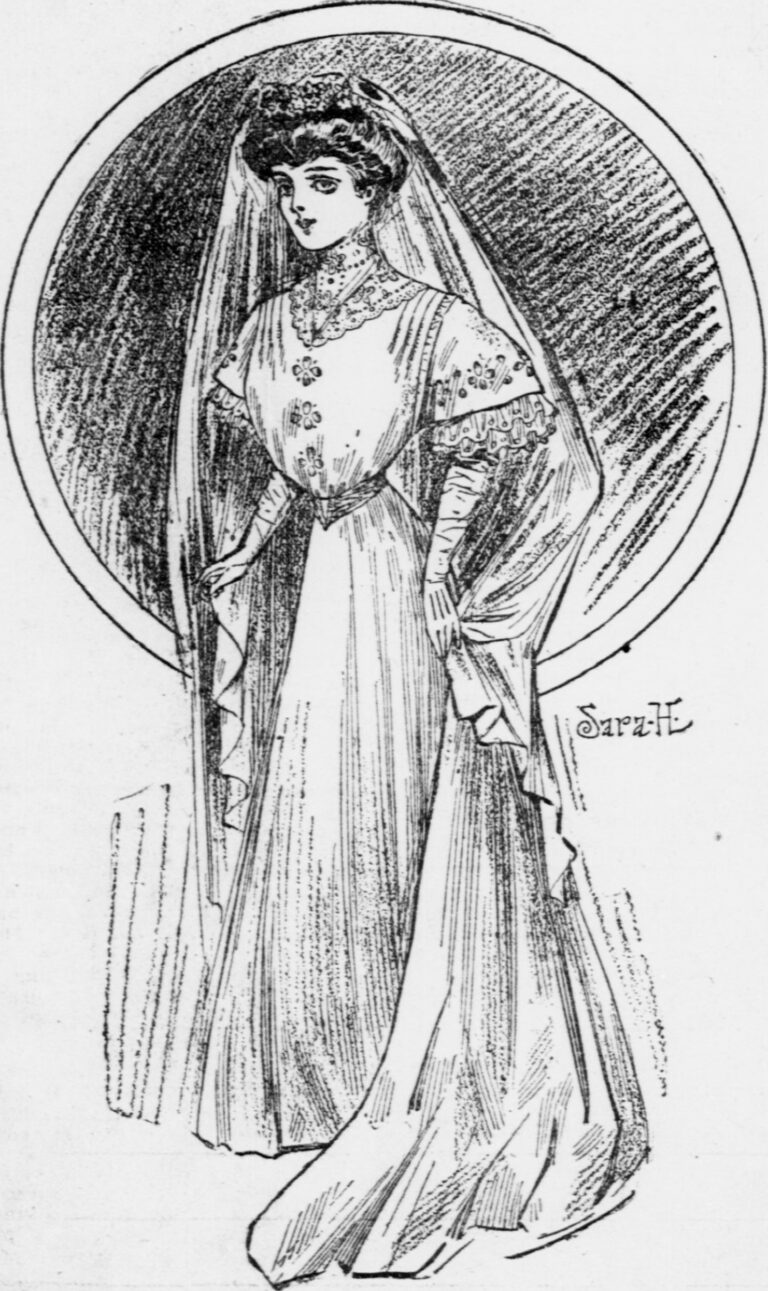
This trend toward simplicity extended to the headpiece and bouquet. Many brides chose headpieces made of tightly ruffled veil mesh accented with small white flowers, often orange blossoms. Orange blossoms had been a popular bridal ornament since Queen Victoria’s wedding in 1840 and remained a potent symbol of marriage. Bouquets commonly emphasized greenery with only a few flowers, held together with a wide white satin ribbon that trailed down. For footwear, white satin slippers were the norm, sometimes embellished with embroidered rosettes to echo the softness of the gown.
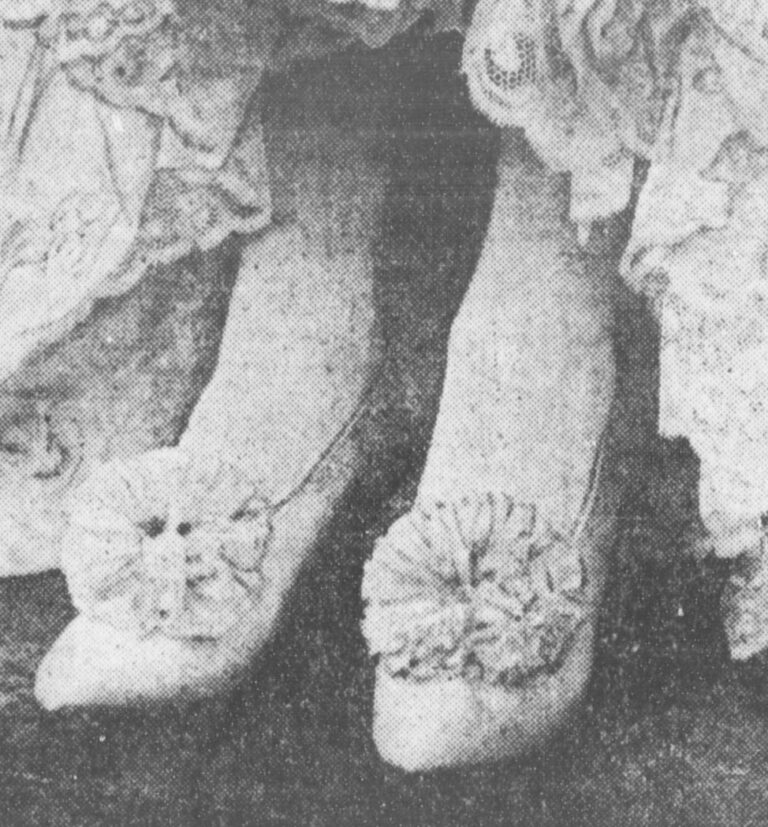
How Bridal Fashion Changed Toward the End of the Decade
Toward the end of the decade, bridal fashion acquired a somewhat stiffer and more tailored appearance, even as silhouettes became smoother. The full, blousy bodice gave way to a closer fit that followed the lines of the body more carefully. Gowns were frequently decorated with satin panels topped by lace overlays, the edges finished with additional lace to highlight the structure. Satin collars climbed high, nearly reaching the ears, and were often lined with lace ruffles. Sleeves remained moderately full but more controlled. Skirts were usually constructed from a thin outer fabric over a satin slip, with white embroidery running down the center front and circling the hem. Headpieces evolved into tiara-like designs set with pearls or flowers, supporting one or two flowing veils that could extend to the floor. Bouquets in this period often featured white roses and lilies of the valley.
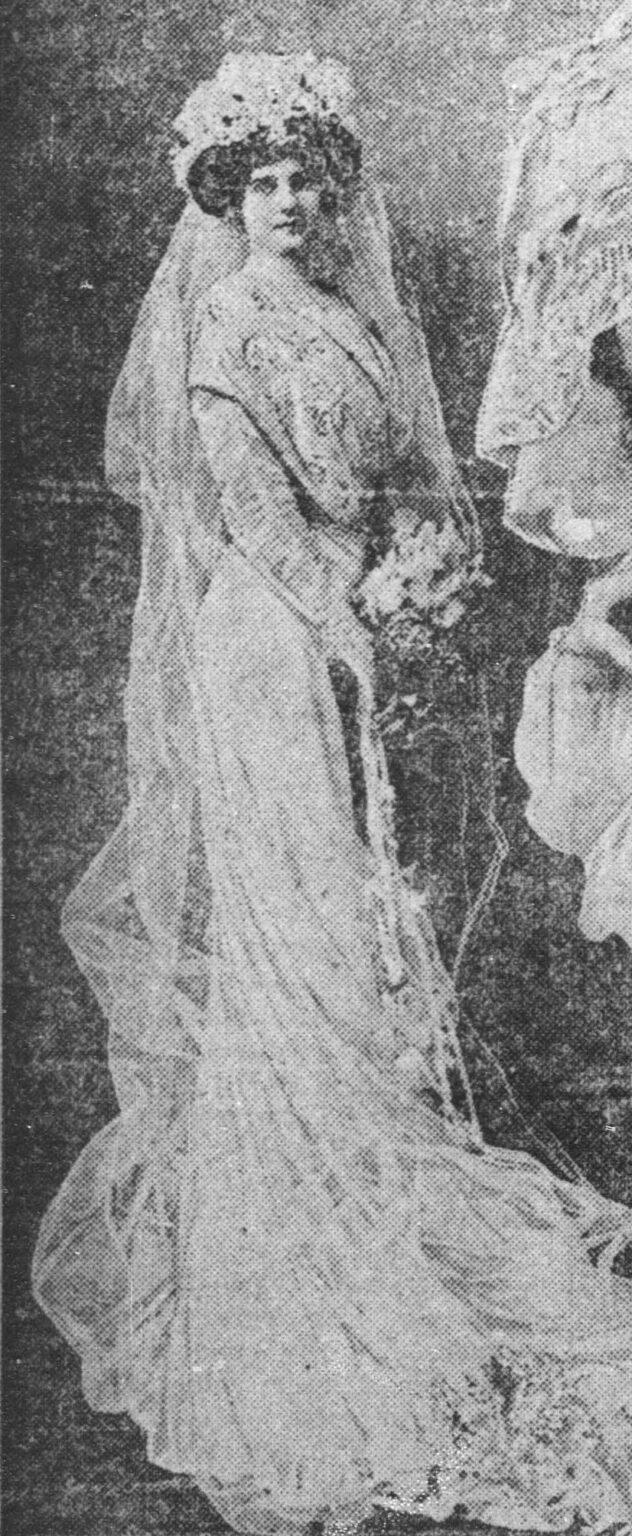
Although these later Edwardian wedding dresses looked more streamlined at first glance, decoration did not disappear. Satin ribbon rosettes, silk tassels, embroidered bodices, and bands of silk fringe along skirts and cuffs added richness to many gowns. Taken as a whole, the decade from 1900 to 1910 reveals a remarkable balance between elaborate detail, modest coverage, and gradual stylistic change. Newspaper coverage from across the United States tracked these shifts in real time, often highlighting seasonal bridal fashion and offering readers a sense of what was stylish for the winter bride, spring bride, summer bride, or fall bride.
For modern readers, the Edwardian bridal wardrobe offers not only visual inspiration but also insight into social history. Wedding gowns, trousseaux, headpieces, and even glove lengths spoke to expectations about femininity, class, and propriety at the beginning of the twentieth century. Through historic newspapers and careful documentation, it becomes possible to see how American brides navigated an age of optimism and innovation while still holding fast to ideas of modesty and tradition that shaped their most important dress.
SKM: below-content placeholderWhizzco for DOT