
The Surprising Prices of Great Depression Secondhand Stores
They had to make ends meet somehow.
The Great Depression was a hard time financially for most folks, but people got by through scrimping and saving. While some lost everything and had to wear shoes with holes in them, many people were able to scrape by with just enough. Secondhand stores were a big part of that, allowing people to get what they needed at a fraction of the cost of buying new. And, those who were in need of money could get a modest sum for their used goods. Everything from dresses to shoes to furniture to leather goods were for sale in these shops. Some of the stores were quite large and serviced several towns, giving shoppers something like a department store-farm store experience to get most of the material items they might need. From old photos we can see some of the pricing and we can compare that to today (adjusting for inflation of course).
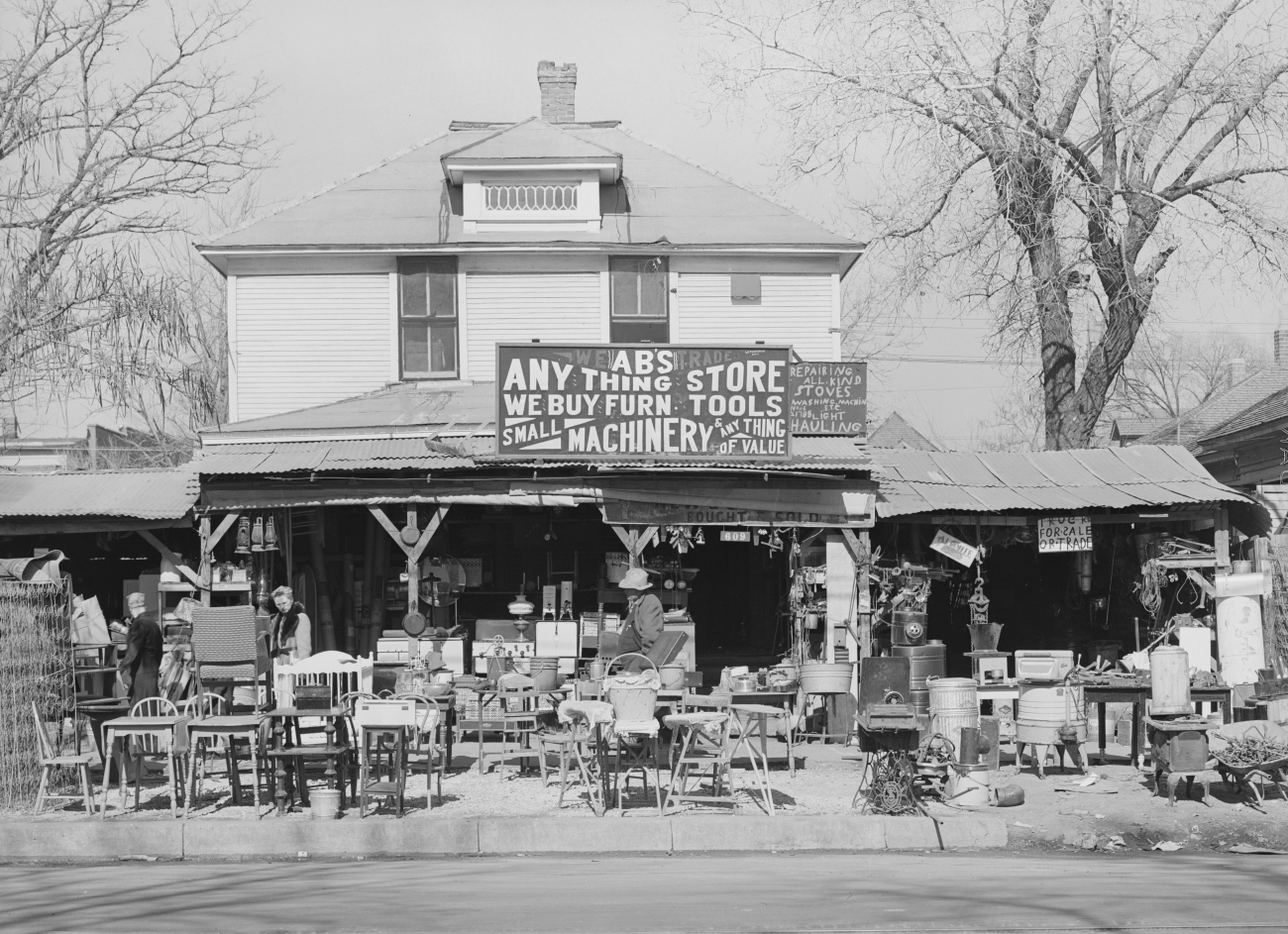
This store in Oklahoma City advertised that they would buy furniture, tools, machinery, and “any small thing of value”. From what they put on the sidewalk it looks like a lot of washing machines, dining sets, and lanterns. There’s even an old fashioned (uncovered) set of bed springs as well!
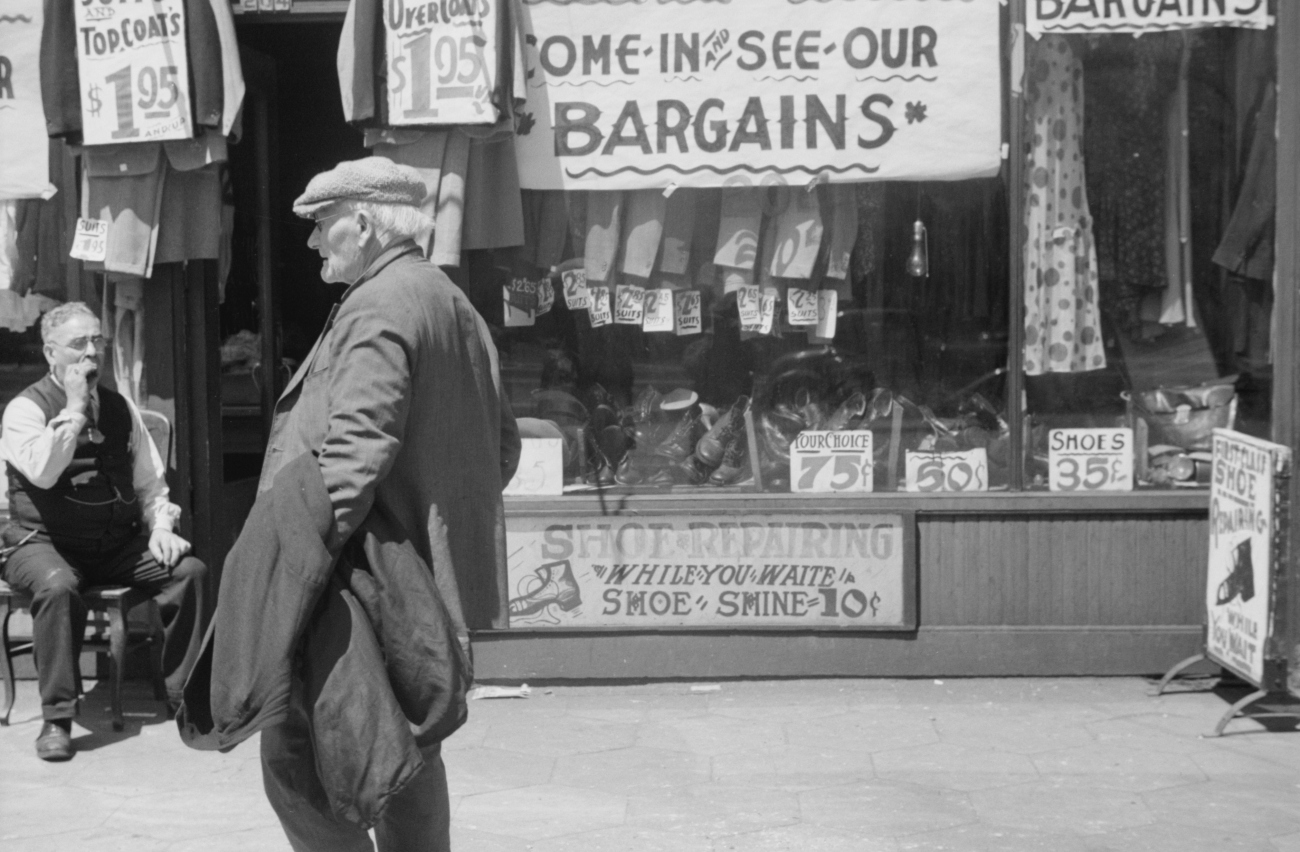
This shop below, photographed in 1937, advertised topcoats for $1.95 which is about $44 today. Suits were around $2.65 which is $60 in today’s cash!
The used shoes, piled up in the window, were between 35¢ and 75¢. That would be between $8 and $17 today. For the shoes this about the same or a little cheaper than what you’d pay for used shoes these days.
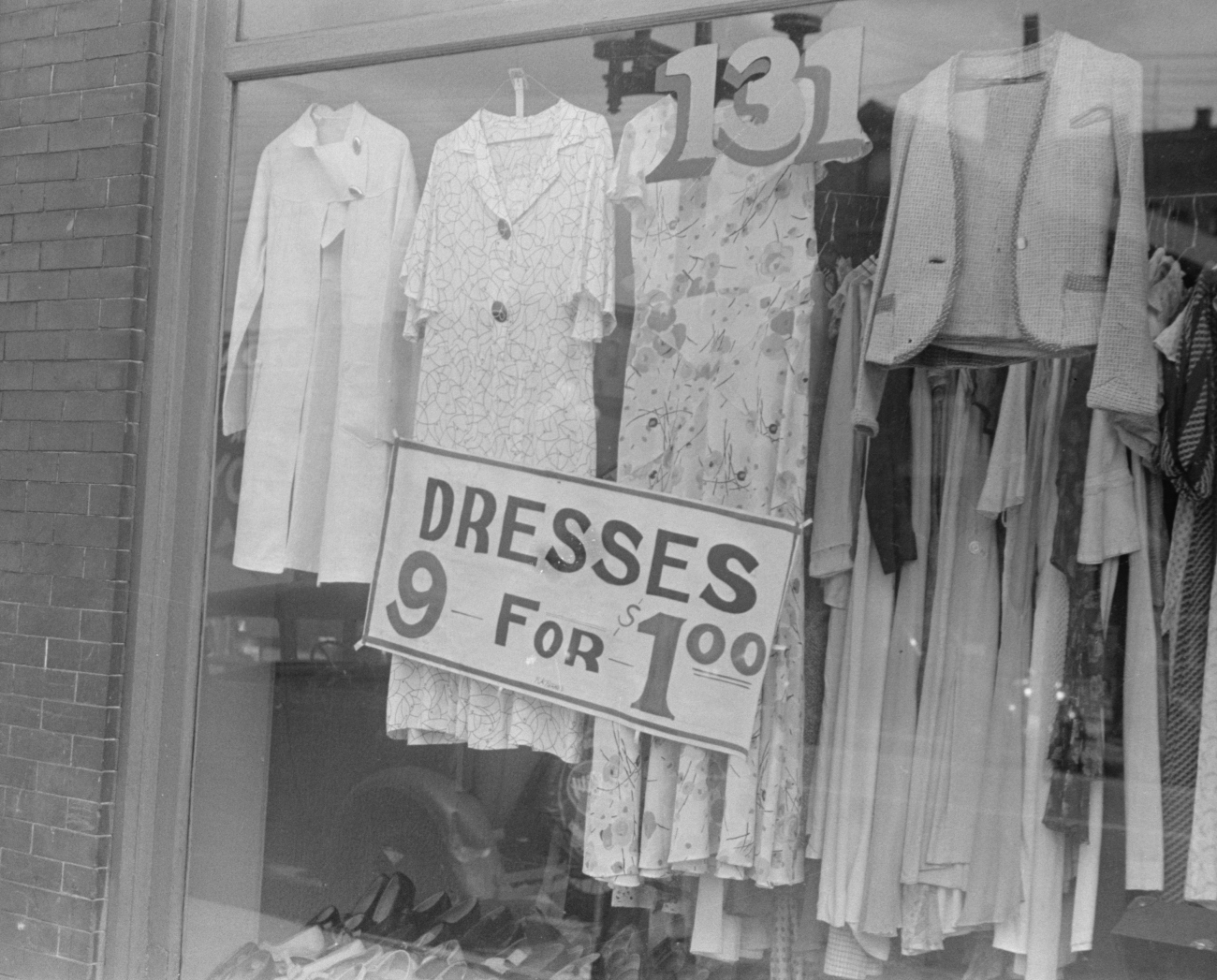
The shop below in 1938 was selling dresses 9 for $1.00. In todays’ money that would be about $23 total ($2.55 a piece). This is much more affordable than the suits! One source from 1936 had dresses averaging about $5.00 a piece new and shoes at $3.00 a pair so the used clothing shops were certainly giving bargains on these particular items.
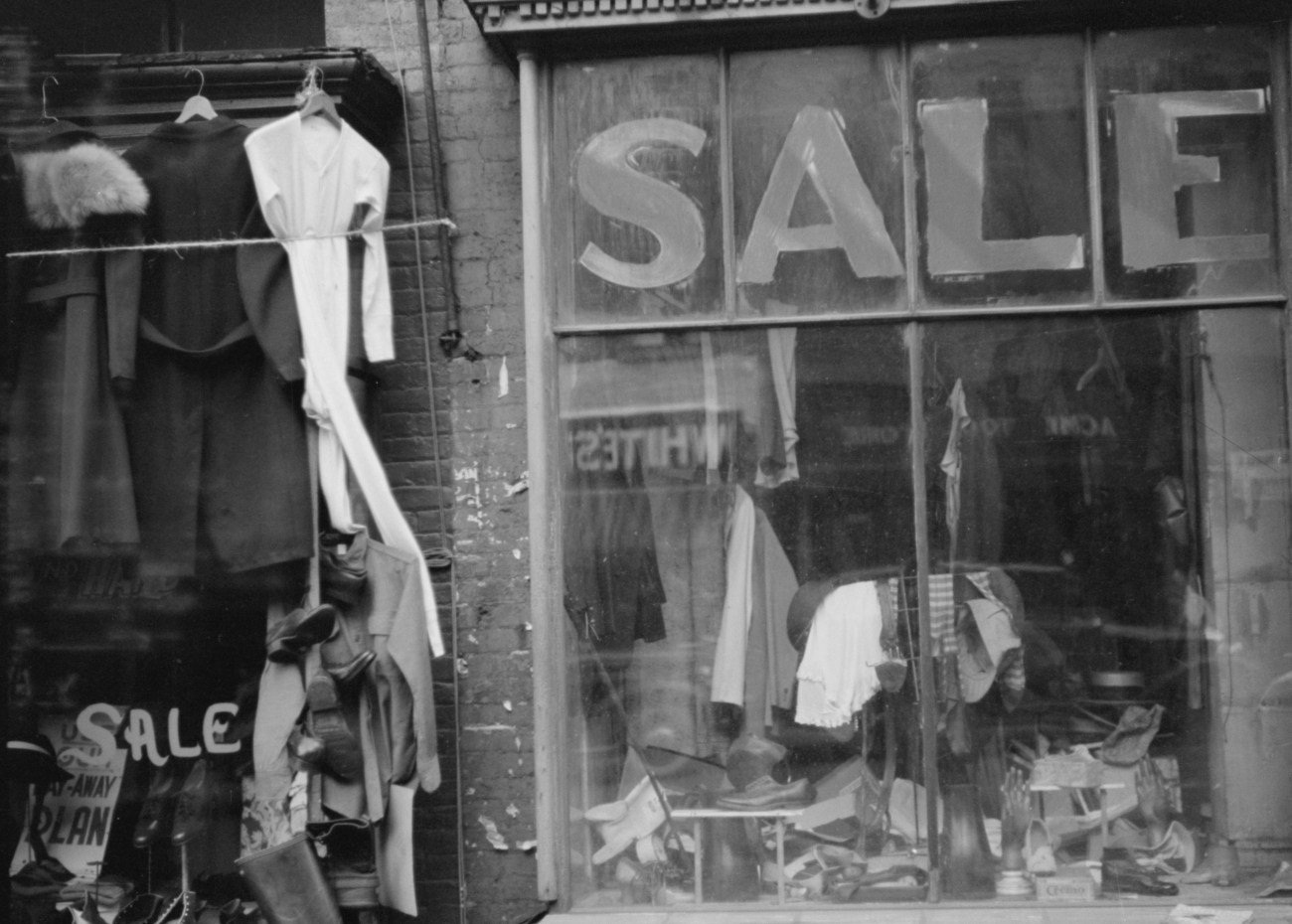
For those who were struggling to even buy used clothing, this secondhand store had a sign in the lower left corner of the window advertising a layaway plan. In 1938 the average yearly household income was around $515, down 25% from 9 years earlier in 1929. No doubt many families had to employ layaway in order to get everything they needed.
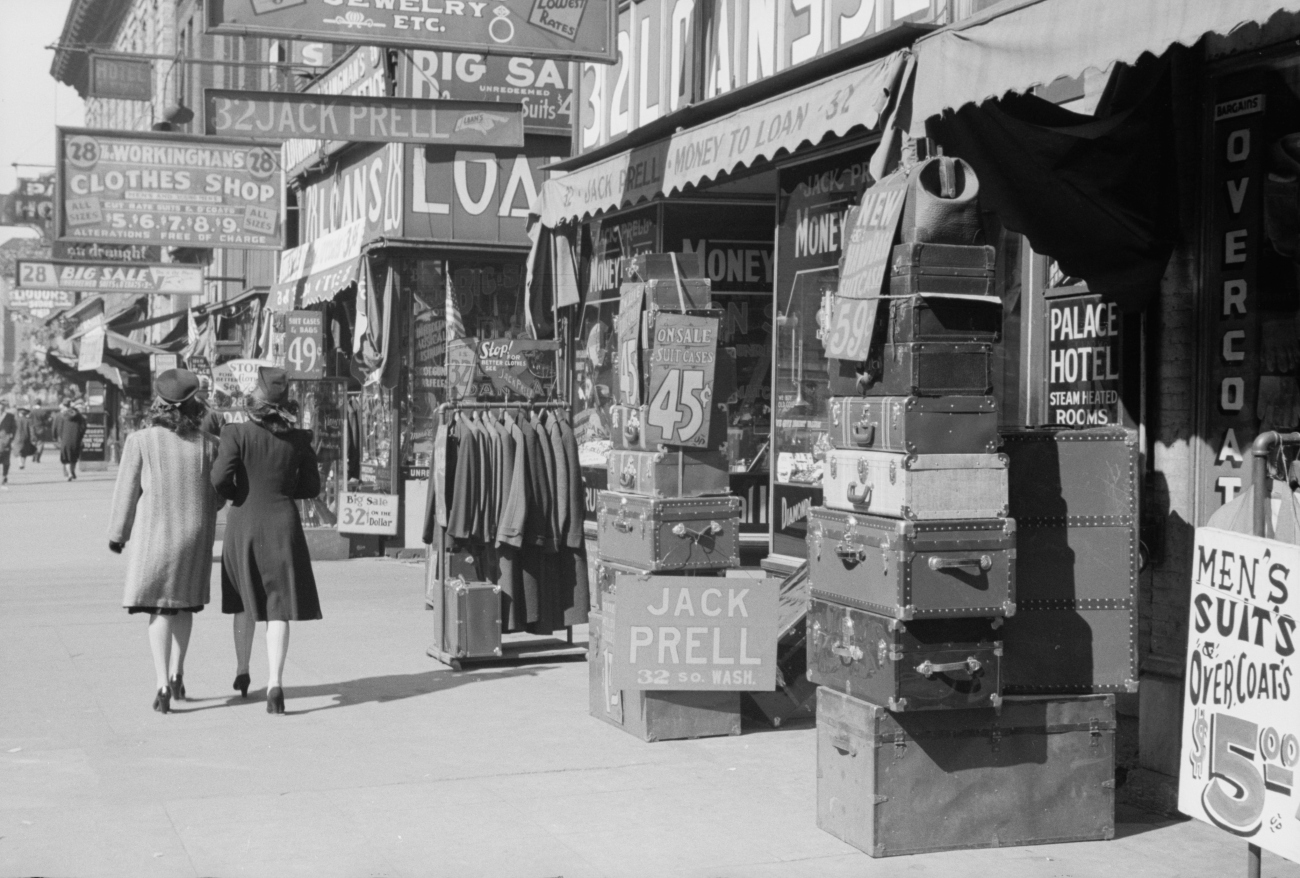
The pawn shop in the image below from 1939 had suitcases for sale for 45¢ to 59¢ which is between $10 and $13 dollars today. Only a few years later leather would become harder to get since it was being used for the war effort. By the 1940s many people had adjusted to a more frugal life and secondhand shopping was still going strong. This practice continued to help folks once World War II began since new products were in limited production.
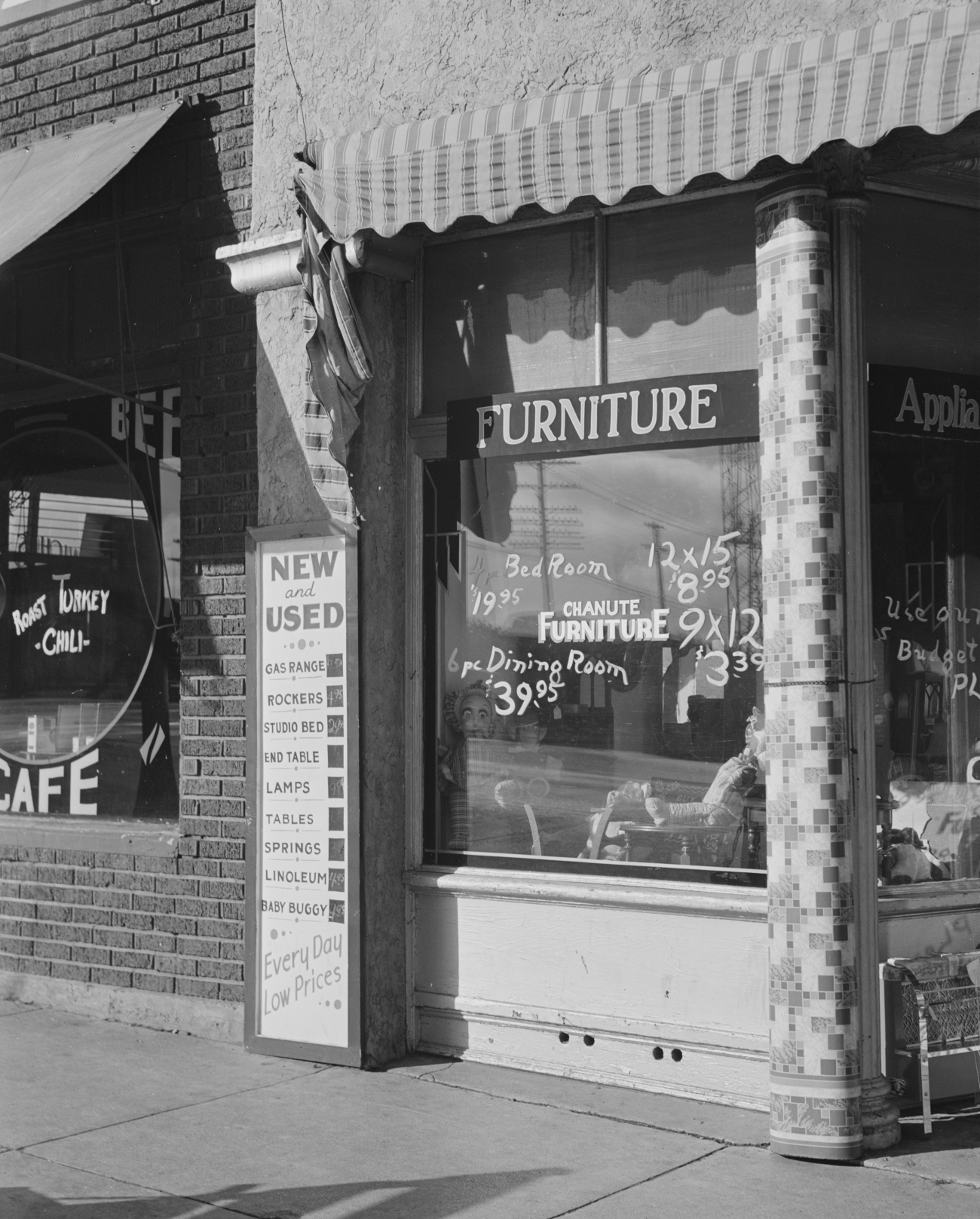
The front windows of the store below (photographed in 1940) give us a good idea of different prices of used home goods at this time.
A 6-piece dining room set was $39.95 which would be about $924 when adjusted for inflation.
A 4-piece bedroom set was $19.95 which is around $461 in in today’s money.
A 12″x15″ was shown for sale at $8.95 or $207 today. However a 9″x12″ was only $3.39 ($78 today).
Some of the prices were much higher than you might expect, while some were much lower. Regardless of the pricing at local shops, it was wise to keep using and then repair everything one had until it was all used up. Folks back then didn’t know if they’d have enough money for the next big thing, let alone the thousand little things a family would inevitably need.
SKM: below-content placeholderWhizzco for DOT