
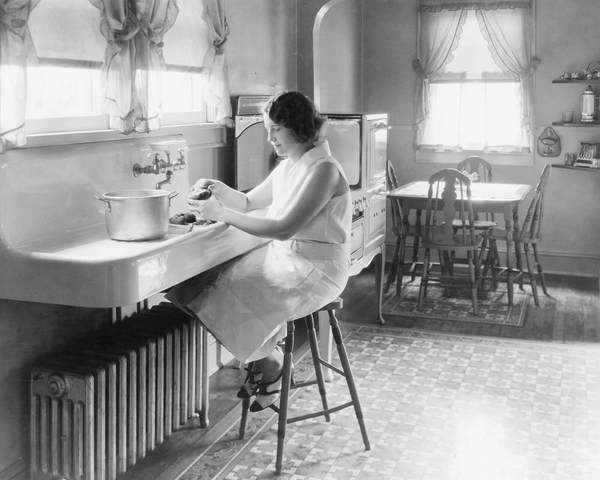
This 1925 photo shows what the typical kitchen in a middle class or upper-middle class home looked like. There are a few great things to notice here: 1) There’s now a radiator to make the preparation more comfortable, 2) The kitchen table has it’s own prime spot, but no longer is out of place, and 3) There are lovely curtains that add to the softness of the room.
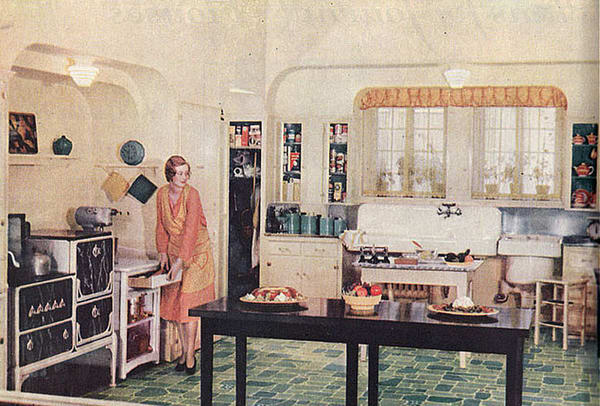
This illustration showed the aspirational view of a 1930’s kitchen, and how it became much more of a part of the home. Notice how the flooring starts to become more fun, the cabinets have some color, and there are plants in the windows. This is also the first time we begin to see colorful pots, pans, and storage bins.
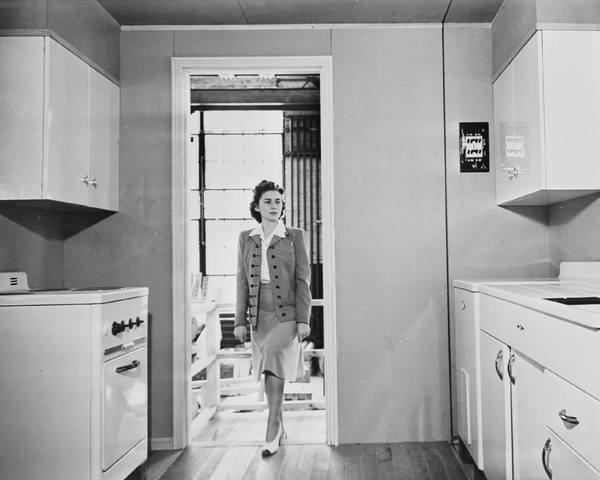
As more and more homes moved to gas in the late 1930s, stoves became smaller and more efficient. They would eventually become built-in to the kitchens like the cabinets, sinks, and spot for the refrigerator would be. The need for efficiency housing during war-time created super-simple kitchens. Here we see a defense worker coming home to her efficiency kitchen in 1941. The stove is now a built-in element as is the dishwasher.
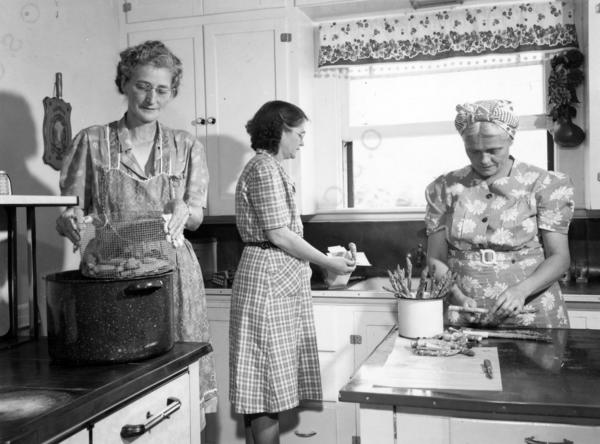
The War Efforts took many women out of the home for the first time as they assumed every job imaginable to fill in for soldiers. This sparked a huge boom of skills among women and they sought to apply much of the efficiency they saw at their jobs back in their homes. This created more and more functionality in the kitchens and enabled multiple people to work at once.
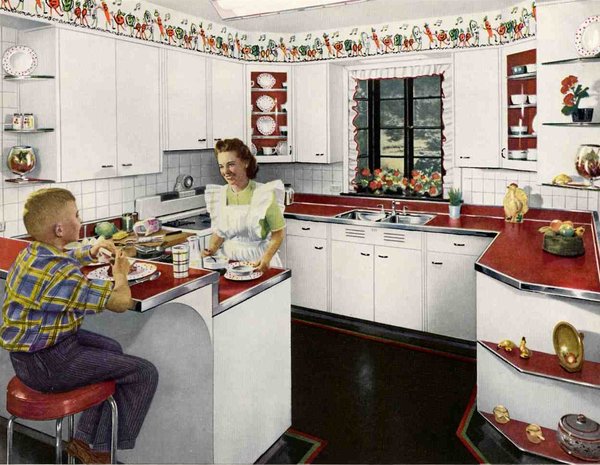
The Baby Boom brought on a whole new world of families and prosperity. As the culture evolved to more rock n roll and expression, so to did kitchens get more ‘fun’. Modern magazines began to promote more colorfully-trimmed kitchens after the war. Many homes even featured built-in hutches like this one that resembled the local diner. What an era!
SKM: below-content placeholderWhizzco for DOT